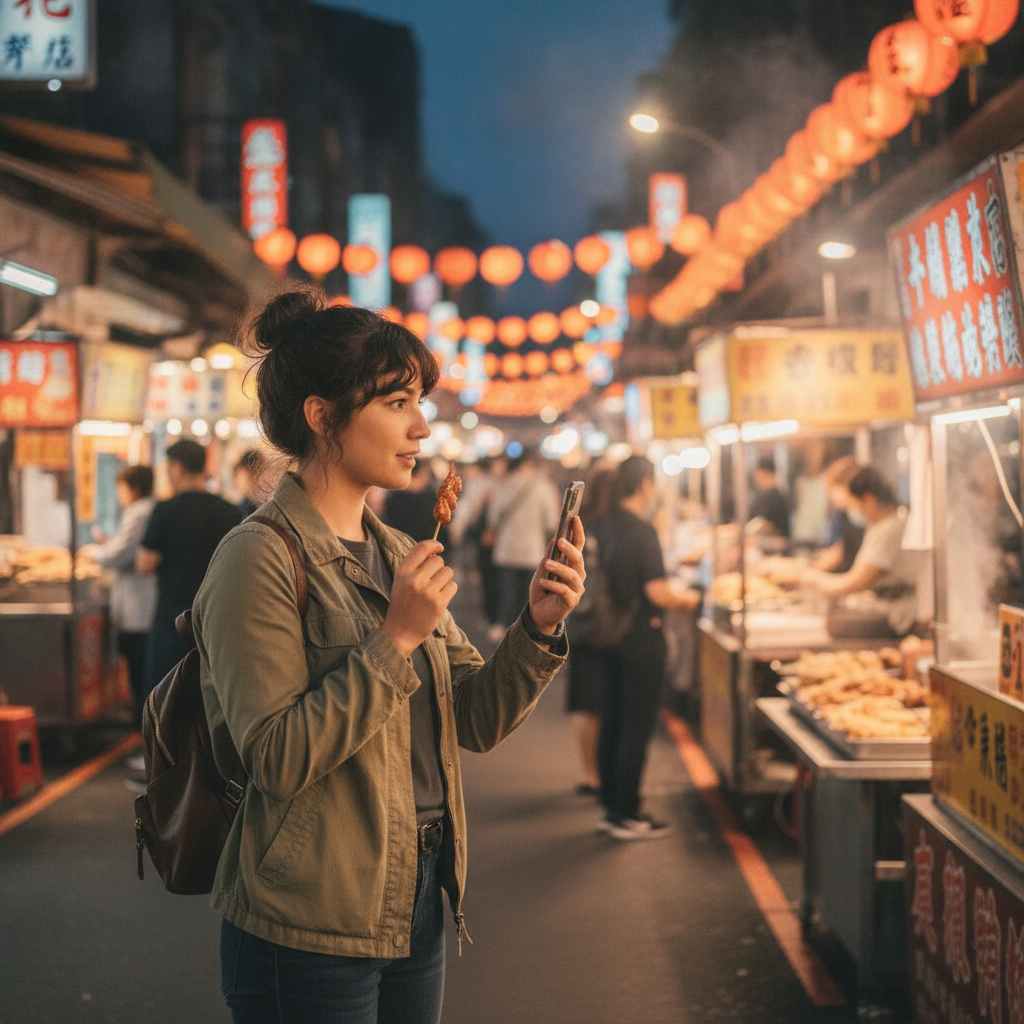
There is a particular kind of sensory overwhelm that greets a first-time visitor to Taipei's night markets — the kind that feels equal parts thrilling and disorienting, where the smell of scallion pancakes mingles with the heat of a thousand bodies moving in purposeful directions, and the neon signs overhead seem to pulse in a language all their own. Solo travelers, especially those arriving without a plan, often describe the experience as standing at the edge of a river and being unsure whether to wade in slowly or simply jump. The good news is that Taipei's night markets have their own internal logic, one that reveals itself quickly to anyone willing to slow down and observe before reaching for their wallet.
The Lay of the Land
Taipei's most well-known night markets are not interchangeable. Each has a distinct personality shaped by its neighborhood and its regulars. Shilin Night Market, located in the Shilin district, is the largest and most visited — a sprawling complex that spans both an indoor food hall and surrounding outdoor lanes thick with clothing stalls, carnival games, and street snacks. Raohe Street Night Market, running along a single covered lane in the Songshan district, is older and more compact, prized by locals for its density of traditional food vendors. Ningxia Night Market sits in the Datong area and carries a reputation for Taiwanese classics done carefully, with less of the tourist infrastructure that surrounds Shilin. A solo traveler who visits all three over several evenings will come away with a genuinely layered understanding of the city, rather than a single, crowded impression.
What to Eat, and How to Order It
The food at Taipei's night markets operates according to a logic that favors small portions, high turnover, and extraordinary repetition of craft. Vendors have often been making the same dish for decades, and that specificity shows. *Oyster vermicelli* — ô-á-mī-suànn in Taiwanese Hokkien — is a thick, starchy soup of oysters and sweet potato noodles ladled from enormous vats, typically served with a sweet and sour sauce. *Stinky tofu*, known as chòu dòufu in Mandarin, is fermented, deep-fried, and unmistakable by smell from half a block away; the flavor is far milder than the aroma suggests, and most travelers who try it find themselves returning for a second serving. Ordering requires no Mandarin fluency — pointing, holding up fingers, and making eye contact with the vendor carries a transaction smoothly from start to finish. At Raohe, the pepper buns baked inside a clay oven at the market entrance are among the most discussed items on any food-focused travel itinerary, and the queue is considered worth every minute.
Payment at most stalls remains cash-based, though this is shifting in busier markets. The prudent move is to carry small denominations of New Taiwan Dollar, drawing from a larger amount held separately in a bag or money belt. The EasyCard — the same transit card used on Taipei's MRT metro system — is accepted at a growing number of vendors as well, and for a solo traveler already using it to move around the city, the convenience is real.
Moving Through the Crowds Without Friction
Crowd dynamics at night markets are intuitive once a traveler stops trying to fight them. The lanes have a natural flow, and the worst congestion almost always occurs at the intersection of a popular stall and a narrowing corridor. The practical wisdom is to walk through once before stopping to buy anything — a first pass to observe what's being made, where the lines form, and which stalls seem to draw serious locals rather than curious tourists. Arriving early, around six or seven in the evening, means smaller queues and vendors who haven't yet entered the exhausted rhythm of a late-night rush. Shilin's indoor basement food hall, which requires descending a flight of stairs from the main street entrance, tends to be less chaotic than the outdoor lanes and is a useful starting point for anyone who finds the outer market overwhelming.
A small, cross-body bag worn against the chest is the most practical choice for carrying essentials. The markets are generally safe, but the density of bodies in a place like Shilin creates the kind of distraction that pickpockets rely on. Keeping valuables minimal and close removes that concern almost entirely.
A Note on Bargaining and Stall Etiquette
Unlike some market cultures, Taipei's night markets do not operate on a bargaining model for food. Prices at food stalls are fixed, usually displayed clearly, and are genuinely reasonable. Attempting to negotiate over a bowl of noodles or a bag of pineapple cake would be both unusual and mildly awkward. At clothing and goods stalls, some flexibility exists for purchasing multiple items, and a polite inquiry about the price of two or three pieces together occasionally produces a small discount. The tone of any such exchange should remain light and unhurried. Vendors are not waiting to be pressed — they're running a business at a fast pace, and the relationship works best when it feels transactional in a genuinely pleasant way.
Finding Your Own Rhythm
For the solo traveler, there comes a point — usually midway through a second or third night market visit — where the sensory overwhelm recedes and something else takes its place. The market stops being a puzzle to decode and becomes simply a place to be. You find yourself pausing not because you're lost but because something smells worth investigating, or because an elderly vendor is pressing scallion pancake dough with a rhythm so practiced it seems almost meditative. The Google Maps app helps with navigation between districts, and the free public wifi found at MRT stations makes it easy to cross-reference a stall's name before committing to a queue. But the better instinct, once the basics are understood, is to follow hunger and curiosity rather than a curated list. Taipei rewards that kind of loose attention. The city has been feeding curious strangers for a long time.
The sensory overwhelm that greeted the first visit doesn't disappear, exactly — it transforms. What once felt like standing at the edge of a river comes to feel more like stepping into a current that was always moving in a direction worth going.