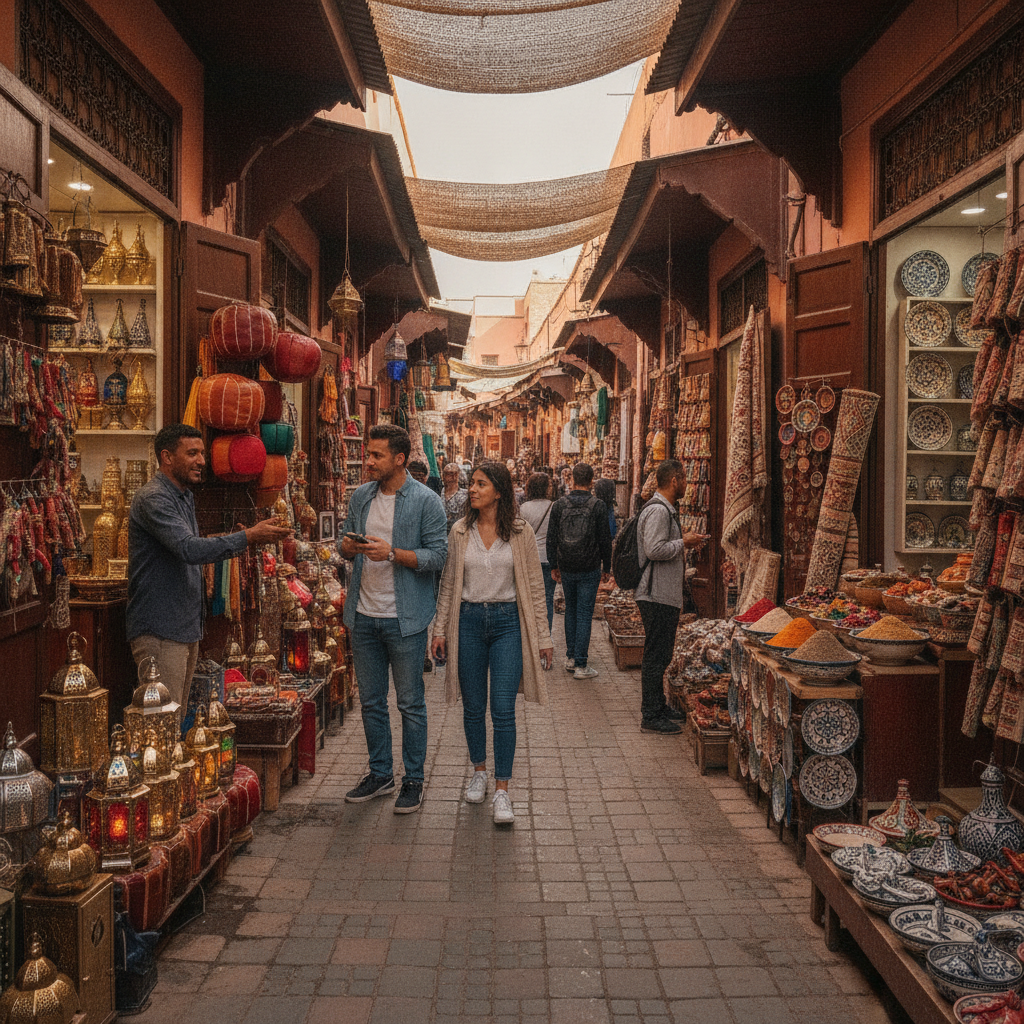
Stepping into Marrakech's Medina is one of the most disorienting — and exhilarating — experiences in travel. The alleyways twist without warning, the crowds push from every direction, and before you've found your bearings, someone is already pressing a leather bag into your hands and quoting a price in three different currencies. It's overwhelming in the best way, but it can also leave you frustrated, sunburned, and unsure whether you paid three times more than you should have for a pair of babouche slippers.
The good news is that the souks reward preparation. A few practical strategies make the difference between a chaotic afternoon and one of the most memorable shopping experiences you'll ever have.
Arrive With a Rough Price Reference
Before you wander into the souk quarter around Jemaa el-Fna, spend twenty minutes in a fixed-price shop or a government-certified cooperative. Places like the Ensemble Artisanal on Avenue Mohammed V display tagged prices on rugs, ceramics, and leatherwork. You won't necessarily buy there, but you'll leave with a working sense of what things cost at retail. That baseline changes everything — once you know a decent wool rug runs a certain range, you can negotiate in the souks with confidence rather than guessing.
Learn the Basic Layout Before You Go
The Medina's souks are loosely organized by trade, a system that dates back centuries. Dyers cluster near the tanneries in the northeast. Metalworkers occupy one stretch, spice sellers another, carpet dealers yet another. Download an offline map through Maps.me or Google Maps before you lose data signal inside the narrow streets. Knowing that the Souk Semmarine leads toward textiles, or that the Souk des Teinturiers sits near the famous Chouara Tannery, means you can set a rough course instead of drifting and ending up somewhere entirely unintended.
Start Walking in the Morning
The souks are dramatically more manageable before noon. Foot traffic builds through the afternoon, and by late morning the narrower passages near the dyers and carpet quarter can become genuinely difficult to move through. Leaving your riad by 9am puts you in the alleys while the light is still cool, the stallholders are freshly energized, and the crowds haven't yet arrived from the tour buses. You'll also find shopkeepers in a better mood for conversation — and relaxed conversation is where the best prices actually happen.
Set a Spending Limit Before You Enter
Decide on a figure before you walk in, and keep most of your cash in a separate pocket from your daily spending money. The psychological pull inside the souks is real — the colors, the smells, the persistent friendliness of merchants — and it's easy to make three impulse purchases in an hour that you didn't plan for. Separating your budget in advance means you're negotiating from a fixed ceiling rather than trying to mentally calculate on the fly. It also limits the risk if your pocket gets picked, which is rare but not unheard of in Jemaa el-Fna at peak hours.
Understand How Bargaining Actually Works
Bargaining in the Medina is not confrontational — it's a social ritual, and doing it well earns you genuine respect. A common starting point is to offer roughly half the first quoted price, then work toward something in the middle range. Walking away slowly and genuinely is one of the most effective moves; if the seller calls you back, there's room. If they don't, the price was probably already fair. Never name a price you're not prepared to pay, and don't start negotiating on something you have no intention of buying — that wastes everyone's time and creates unnecessary friction.
Watch Out for the Unofficial Guide Situation
Unofficial guides — friendly locals who offer to show you the tanneries or lead you to a "special" shop — are common around the main entrances to the Medina and near Jemaa el-Fna. They're not universally dishonest, but the shop they take you to will often pay them a commission, which means you'll pay more. If you want a guide, book one through your riad or through a verified platform like GetYourGuide, where the price and expectations are agreed upfront. Politely declining unsolicited offers with a firm but friendly "no, thank you" is both sufficient and socially acceptable.
Mark Your Riad's Location Before You Wander
The single most practical thing you can do before entering the souk is drop a pin on your accommodation's exact location. Streets in the Medina often have no signage, change names mid-block, or aren't in mapping databases at all. The neighborhood of Mouassine and the Bab Doukkala area both have labyrinthine back alleys that look identical after thirty minutes of walking. A saved offline pin means that no matter how turned around you get, you can reorient yourself without asking a stranger — who may or may not have an ulterior motive for showing you the way.
Know When to Say No to Tea
Being invited into a shop for mint tea is a genuine Moroccan hospitality tradition, and accepting doesn't obligate you to buy anything. That said, the longer you sit and the more glasses you drink, the stronger the social pressure becomes. If you're genuinely interested in what a shop sells, tea is a lovely way to browse without rushing. If you already know you're not buying, it's kinder — and honestly less stressful — to politely decline at the door and keep moving. Read your own instincts on this one.
The Medina's souks are one of the great market experiences left in the world — chaotic, beautiful, and full of things you'll still have in your home a decade later. Going in with even a basic plan means you spend less time stressed and more time actually enjoying what makes Marrakech so unforgettable. Take it street by street, stay curious, and trust that getting a little lost is part of the experience.