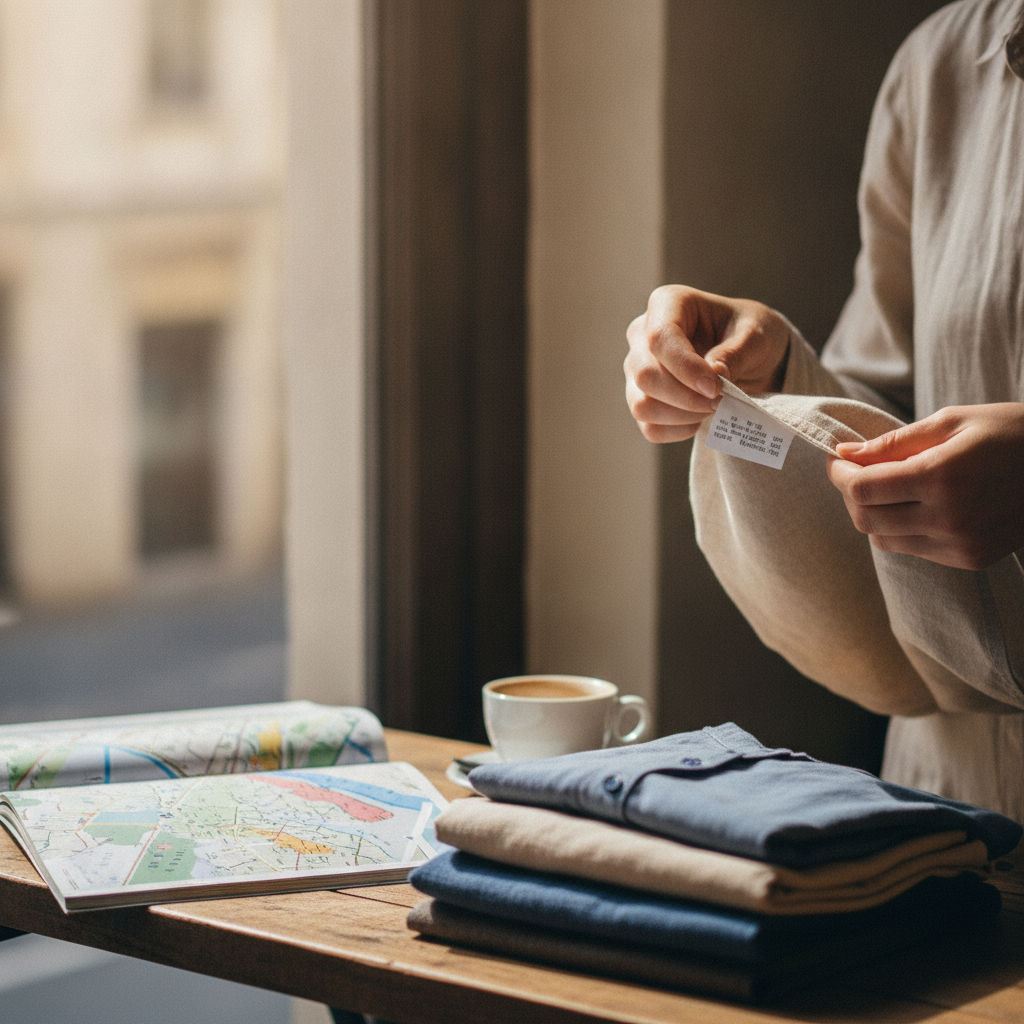
Most clothing falls apart not because it was poorly sewn, but because the fabric itself was the wrong choice for the job. That tiny label stitched into the seam of every garment holds more useful information than most shoppers ever stop to read. Once you understand what it's actually telling you, buying clothes that last stops feeling like guesswork.
What Do Those Fiber Percentages Actually Mean?
Every fabric label lists the fiber content by percentage — something like "80% cotton, 20% polyester" — and those numbers aren't arbitrary. They tell you what the fabric is primarily made of and how it's likely to behave over time. Natural fibers like cotton, wool, and linen tend to breathe well and age gracefully, while synthetic fibers like polyester and nylon are more durable and resistant to moisture. The ratio between them shapes everything from how soft a shirt feels on day one to whether it still looks decent after fifty washes.
How Does Fiber Type Affect Durability?
Natural fibers have strengths and weaknesses that vary by type. Cotton is breathable and easy to care for, but it wrinkles, fades, and can weaken with repeated washing if the weave is loose. Wool is naturally resilient and regulates temperature well, but it requires more careful handling. Linen is strong and gets softer with age, though it wrinkles easily. Synthetic fibers like polyester hold their shape and resist shrinking, but they can pill over time and tend to trap odors. Blended fabrics try to split the difference, pairing the comfort of natural fibers with the strength of synthetics.
What Makes a High-Quality Blend Worth Buying?
Not all blends are created equal. A well-balanced cotton-polyester blend — typically somewhere around two-thirds cotton and one-third polyester — tends to hold up better than either fiber alone while staying comfortable against the skin. On the other hand, a fabric that's mostly polyester with a small percentage of cotton often performs more like a pure synthetic: it may feel less breathable, pill faster, and look worn out sooner. Brands like Uniqlo and Patagonia publish their fabric compositions prominently because they know fiber quality is part of what they're selling.
How Can You Spot a Fabric That Will Pill or Fade Quickly?
Pilling happens when short or loose fibers work their way to the surface and tangle together into small balls. Fabrics made from short-staple cotton or low-grade wool are especially prone to this. On a label, you won't see the word "short-staple," but you can make an educated guess by price point and by touch — if a fabric feels slightly fuzzy or rough when new, it's more likely to pill under friction. Fading is a separate issue and tends to affect deeply dyed synthetics and poorly finished cottons. Dark-colored garments with a high polyester content often fade unevenly after repeated machine washing.
Why Does Thread Count Matter for Woven Fabrics?
For woven items like dress shirts, sheets, and structured trousers, the density of the weave matters as much as the fiber content. A tightly woven fabric resists tearing, holds its shape better, and typically feels more substantial in your hand. Loosely woven fabrics — even those made from premium fibers — are more prone to snags and distortion with regular wear. You can often judge weave density by holding the fabric up to light: the less light passes through, the tighter the construction. This is worth checking especially when shopping for workwear or anything that needs to look polished over time.
How Do Care Instructions Reflect Fabric Quality?
The care label is directly connected to the fabric composition, and it can be a quiet signal of how demanding a garment will be. A piece that requires dry cleaning only is either made from a delicate fiber like silk or cashmere, or it's been constructed in a way that won't survive machine washing. Neither is a dealbreaker, but it's worth knowing upfront. Machine-washable wool or structured blazers — categories where Everlane and M.M. LaFleur have made a point of offering low-maintenance options — tend to justify a higher price tag precisely because they're easier to keep in rotation.
What Should You Look for When Buying Activewear Specifically?
Activewear has its own set of label priorities. Moisture-wicking fabrics are almost always synthetic — polyester or nylon — because natural fibers absorb sweat rather than pushing it away from the skin. For high-movement activities, look for a high percentage of nylon or polyester combined with a small amount of elastane or spandex, which gives the fabric stretch and recovery. Pure cotton activewear tends to stay wet, get heavy, and stretch out of shape. Labels that list elastane at four percent or higher generally indicate a fabric designed to move with the body and return to its original shape.
How Do You Avoid Being Misled by Feel Alone?
Soft doesn't mean durable, and this is where a lot of purchasing decisions go wrong. Many fast-fashion garments are treated with softening agents during manufacturing to make them feel luxurious on the rack. After a few washes, that softness disappears and the fabric's true character emerges. Checking the label before buying — rather than relying on how something feels in the store — is the more reliable method. A rough-feeling linen shirt, for example, will almost certainly get softer with washing, while an artificially silky polyester blouse may never recover its initial appeal.
Reading fabric labels takes about ten seconds and changes the way you shop entirely. Understanding what fibers do, how blends behave, and what care requirements signal about construction quality puts you in a much stronger position to buy things that actually last. The label is there for a reason — treating it as useful information rather than fine print is one of the simplest upgrades you can make to how you build a wardrobe.