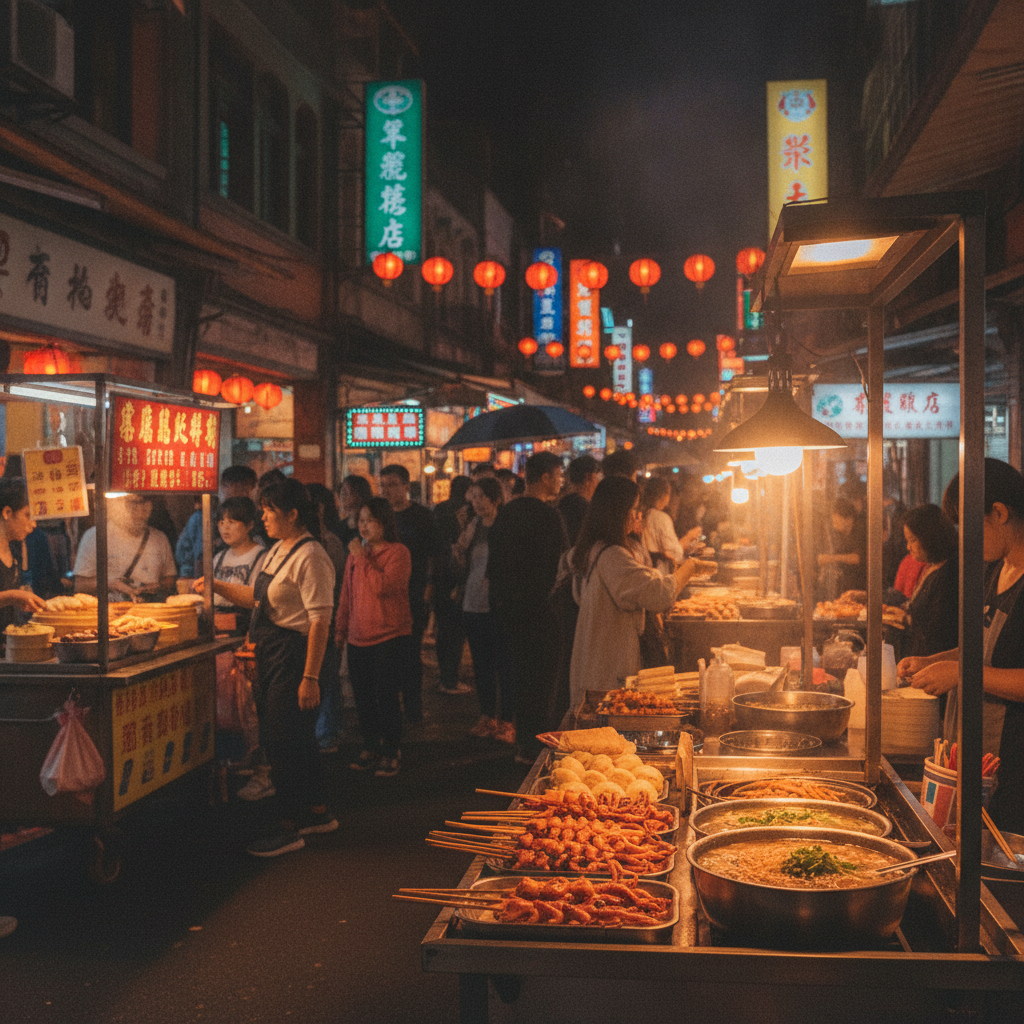
There is a particular kind of overwhelm that arrives not from danger or confusion, but from abundance — too many choices, too many smells, too many voices calling from too many stalls at once. Taipei's night markets are that overwhelm made beautiful. For the first-time solo traveler stepping into Shilin or Raohe Street Night Market after dark, the sensory collision can feel like arriving at a party where everyone already knows the rules except you. The good news is that the rules are simple, forgiving, and deeply worth learning.
Reading the Layout Before the Hunger Sets In
Most of Taipei's major night markets follow a loose but consistent logic. There is usually a central artery of food stalls flanked by lanes selling clothing, accessories, and games. Shilin Night Market, the largest in the city, even has a dedicated underground food hall where vendors sell *xiaochi* — a Taiwanese term for small eats or snack foods — in a more sheltered, organized setting. Raohe Street, running parallel to the Keelung River in Songshan District, is narrower and arguably easier to manage for a first visit, its single long corridor making it harder to lose your bearings. Before eating anything, it's worth doing a full pass of the market to see what's available and where the longest queues are forming. A crowd in Taiwan is almost always a reliable endorsement.
The Etiquette of Ordering and Eating
Ordering at a night market stall rarely requires Mandarin fluency, though learning a handful of phrases earns visible warmth from vendors. Most stalls display photographs with prices, and pointing is universally understood. What matters more is knowing the rhythm of a transaction: approach, indicate your choice, pay promptly, step to the side to wait. Hovering at the front of a stall while others queue behind you is the most common mistake first-timers make. Payment is almost always in New Taiwan Dollar cash — while some younger vendors accept mobile payment through apps like LINE Pay, a small pocket of bills is essential. Eating while walking is common and expected; sitting down at a stall without ordering is less so, and it's polite to make a purchase before occupying a plastic stool.
Food at Taipei's night markets rewards the curious and patient in equal measure. *Oyster vermicelli* — or *o-a-mi-sua* in Taiwanese Hokkien — is a thick, starchy soup with oysters and sweet potato noodles that looks deceptively plain and tastes like nothing else. *Scallion pancakes*, *stinky tofu* (which smells far more alarming than it tastes), and grilled corn brushed with soy butter all compete for attention along every lane. The instinct to play it safe and order something recognizable is understandable, but the markets reward a willingness to point at something unfamiliar and see what arrives. Portion sizes are small enough that missteps are low-stakes and easily corrected by whatever comes next.
Managing Crowds, Heat, and Decision Fatigue
Weekend evenings between roughly eight and ten o'clock represent peak crowd density at most markets, and the heat generated by cooking equipment, bodies, and the Taiwanese summer can make navigation genuinely taxing. Solo travelers tend to find weeknights considerably more comfortable — the atmosphere is still lively, but the lanes breathe more easily and vendors have more time to communicate. Wearing light layers and carrying a small crossbody bag keeps movement easy; a larger backpack becomes a liability in tight corridors. Hydration matters more than most first-timers anticipate — it's easy to spend two hours eating rich, salty food without drinking any water, which compounds fatigue. Vendors selling fresh sugar cane juice or winter melon tea offer a useful corrective, and the drinks are inexpensive enough to buy frequently.
Decision fatigue is a real phenomenon at any large market, and Taipei's night markets generate it efficiently. The standard advice — do a full pass before committing — helps, but so does arriving with one or two dishes already in mind. A quick search before leaving the hotel for *Ningxia Night Market's top stalls* or the most-discussed items at Raohe will provide a loose anchor around which the rest of the evening can float freely. Having a rough plan doesn't diminish the sense of discovery; it redirects energy toward noticing rather than choosing.
What Solo Travel Unlocks in This Setting
For the traveler moving through Taipei alone, the night market offers something unexpectedly social. A single diner at a communal table draws easy conversation — neighboring diners frequently ask where you're from, offer recommendations for the next stall, or simply share the companionable silence of eating something good in a noisy place. There is a democratic quality to a night market that larger restaurants or guided food tours don't replicate: everyone is standing in the same line, sweating in the same heat, negotiating the same crowded lane. You might arrive feeling like an outsider and leave feeling like a regular, which is one of the better tricks a city can manage.
When you step back into the cooler air beyond the market entrance, the particular mix of satiation and mild sensory exhaustion that follows a night market visit is its own form of satisfaction. The abundance that felt overwhelming at the start has, by the end, become a kind of gift — proof that a city is alive, generous, and willing to share itself with whoever shows up hungry and pays attention. Taipei asks very little of its visitors in these late-hour markets, only that they slow down enough to receive what's being offered.