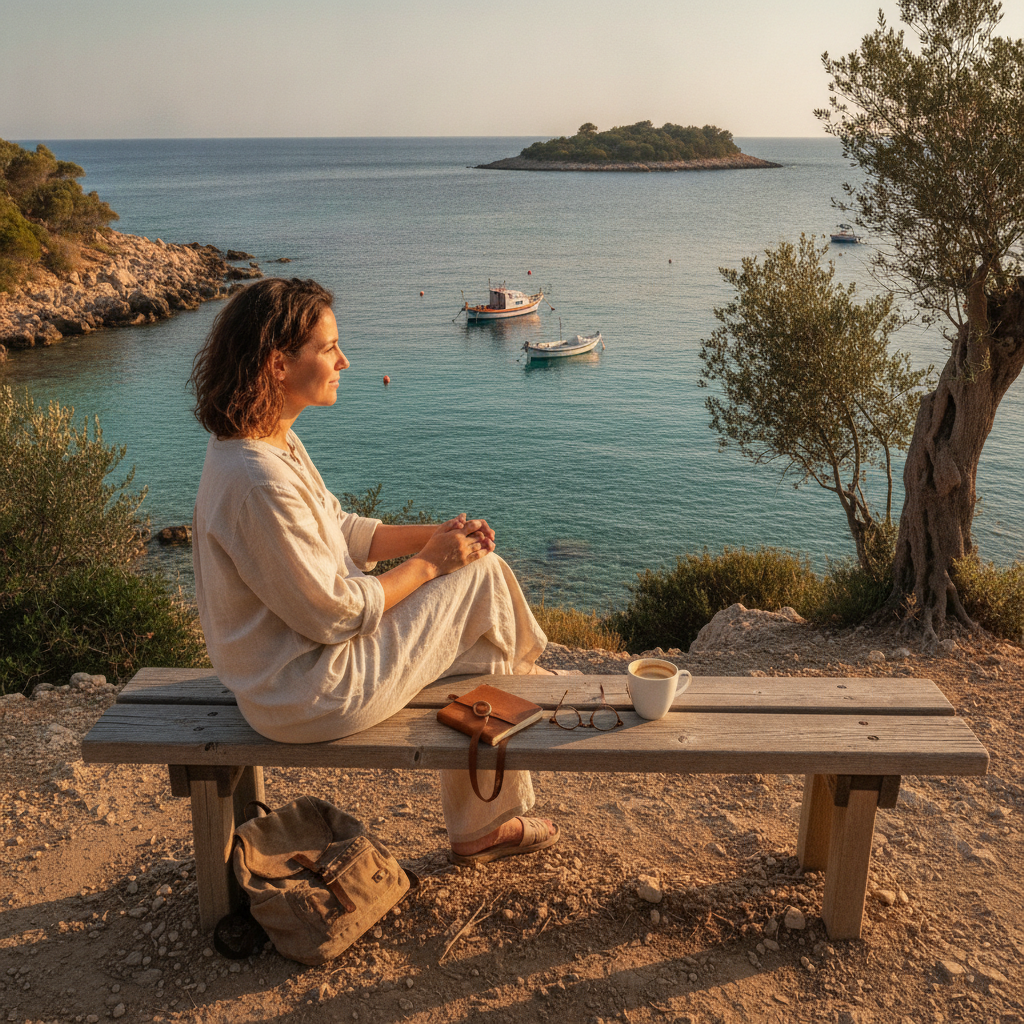
There is a particular quality to the mind on a Tuesday afternoon when every hour is spoken for — a kind of tightness, a narrowing of attention toward the next task, the next obligation, the next small decision that needs to be made before the day closes. Most people recognize this state without naming it. It feels like efficiency, and sometimes it is. But over weeks and months, that relentless scheduling does something quieter and harder to notice: it gradually crowds out the open, associative thinking that makes a person feel like themselves.
Let the Afternoon Belong to Nothing in Particular
The practice is simple enough to describe. Once a month, a person sets aside a single afternoon — three or four hours, midday to early evening — and leaves it completely unstructured. No errands assigned to it, no reading list to work through, no productive project waiting in the background. The afternoon simply exists, open and unspoken for. What tends to happen in that time surprises most people who try it. The first hour often feels uncomfortable, even restless. The habit of filling time is deeply ingrained, and the absence of a plan can register as a kind of mild panic. But somewhere in the second hour, something loosens. Thoughts begin connecting across subjects that normally stay separate. A half-remembered interest resurfaces. A problem that had felt stuck begins to shift.
Psychologists and cognitive researchers have long distinguished between focused, goal-directed thinking and a more diffuse mode of attention — sometimes called the default mode, a state the brain enters naturally when external demands fall away. This second mode isn't passive or idle. It's the mental space where integration happens, where experiences from different areas of life are quietly sorted and linked, where creativity tends to emerge not through effort but through the absence of it. Busy schedules don't eliminate this capacity, but they compress it into the margins: the commute, the shower, the few minutes before sleep. Giving it a dedicated afternoon is less an indulgence than a deliberate act of cognitive maintenance.
What Gets Lost in the Fully Scheduled Week
The Japanese concept of *ma* — often translated as negative space or meaningful emptiness — captures something that Western productivity culture tends to undervalue. In architecture and music, *ma* refers to the pauses and gaps that give structure its meaning, the silences that make the notes around them legible. Applied to time, the idea suggests that unoccupied hours aren't wasted hours; they're the spaces that allow the rest of experience to breathe and cohere. When every hour carries a function, the week becomes something to get through rather than something to inhabit.
This erosion happens gradually and without drama. A person doesn't notice the exact moment when they stopped following a curiosity just to see where it led, or when they last spent two hours reading something unrelated to any current goal, or when they last simply walked without a destination or a podcast in their ears. These small freedoms tend to be the first things surrendered when life gets busy, and they're rarely mourned because they disappear so quietly. The open afternoon is a way of reclaiming them — not as nostalgia, but as a practical restoration of mental range.
Build the Habit Before You Know What You'll Do With It
The instinct, when first considering this practice, is to plan what the unscheduled afternoon will contain. A person thinks: I'll use it for reading, or sketching, or a long walk through the Marais in Paris if travel is involved. But that instinct is precisely what the practice is designed to suspend. The value of the afternoon lies not in what fills it, but in the experience of letting it be filled by whatever the mind and body reach toward when they aren't being directed. Some months that might be a long, wandering walk. Others it might be sitting in a café in a neighborhood like Brooklyn's Carroll Gardens with a notebook and no agenda. Occasionally it might look like an afternoon that accomplishes nothing visible at all — and those tend to be the most restorative.
The practical question of *when* matters more than it seems. An afternoon carved out of a weekend day carries different energy than one taken on a weekday, and different people will find different moments work better. What matters is protecting it with the same firmness one would protect a meeting or a commitment to another person. Apps like Fantastical or even a simple paper calendar block can mark it as unavailable without explaining why. The boundary is the practice. Once it's in place, the afternoon takes care of itself.
Let Yourself Follow the Unimportant Thread
When you give yourself an open afternoon — genuinely open, not half-open with a mental to-do list hovering nearby — notice what surfaces in the second hour when the initial restlessness fades. It might be an old interest you'd set aside years ago, or a place you've been meaning to look up, or simply the desire to sit somewhere pleasant and watch the light change. Follow that thread without questioning whether it's worth following. The unimportant-feeling thought, the minor curiosity, the small pleasure pursued without justification — these are the textures of a mind that still feels spacious, still feels like your own. Over months, as the practice becomes regular, something cumulative happens. The thinking that returns isn't just the relaxed thinking of a single afternoon; it begins to soften the edges of the busy weeks themselves, carrying a little more openness into the hours that are scheduled, a little more range into the days that aren't.
The afternoon that belongs to nothing turns out, quietly, to belong to everything.