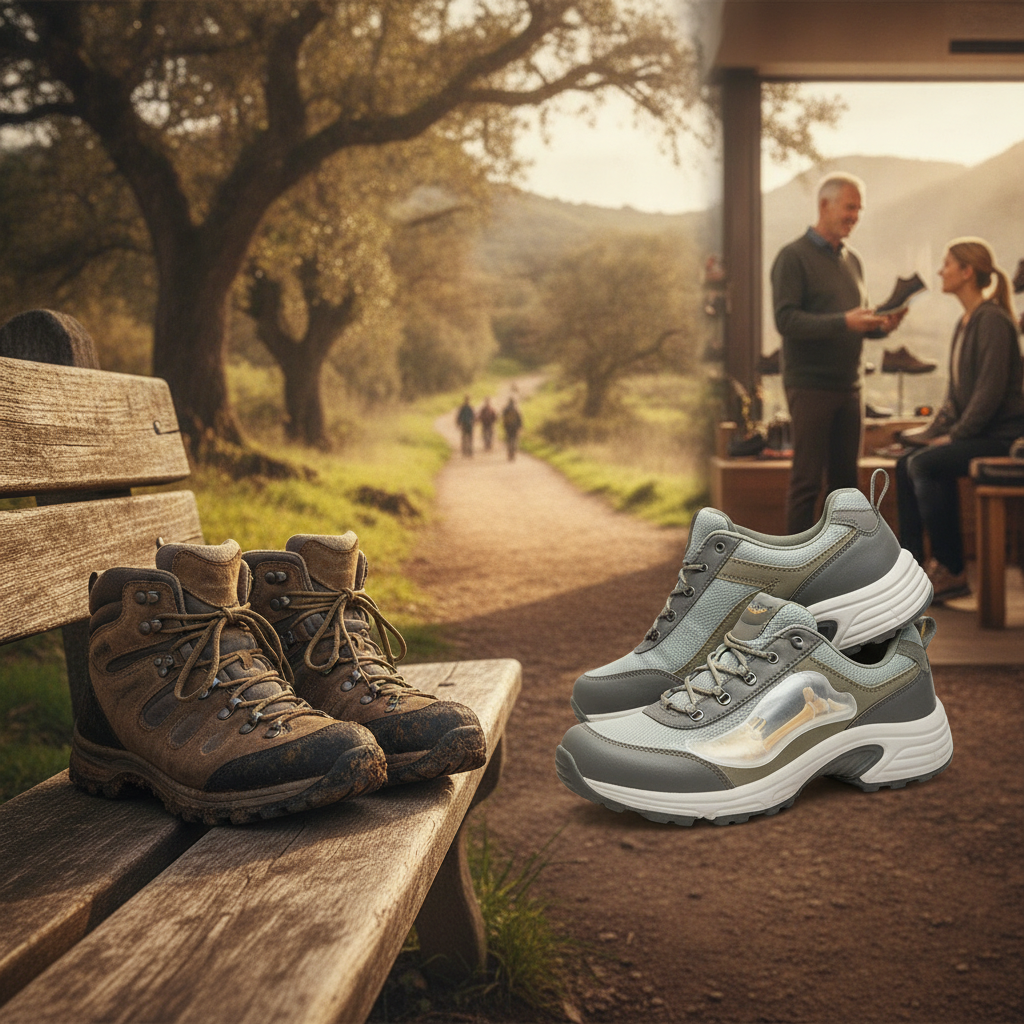
The difference between a good walking shoe and the right walking shoe only becomes apparent after the first few hundred miles, and by then, the wrong choice has already left its mark. For travelers, commuters, and anyone who logs serious distance on foot, the footwear decision carries more consequence than almost any other gear purchase. A pair bought in haste from a general retailer might look identical on the shelf to one chosen through a proper specialist fitting, but the experience of wearing each across varied terrain, across weeks and months, tends to diverge significantly. The case for visiting a dedicated walking or running specialty store isn't built on brand loyalty or price — it's built on biomechanics, durability, and the cumulative cost of getting it wrong.
The Limits of General Retail Footwear Advice
General retailers stock a wide range of shoes across many categories, and that breadth comes with an inherent trade-off in depth. Staff at department stores or large sporting goods chains are rarely trained to assess gait, arch type, or pronation patterns — the foundational factors that determine whether a walking shoe will support or quietly damage a foot over time. A shoe that looks appropriate on a display wall might be the wrong last shape entirely for a given foot, and without the knowledge to identify that mismatch, shoppers are left guessing. Brands like Brooks, Hoka, and New Balance all produce models in multiple widths and stability categories for exactly this reason, but those distinctions are rarely explained clearly in general retail environments.
What a Gait Analysis Actually Reveals
Specialist fitting stores routinely offer gait analysis as part of the purchase process, and the results frequently surprise first-time visitors. By observing how a customer walks or jogs on a treadmill — sometimes with video review — trained staff can identify whether the foot rolls inward excessively (overpronation), remains relatively neutral, or supinates outward. These patterns directly affect which shoe category will provide appropriate support and which will exacerbate joint stress over time. Someone who overpronates significantly and buys a neutral cushioning shoe because it felt comfortable in-store may find knee or hip discomfort compounding over longer distances. That kind of slow-developing problem rarely gets traced back to the shoe until real damage has already accumulated.
The Hidden Cost of Replacing Shoes Too Soon
Shoes bought without proper fitting tend to be abandoned earlier — either because discomfort makes them unwearable or because they wear unevenly and lose structural integrity faster than expected. This cycle of early replacement adds up quietly but consistently. A specialist-fitted shoe that costs more upfront and performs correctly across its full intended lifespan often represents better value than two or three cheaper pairs that failed to serve their purpose. Stores like Fleet Feet in the United States build their entire retail model around this principle, offering fitting appointments and follow-up support that general retailers simply aren't structured to provide. The economics become clearer once the replacement cycle is taken into account rather than just the initial price tag.
How Foot Shape Complexity Demands Expert Attention
Foot anatomy varies far more widely than most people realize, and the standard sizing system — based primarily on length — captures only a fraction of what makes a shoe a genuine fit. Width, arch height, toe box depth, and heel cup volume all contribute to whether a shoe will feel comfortable after an hour, let alone after a full day of travel on cobblestones in Lisbon or along extended trails in New Zealand. Specialist retailers carry a broader range of widths and last shapes, and their staff understand how models from brands like Altra, Salomon, or Merrell differ in their internal geometry. A foot that has been assessed properly is far less likely to develop blisters, black toenails, or the plantar strain that sidelines walkers mid-trip.
The Long-Term Value of an Ongoing Fitting Relationship
One underappreciated benefit of buying from a specialist store is the relationship it establishes for future purchases. Staff who remember a customer's foot profile, past shoes, and any issues that arose can recommend replacements or adjustments with far greater precision than starting cold with an online algorithm or a generalist. Feet change gradually over years — through age, weight shifts, or the aftermath of injury — and having a fitting history on record at a store like Road Runner Sports means those changes get addressed rather than ignored. Many specialist retailers also offer wear assessments, where a customer can bring in an old pair to have the wear pattern analyzed before choosing a replacement, a service that has no equivalent in general retail.
Making the Most of Your Specialist Fitting Visit
When you visit a specialist walking shoe store, bring the socks you actually plan to walk in — thickness and material affect fit more than most people expect. If you have any existing orthotics or insoles, bring those too, since the shoe selection may need to accommodate the volume they displace. Try to visit later in the day when your feet have swollen slightly to their natural walking size, and plan to walk around the store for several minutes in each candidate pair rather than just standing still. If a store offers a treadmill trial or outdoor test loop, use it — the difference between a shoe that feels fine standing and one that works correctly in motion is exactly what specialists are trained to help you identify. Don't hesitate to explain where you walk most, whether that's city pavement, hiking trails, or airport terminals, because terrain matters as much as foot type in narrowing down the right choice.
As specialist fitting culture continues to expand — with more stores integrating pressure mapping technology and digital foot scanning alongside traditional gait assessment — the gap between what a general retailer can offer and what a dedicated walking specialist provides is only likely to widen. For anyone committed to staying mobile, whether across a two-week trip or simply through the demands of daily life, the investment in a proper fitting remains one of the most practical spending decisions a walker can make.