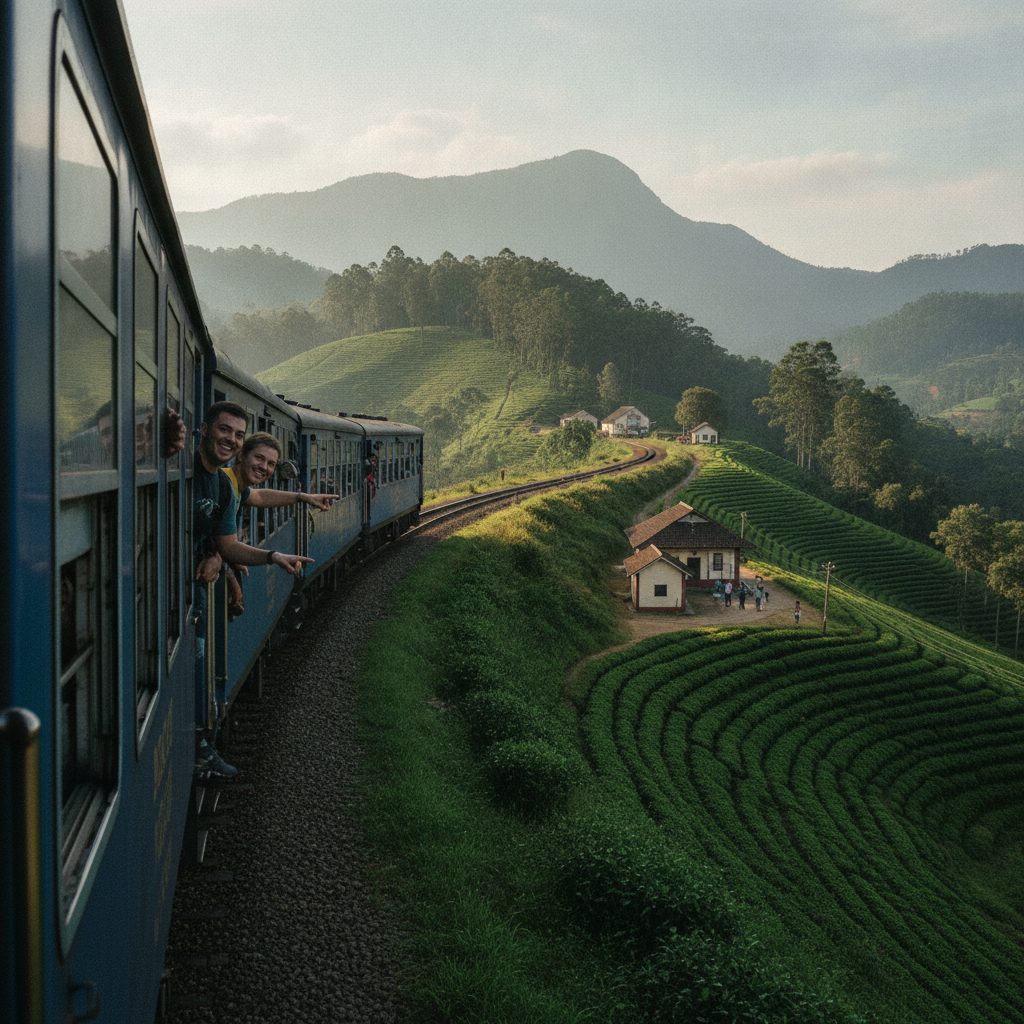
Some places resist the pace you arrive with. A traveler lands in Tbilisi with a full itinerary, a downloaded map, and the quiet confidence of someone who has made efficient use of a week before — and within a day or two, something shifts. The schedule loosens. The afternoon stretches. A second glass of amber wine appears without being asked for, and the evening reorganizes itself entirely around a table that was only supposed to seat four.
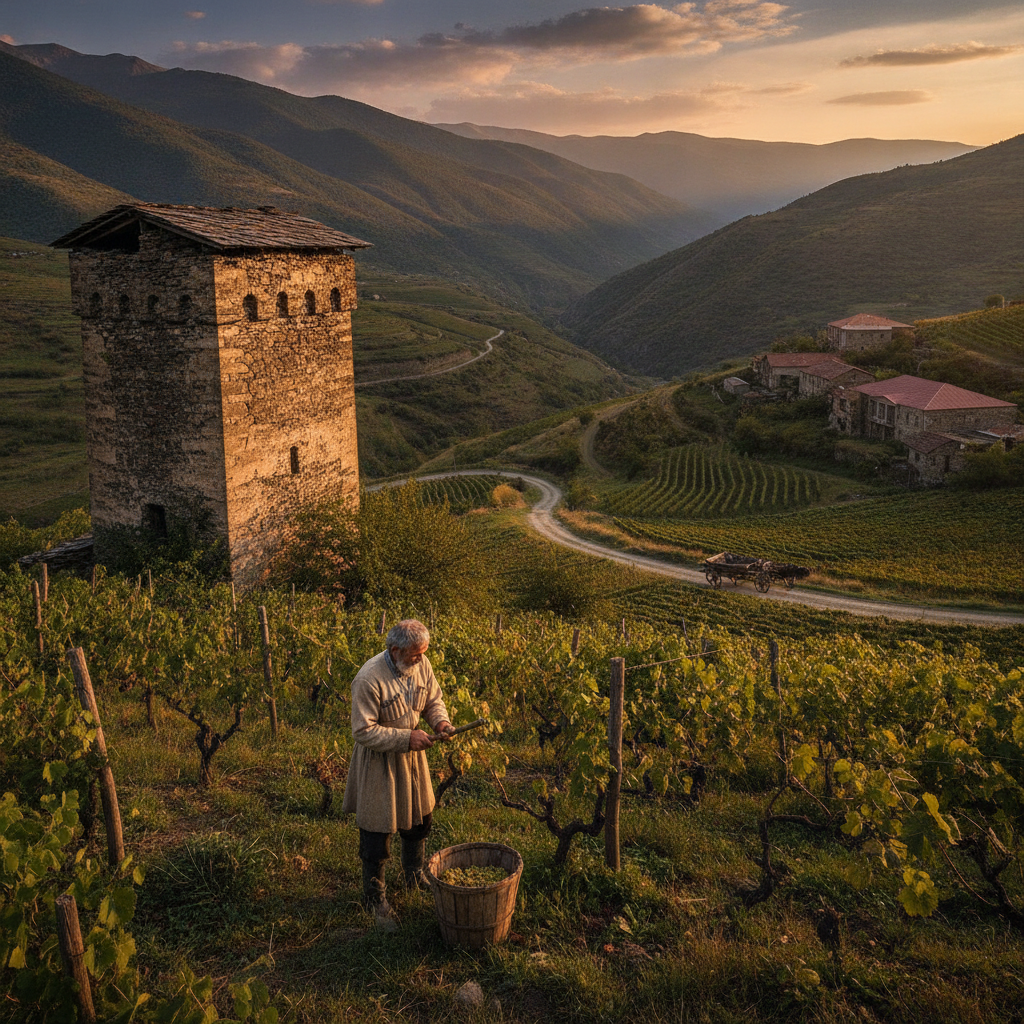
Georgia's wine country, particularly the Kakheti region to the east of Tbilisi, operates on rhythms that have been layered into the landscape over thousands of years. This is not a region that performs slowness for tourists — it simply has no structural reason to rush. The vines, the clay vessels buried underground, the harvest cycles: all of it unfolds according to timelines that predate modern tourism by millennia. Visitors who come expecting a curated wine trail with tasting menus and appointment slots find something considerably more unpredictable, and usually more rewarding.
The Ancient Language of Winemaking
Georgia's claim to being one of the world's oldest winemaking civilizations is not a marketing invention. Archaeological evidence places fermentation practices in the South Caucasus region stretching back roughly eight thousand years, and the traditional method still practiced today — burying large clay vessels called *qvevri* underground to ferment and age wine — has been inscribed on UNESCO's list of intangible cultural heritage. The qvevri method produces what is commonly called amber or orange wine in the West, though Georgians rarely use either term. Skin-contact white wines, fermented with extended maceration, are simply how wine has been made here. The amber color, the tannic structure, the earthy depth: these aren't stylistic choices. They're the result of a process that was never replaced because nothing better came along to replace it.
In the village of Sighnaghi, perched above the Alazani valley with the Greater Caucasus mountains visible on clear mornings, the winemaking conversation is inseparable from the culinary one. Families who grow their own grapes often press their own wine and serve it at the same table where they've prepared *khinkali* — Georgia's distinctive soup dumplings, eaten by hand and never cut with a knife — and *mtsvadi*, meat threaded onto skewers and grilled over vine cuttings. The smoke and the wine and the bread baked in the cylindrical clay oven called a *tone* form a sensory logic that no restaurant menu has entirely captured.
What the Guesthouses Know That Hotels Don't
Much of Kakheti's accommodation sits in small family guesthouses rather than branded hotels, and this structural fact shapes the travel experience in ways that go beyond price. In a place like Telavi, the regional capital and the most practical base for exploring the wider valley, a guesthouse stay typically includes meals prepared by whoever runs the household. The host sets the pace. Breakfast appears when it appears. The wine at dinner is often from a family qvevri in the courtyard, poured from a ceramic pitcher without ceremony. These are not boutique experiences designed to simulate authenticity — they are simply how local hospitality functions, and the distinction matters.
Travelers who gravitate toward this style of accommodation find that a week in Kakheti rarely unfolds the way they planned it. A planned half-day at the Alaverdi Monastery, one of the great medieval Georgian Orthodox complexes and a site where monks still produce wine on the grounds, extends into a full afternoon. A drive toward the fortress-village of Shuakhevi becomes a detour through a roadside market where a conversation about dried persimmons lasts forty minutes. The region doesn't punish flexibility — it rewards it consistently.
The Particular Texture of Georgian Time
There's a concept in Georgian social life called *tamada* — the role of the toastmaster at a traditional feast, or *supra*. The tamada leads a series of toasts throughout a meal, each one addressing a theme: life, guests, family, the departed, the future. A Georgian supra is not a dinner with a beginning, middle, and end in the Western sense. It is a ceremony with its own internal logic, and it can last for hours without feeling drawn out, because the toasts give the time its shape. Sitting through one, even without understanding every word, is to understand something about how Georgians think about shared presence — as something worth marking, and marking again.
For the traveler spending a week in this part of the Caucasus, the supra serves as a kind of cultural calibration. You come in with a certain metabolism of experience — one attraction per morning, one per afternoon, efficient transitions — and the supra quietly dismantles it. Not aggressively. Just by demonstrating, over the course of a long evening, that another way of organizing time exists and has always existed here.
Returning to the First Evening
By the final day of a week in Kakheti, most travelers have not covered everything they planned to cover. Some monasteries remain unvisited. The side road toward the Tsinandali estate, the historic home of a Georgian aristocratic family and now a cultural center with preserved gardens, may or may not have been explored. The mental checklist is shorter than it was on arrival, and the feeling that accompanies this is not failure — it's something closer to perspective. A region that has been making wine in the same clay vessels for eight thousand years is not going to be understood in seven days, and it doesn't pretend otherwise. What a week here offers instead is a first acquaintance: a particular slant of afternoon light over a vine-terraced hillside, a ceramic cup of amber wine that smells faintly of dried apricot and earth, a table that kept expanding because that is simply what tables here do. You arrive efficient and leave instructed — not in facts, but in pace.