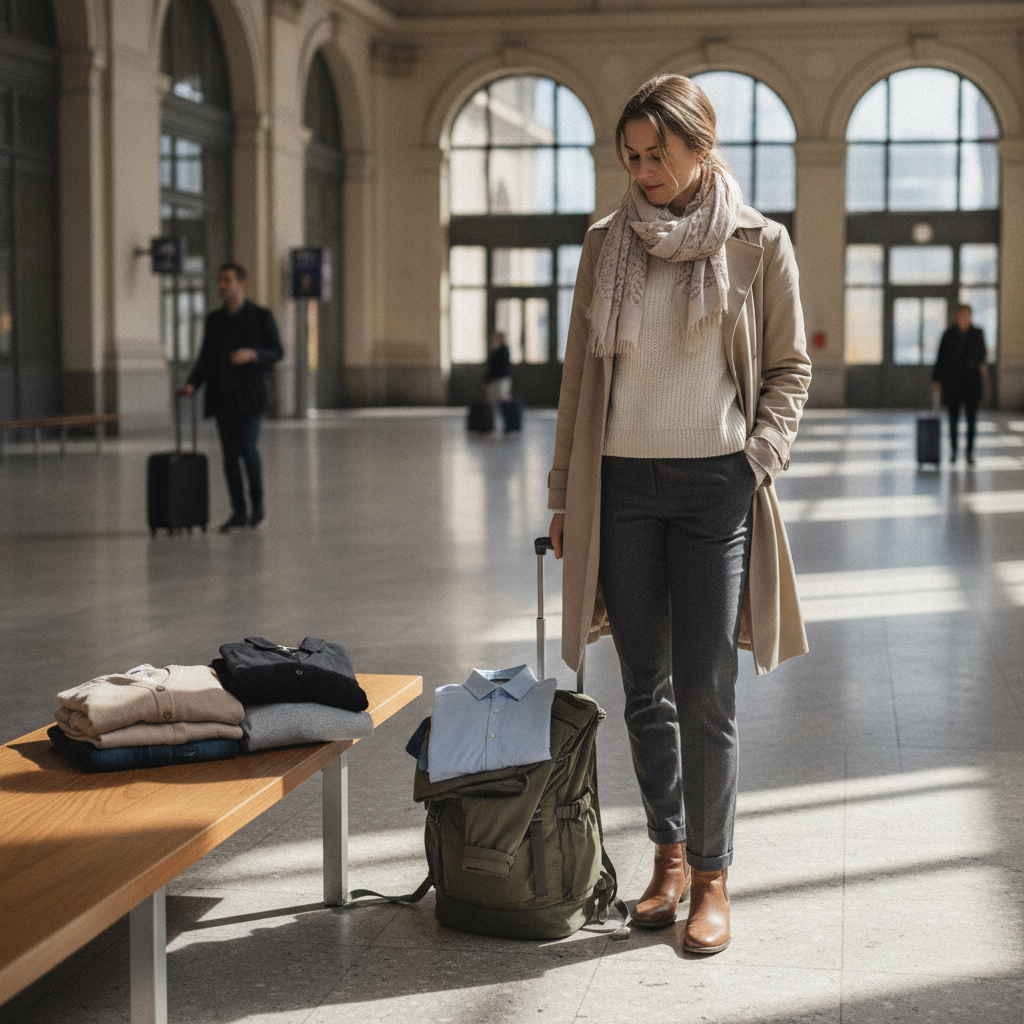
Neutral-palette travel clothing has quietly become one of the smartest spending strategies for frequent travelers, not because it simplifies packing, but because it fundamentally changes how much clothing a person needs to own. The logic runs deeper than carrying fewer bags. When every item in a travel wardrobe can pair with every other item, the math of getting dressed shifts entirely — fewer pieces cover more combinations, and those pieces work across more trips, more climates, and more occasions than brightly patterned alternatives ever could.
The Real Cost of a Fragmented Wardrobe
Most travelers accumulate clothing in pieces rather than systems. A bright statement top purchased for one trip rarely earns a second outing because it doesn't blend with anything else in the bag. Over time, these isolated purchases add up to a wardrobe full of items with limited mileage, which quietly pushes spending higher each season. Neutral palettes — think stone, navy, charcoal, white, and warm taupe — solve this by creating natural cohesion. Every addition automatically works with what's already there, which means fewer replacements, fewer impulse buys, and a much longer useful life per garment.
Versatility as a Multiplier for Value
A single well-constructed merino wool T-shirt in a neutral shade functions as a base layer in colder destinations, a standalone piece in warm weather, and a smart-casual option under a blazer for an evening out. That range of use is what separates truly versatile clothing from gear that merely packs small. Brands like Uniqlo, Everlane, and Wool& have built product lines around exactly this principle, offering pieces in tightly curated color families that encourage mix-and-match flexibility from day one. The cost per wear on these items tends to drop significantly over a travel career because they earn consistent use rather than sitting unused between specific trips.
Why Neutral Colors Perform Better Across Destinations
Color psychology plays a practical role in travel dressing that often gets overlooked. Neutral tones tend to read as appropriate across a wider range of cultural contexts, from conservative religious sites in the Middle East to business-casual restaurants in cities like Copenhagen or Tokyo. Bright patterns can unintentionally signal tourist status or clash with local dress norms in ways that cause friction. Neutral clothing doesn't eliminate cultural preparation, but it reduces the number of wardrobe decisions required on the ground, letting travelers focus on place rather than outfit management. That's a quiet but real quality-of-life benefit.
How Fabric Choice Amplifies the Strategy
Neutral color alone doesn't complete the picture — fabric selection is what makes the strategy durable over time. Natural fibers like merino wool and linen resist odor between washes, which extends wear between laundry days and reduces the total number of items needed. Synthetic blends like those used by Patagonia in their Capilene line offer moisture management in active environments while packing compressively. When these fabrics are paired with neutral colors, the result is clothing that holds its appearance longer, shows staining less obviously in lighter neutrals with appropriate finishes, and ages more gracefully than cheaper fashion-cycle pieces. The investment per item is higher upfront, but the cost over a two- or three-year span typically runs lower.
Reading the Market for the Best Entry Points
For shoppers looking to build a neutral travel wardrobe without absorbing the full retail cost at once, timing matters considerably. Seasonal transitions — particularly late summer and early winter — reliably produce deep markdowns on exactly the kind of foundational basics that anchor this style of travel dressing. End-of-season sales at Uniqlo regularly bring merino and pima cotton basics to prices well below their standard retail. Price history tools like CamelCamelCamel for Amazon listings or Honey's extension for broader retail sites make it straightforward to confirm whether a current sale price represents a genuine low or a manufactured discount. Building the wardrobe incrementally, one quality piece at a time, is far more effective than attempting a full overhaul in a single shopping session.
Putting the Strategy Together Before Your Next Trip
When you're ready to start building or refining a neutral travel wardrobe, begin with an audit of what you already own. Pull out every item you've actually worn on a trip in the past two years and note the colors. Chances are the most-reached-for pieces already lean neutral. From there, identify the gaps — usually a reliable layer, a versatile bottom, and one smart-casual option — and shop those specifically rather than browsing broadly. Set price alerts for the specific items and colors you've identified, and give yourself a season to find them at favorable prices. The restraint pays off in a wardrobe that feels cohesive, travels well, and stops demanding constant refreshing.
The shift toward intentional, neutral-palette travel dressing reflects a broader recalibration in how thoughtful shoppers approach both travel and spending. As sustainable fashion awareness continues to grow and more travelers opt for longer, slower trips over rapid multi-destination itineraries, the demand for genuinely versatile clothing is only increasing. Brands are responding with more considered collections, and the secondhand market for quality neutral basics is strengthening, creating even more entry points for value-conscious travelers. The wardrobe that works everywhere is no longer a niche concept — it's becoming the practical standard.