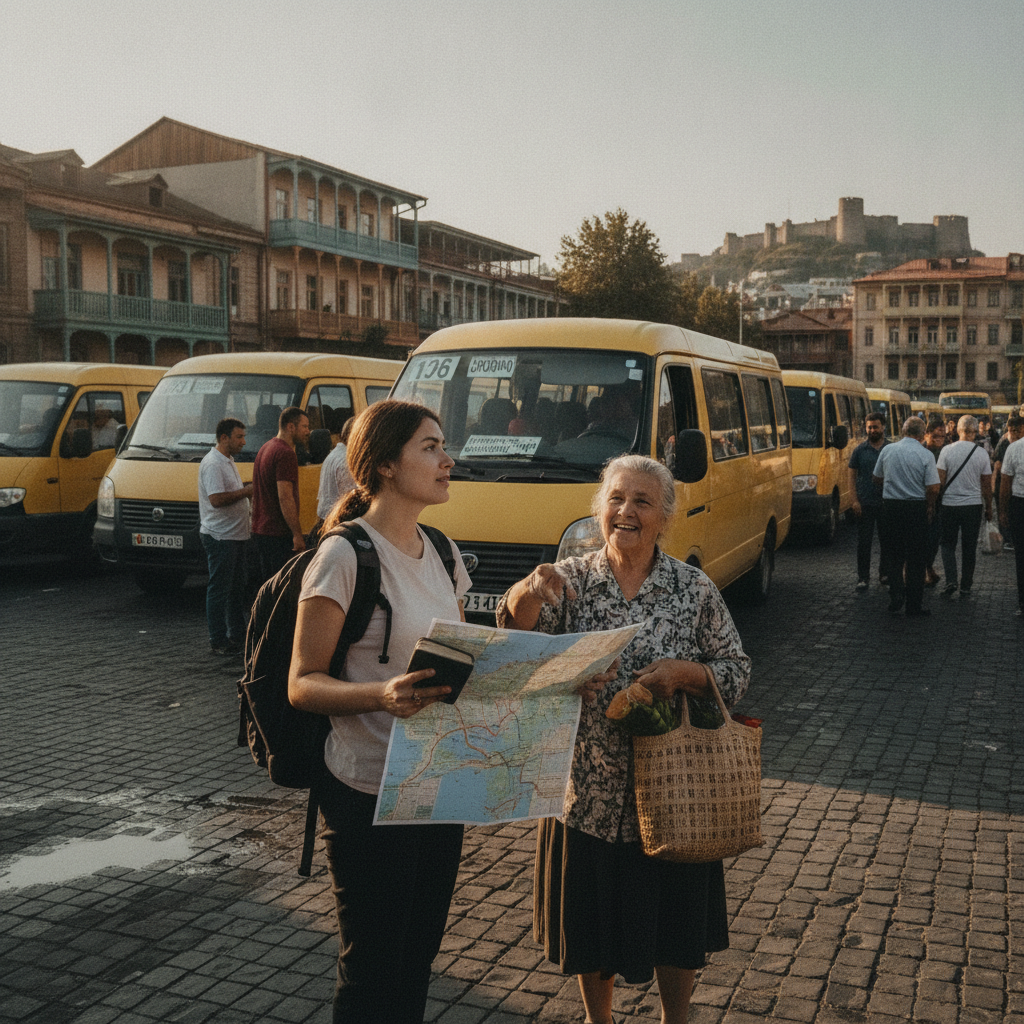
Arriving in a city where the transit system runs on collective memory rather than posted schedules is one of the more disorienting travel experiences you can have. Tbilisi's marshrutka network — a web of privately operated minibuses covering nearly every corner of the city — is fast, cheap, and genuinely useful. But it looks chaotic from the outside, and without a phone signal or roaming data to fall back on, it can feel genuinely intimidating. The good news is that locals use these minibuses every day without apps, and you can too, with a bit of preparation and some street-level awareness.
Get a Printed Route Map Before You Leave Your Accommodation
This is the single most important step you can take before stepping outside. Ask your guesthouse, hotel, or Airbnb host for a basic marshrutka map — many accommodations near Rustaveli Avenue or in the Vera neighborhood keep printed copies specifically for guests. If yours doesn't have one, spend twenty minutes writing down the route numbers for the areas you plan to visit, along with their general directions. A hand-drawn sketch isn't glamorous, but it works. Once you're on the street without data, even rough notes are worth their weight.
Learn the Route Numbering Logic for Key Districts
Tbilisi's marshrutkas are numbered, and while the system doesn't follow a perfectly logical grid, certain routes become second nature quickly. Routes in the low hundreds often serve the city center and Old Town areas, while higher numbers tend to reach outer districts like Gldani or Saburtalo. The 37 and 61, for example, are frequently used by people moving between central points and residential neighborhoods. Spend some time before your trip identifying three or four numbers relevant to your itinerary — you don't need to memorize the whole system, just enough to feel grounded.
Use Rustaveli Metro Station as Your Orientation Anchor
When you're offline and unsure where you are, getting yourself back to Rustaveli Metro Station is almost always a viable reset. It sits on the main boulevard, connects to the metro, and serves as a hub for several marshrutka routes. Think of it the way you'd think of a central train station in any European city — a known point from which you can re-establish your bearings. Even if a particular minibus doesn't originate there, spotting it on a street sign tells you roughly where in the city you've ended up.
Watch Where Locals Board and Signal the Driver to Stop
Marshrutkas don't always stop at marked points. You flag them down from the roadside, and you call out — or tap the driver's seat — when you want to get off. Watch what other passengers do, especially on your first ride. Most locals will wave a hand toward the curb when they want off, and the driver pulls over somewhere nearby. For boarding, stand near a known stopping area and raise your hand as the minibus approaches. It feels awkward the first time and completely normal by the third.
Carry Small Change in Georgian Lari at All Times
Fares on Tbilisi's marshrutkas are low — typically a single lari or slightly above — and drivers strongly prefer exact change or small bills. Trying to pay with a large note, especially during busy periods, creates friction you don't need. Before heading out each day, check that you have a handful of coins and small denomination lari tucked somewhere accessible, not buried in a bag you have to dig through while standing in a moving minibus. This small habit removes one of the more stressful moments new riders encounter.
Ask at Kiosks and Pharmacies When You're Genuinely Lost
Small street kiosks and pharmacy counters are underrated resources for transit questions. The people working them tend to know local routes well and are used to pointing confused-looking visitors in the right direction. A simple, slow-spoken question accompanied by a piece of paper showing your destination — written in Georgian script if possible, which you can prepare in advance — goes a long way. The Carrefour Express locations scattered around the city are also useful landmarks to mention when asking for directions, since most people can reference them instantly.
Download Offline Maps for Tbilisi Before You Leave Home
This one requires internet access ahead of time, but it's worth front-loading the effort. Maps.me allows full offline use and includes pedestrian-level detail for Tbilisi, including street names in both Latin and Georgian script. Once downloaded over Wi-Fi, the app works entirely without data. You won't get live marshrutka tracking, but you'll be able to confirm your general position, identify nearby streets, and check walking distances as a fallback when a minibus drops you somewhere unexpected. It's a simple buffer that makes the whole experience significantly less stressful.
Trust the Direction Cues on the Windshield
Most marshrutkas display their route number and a destination or key stop on a card or sign in the windshield. These are sometimes handwritten, sometimes printed, and occasionally in Georgian script only — but even a partial match to a place name you've noted down is useful information. If you're heading toward Mtatsminda or Vake, for instance, look for those syllables in what's displayed. Cross-reference with your handwritten notes, and when in doubt, confirm with a fellow passenger using a map or pointing gesture. People are generally patient with travelers making a genuine effort.
Getting around Tbilisi without data isn't just manageable — it's actually one of the more rewarding ways to experience the city, because it forces you to pay attention to your surroundings rather than a screen. The marshrutka network moves fast and covers a lot of ground, and once you've ridden a few routes successfully, the logic of it starts to click into place. Start with one or two familiar routes, build your confidence from there, and you'll find that getting across the city becomes something you do without thinking twice.