There is a particular kind of dread that settles in around 6 p.m. on a Sunday — a creeping unease that many people mistake for evidence of deep dissatisfaction with their work, their schedules, or their lives. The Japanese have a word for it, *nichiyōbi no yūutsu*, loosely translated as "Sunday melancholy," and it's recognized across cultures as a near-universal low-grade ache. What's less often recognized is that the dread itself isn't the problem. The problem is what most people do with Sunday evening: they try to outrun it with distraction, or they simply collapse into passivity, telling themselves they've earned the rest. Both responses leave Monday morning feeling like an ambush.
Reframe What Sunday Evening Is Actually For
The prevailing cultural idea is that the weekend exists for rest, and that Sunday evening is the tail end of that rest — a last gasp before obligation resumes. But this framing treats transition as something that happens *to* a person rather than something a person can actively shape. Across many parts of northern Europe, particularly in Scandinavian households, Sunday evening carries a different weight. It's observed not as leisure's final act but as a gentle preparation — a setting of the stage. Candles are lit, meals are made with care, and the rhythm slows deliberately. The point isn't productivity. It's intention. When Sunday evening is treated as a liminal space — a threshold — rather than a leftover, the relationship with Monday morning begins to change.
That shift begins with a small but meaningful reorientation: recognizing that the work week isn't something that begins on Monday at 9 a.m., but something that is already being shaped by what happens Sunday at 7 p.m. The inbox doesn't need to be opened. Plans don't need to be made in granular detail. What matters is that the mind is allowed to orient itself — to move, slowly and on its own terms, from one mode of being to another. Psychologists who study circadian and behavioral rhythms note that the brain responds well to transitional cues: consistent signals that mark the end of one context and the beginning of another. Sunday evening, approached with this in mind, becomes one of the most powerful such signals available.
Build the Ritual Around Sensation, Not Productivity
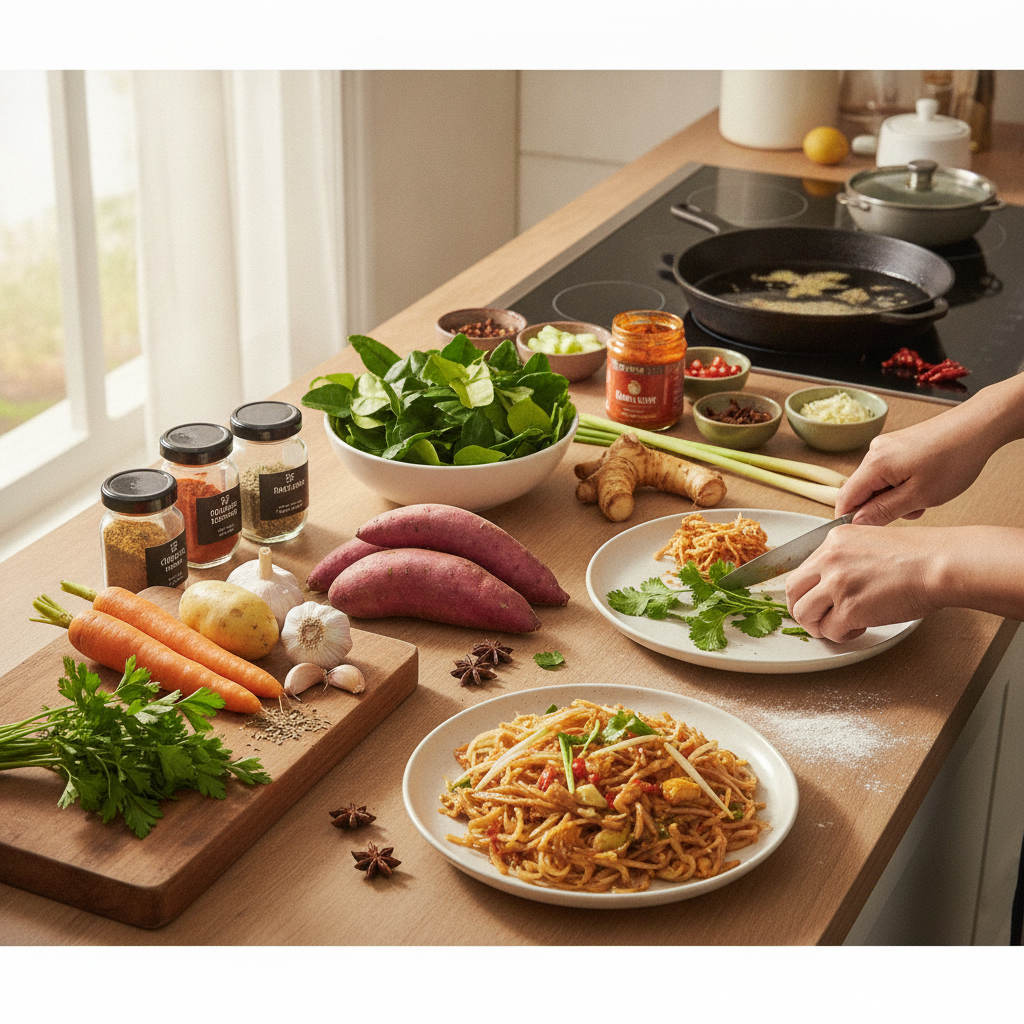
The temptation when building any kind of evening ritual is to fill it with tasks — a Sunday reset, as it's often called on platforms like Pinterest or in Notion productivity templates. Lay out clothes. Prep lunches. Review the calendar. These things have value, but when they become the entire focus, Sunday evening hardens into a low-stakes workday, and the body and mind register it accordingly. The ritual that actually changes Monday mornings tends to be organized around sensation rather than output: the smell of something cooking slowly, the weight of a good book, the deliberate act of changing out of day clothes into something softer.
In many Mediterranean households, Sunday dinner is still a long, unhurried meal — not because the food requires it, but because the act of sitting with others without urgency is considered its own kind of preparation. Neighborhoods like Trastevere in Rome or the Gràcia district of Barcelona maintain this rhythm almost as a communal agreement. The transition from weekend to week is marked by gathering and food and ease, not by open laptops or Monday-morning dread-preemption. Even for those who live alone or who don't have the luxury of long Sunday dinners, the principle holds: Sunday evening rituals that center on the senses rather than the to-do list tend to produce calmer, more grounded Monday mornings.
Why Deliberate Closure Matters More Than Rest
Rest and closure are related but distinct. Rest is the absence of effort; closure is the active, conscious drawing of a line. When Sunday evening passes without closure — when it simply dissolves into sleep — the unresolved energy of the weekend tends to bleed forward. The mind wakes on Monday already mid-thought, already mid-feeling, with no clear sense of having transitioned. This is partly why Monday mornings so often feel chaotic even when nothing particularly difficult lies ahead. The transition wasn't made. It was skipped.
Apps like Headspace and Calm have built guided "week preparation" sessions precisely because the demand for that kind of structured closure is real and widely felt. But the tool matters less than the habit. What the brain needs isn't a specific app or a particular candle or a brand of herbal tea — though Pukka and Yogi Tea have built entire markets around the Sunday-evening wind-down mood. What it needs is consistency: the same sequence of small acts, performed with enough regularity that they begin to carry meaning. Over time, those acts become anchors, and anchors make transitions feel less like falls.
What Changes When You Begin This Way
For those who have shifted their approach to Sunday evening — treating it as a ritual transition rather than a passive rest — the change in Monday morning isn't dramatic. It's subtle, and that subtlety is the point. Monday begins not with the jolt of reentry but with something closer to continuation. The week doesn't feel like something being imposed from outside; it feels like something already in motion. Energy is steadier. Focus arrives earlier. The sense of dread that once gathered in the late Sunday afternoon begins, gradually, to lose its grip.
This is where the practical and the reflective converge. You don't need to overhaul your weekends or impose a rigid new structure on the hours you guard most carefully. What changes things is simply deciding that Sunday evening deserves to be met with the same intentionality you might bring to a meal you care about, or a conversation that matters. Set the stage for Monday on your own terms — slowly, sensibly, through habit rather than hustle — and the week that follows will feel less like something you're bracing for and more like something you've already, quietly, begun. That shift is small. But like most small shifts made consistently, it compounds into something that eventually feels essential.