Kitchen drawers have a way of filling up faster than budgets can keep pace with. You buy a quesadilla maker here, an avocado slicer there, a dedicated egg cooker because it seemed like a reasonable idea at the time — and before long, you've spent a small fortune on tools that each do exactly one thing. The cumulative cost of that approach tends to surprise people once they actually tally it up.
The smarter path isn't necessarily buying less. It's buying differently. Investing in one well-made, multi-functional piece often outperforms a drawer full of specialists — on cost, on storage, and on long-term usefulness. Here's how to start thinking about your kitchen purchases the way experienced home cooks and deal-savvy shoppers do.
Add Up What You've Already Spent on Specialists
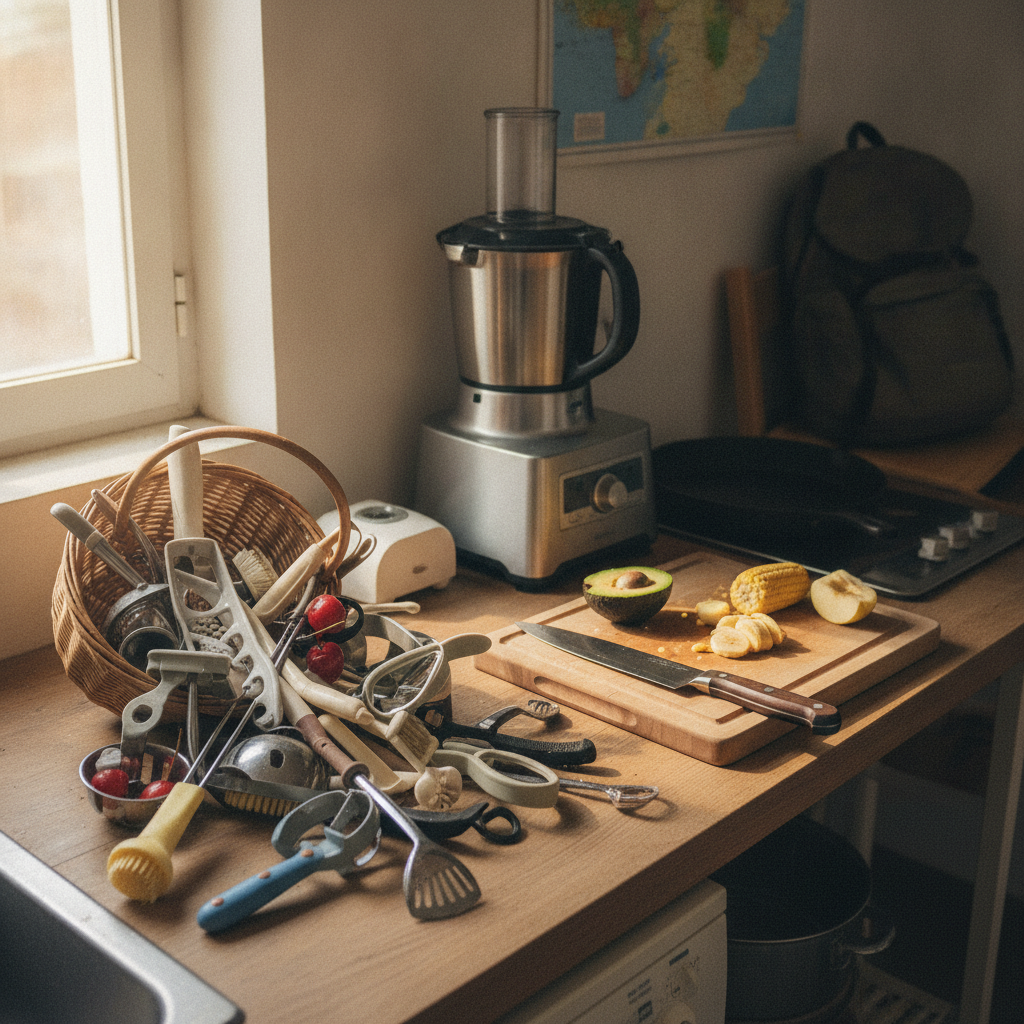
Before you buy anything new, spend five minutes doing a quick audit of your existing kitchen tools. Pull open that junk drawer or cabinet and identify every item that performs only one task. A strawberry huller, a mango splitter, a dedicated pancake pen — each one had a price tag, and collectively they represent real money spent. Seeing that total laid out honestly changes how you approach the next purchase. Most people find they've spent far more than expected on tools they reach for maybe twice a year.
Understand Why Multi-Use Tools Win on Value
A quality cast iron skillet from Lodge can sear, bake, fry, roast, and even serve as a presentation piece at the table. A single-purpose electric egg poacher does one thing and then sits unused for weeks. The value gap between those two purchases isn't just about price — it's about how often you actually use what you own. A tool that earns its counter space five nights a week delivers compounding value. One that sits dormant in a cabinet is a sunk cost with no return.
When you factor in the cost-per-use over months and years, versatile pieces win decisively. A high-quality blender like a Vitamix handles smoothies, soups, sauces, nut butters, and dough. Compare that to three or four separate appliances covering similar ground at a combined higher price, and the math becomes obvious. You're paying a premium for redundancy when you go the specialist route.
Look at Storage Costs as a Real Expense
Storage space in a kitchen isn't free, even if it feels like it is. Every shelf, drawer, and cabinet inch has opportunity cost — space that a useful tool could occupy is instead taken up by something that's rarely touched. In smaller kitchens, this gets even more pressing. A single Instant Pot can replace a slow cooker, a rice cooker, a pressure cooker, and a steamer, all while taking up one appliance's worth of real estate. That consolidation has genuine practical value that doesn't always show up on a price tag comparison.
Compare Before You Commit to the Specialist
When a single-purpose tool catches your eye — especially at a sale price — pause and cross-reference it against a versatile alternative before adding it to your cart. Tools like the Breville Smart Oven Air Fryer Pro can replace a standard oven, air fryer, dehydrator, and broiler in one unit. A food processor with multiple blade attachments outperforms a dedicated slicer, a chopper, and a shredder combined. Getting in the habit of asking "what else can this do?" before purchasing is one of the simplest ways to protect your budget over time.
Watch for Sales on Quality Versatile Pieces
High-quality multi-use tools do tend to carry higher upfront prices, but they go on sale regularly — and those sales are worth waiting for. Le Creuset Dutch ovens, KitchenAid stand mixers, and full-featured Instant Pot models all cycle through meaningful discounts on major sale events. Setting up price drop alerts through tools like Google Shopping or browser extensions such as Honey lets you track the item without constantly checking. Buying a versatile piece at a well-timed discount is one of the best kitchen deals you can find.
Factor in Replacement Frequency
Single-purpose tools, particularly cheaper ones, tend to break down faster because they're often built to a lower standard. A plastic avocado slicer cracks, a flimsy mandoline warps, a budget electric can opener burns out — and then you replace it, spending again. A well-made chef's knife from Wüsthof or a sturdy carbon steel wok, cared for properly, lasts for years or even decades. Replacement frequency is a hidden cost that rarely factors into the initial purchase decision, but it should.
Let Your Actual Cooking Habits Guide the Choice
The most versatile tool in the world isn't worth much if it doesn't match how you actually cook. Before investing in a multi-use piece, think honestly about your weekly cooking patterns. Do you cook grains often? A quality saucepan handles that better than a dedicated rice cooker for most home cooks. Do you meal prep vegetables regularly? A food processor earns its space. Matching the tool to your real habits — rather than your aspirational ones — is what turns a smart purchase into a genuinely good investment.
Kitchen spending has a way of accumulating quietly over time, one seemingly reasonable purchase at a time. Shifting your buying lens toward versatility over specialization tends to reduce that drift significantly. The goal isn't a minimalist kitchen for its own sake — it's a kitchen where every tool pulls real weight, and your money is working as efficiently as the equipment itself. Start with one honest audit, and the next right purchase usually becomes much clearer from there.