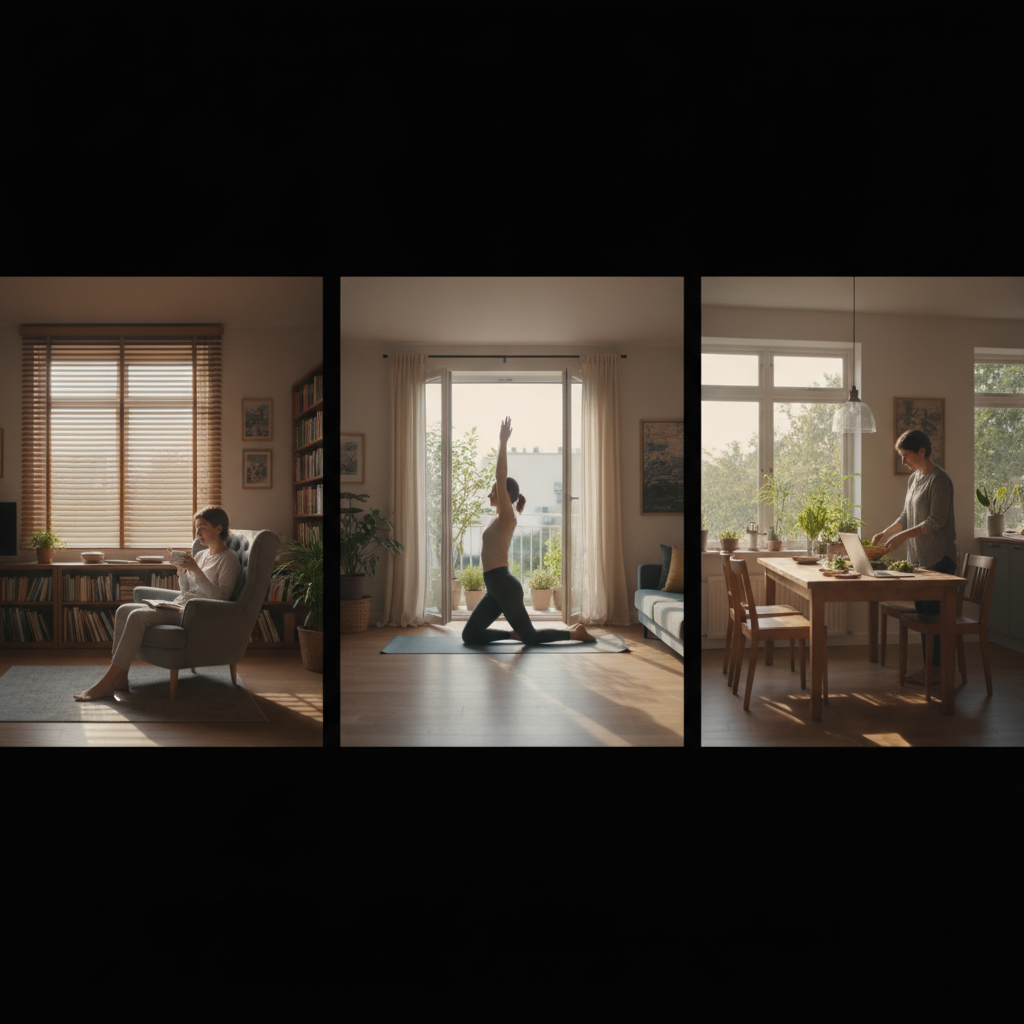
Most people settle into a morning geography without realizing it — same chair, same kitchen counter, same corner of the couch — and over time, entire rooms start to feel like they belong to specific times of day or specific moods. The bedroom becomes purely for sleeping, the kitchen purely functional, the living room a wind-down space for evenings. That kind of sorting isn't bad, but it can quietly shrink how much of your home you actually inhabit with any intention.
Rotating where you spend your first waking hour is a low-friction way to break that pattern. It doesn't require redecorating or buying anything from West Elm. It just asks you to pay attention to where you land each morning and occasionally choose differently. Over weeks and months, that small shift tends to ripple outward in ways that feel surprisingly significant.
Notice Where You Default Without Thinking
The first step is observational. For one week, pay attention to which room you move to within the first fifteen minutes of waking up, and what draws you there. Is it the coffee maker? The bathroom light? The phone charger on the kitchen counter? Most people have a gravitational pull they've never examined. Naming that pull is useful because it reveals which spaces feel safe and familiar — and implicitly, which spaces feel like they're off-limits before noon. Apps like Daylio can help you track mood alongside location if you want a clearer picture over time.
Try the Room You Never Think to Use First
Once you've identified your default, pick the room you almost never start your day in. For many people that's a spare room, a dining room that mostly holds mail, or even the backyard if weather allows. Spend your first hour there one morning a week — with your coffee, a book, or just silence. The discomfort is useful. Rooms you haven't inhabited intentionally in a while often feel strange or underused, and that strangeness is worth sitting with. It tends to prompt small, practical thoughts about what the space could actually be.
Let the Room Suggest What You Do There
Different rooms carry different ambient cues, and those cues shape behavior more than most people expect. A desk in a study signals focus. A soft chair near a window signals reading. The kitchen table, cleared of clutter, can signal a slower kind of breakfast than eating standing at the counter ever does. When you rotate your morning room, try following the room's lead rather than importing your usual routine wholesale. If you're in a quiet corner of the house, maybe that's a morning for journaling. If you're at the dining table, maybe that's where you sketch out the week.
Watch How the Room Feels Later That Day
One of the quieter effects of this habit is that rooms you've occupied intentionally in the morning tend to feel more accessible later. A study you sat in quietly at 7 a.m. feels easier to return to at 8 p.m. for reading or planning. The habit works partly through familiarity — your nervous system stops treating certain spaces as foreign — and partly through association. You begin linking those rooms with calm, deliberate starts rather than nothing at all. Brands like IKEA have long understood that how you use a room is shaped by what feelings you associate with it, not just what furniture it holds.
Adjust What's in Each Room Accordingly
As you rotate, you'll start noticing small friction points — a room you'd love to spend a morning in, but there's nowhere comfortable to sit, or no good light, or the charger is always in the wrong place. Treat these as useful data. Rather than accepting the friction, make one small adjustment per room. Move a lamp. Add a small tray with whatever you need for a slow morning. These tweaks, made gradually and in response to actual use, tend to be more effective than wholesale room redesigns because they're grounded in how you actually behave rather than how you imagine you might.
Give Each Room a Weekly Morning Slot
If the rotation feels random and hard to sustain, try assigning rooms to days. Monday in the kitchen, Tuesday in the study, Wednesday in the living room — whatever fits your layout. A loose schedule removes the daily decision without locking you into anything rigid. Over a month or two, the habit becomes automatic enough that you stop needing the schedule at all. You'll find yourself choosing rooms based on what kind of morning you want rather than what's closest to the coffee maker.
Let the Pattern Evolve on Its Own
The goal isn't to optimize every square foot of your home like a productivity consultant from a YouTube channel. The goal is to gradually expand your sense of which spaces feel like yours at different points in the day. Homes tend to reflect the habits of whoever lives in them, and habits, by definition, are slow to change. But they do change. Most people who try this rotation for a full season report that they use more of their home, feel less stuck in their routines, and find that rooms they barely noticed before become genuinely useful parts of their daily rhythm — not because anything dramatic shifted, but because they showed up in those spaces one quiet morning at a time.
Small, consistent experiments with how you inhabit a space tend to compound over time in ways that feel disproportionate to the effort involved. Start with one morning a week in a room you rarely use first, and let the rest follow from there.