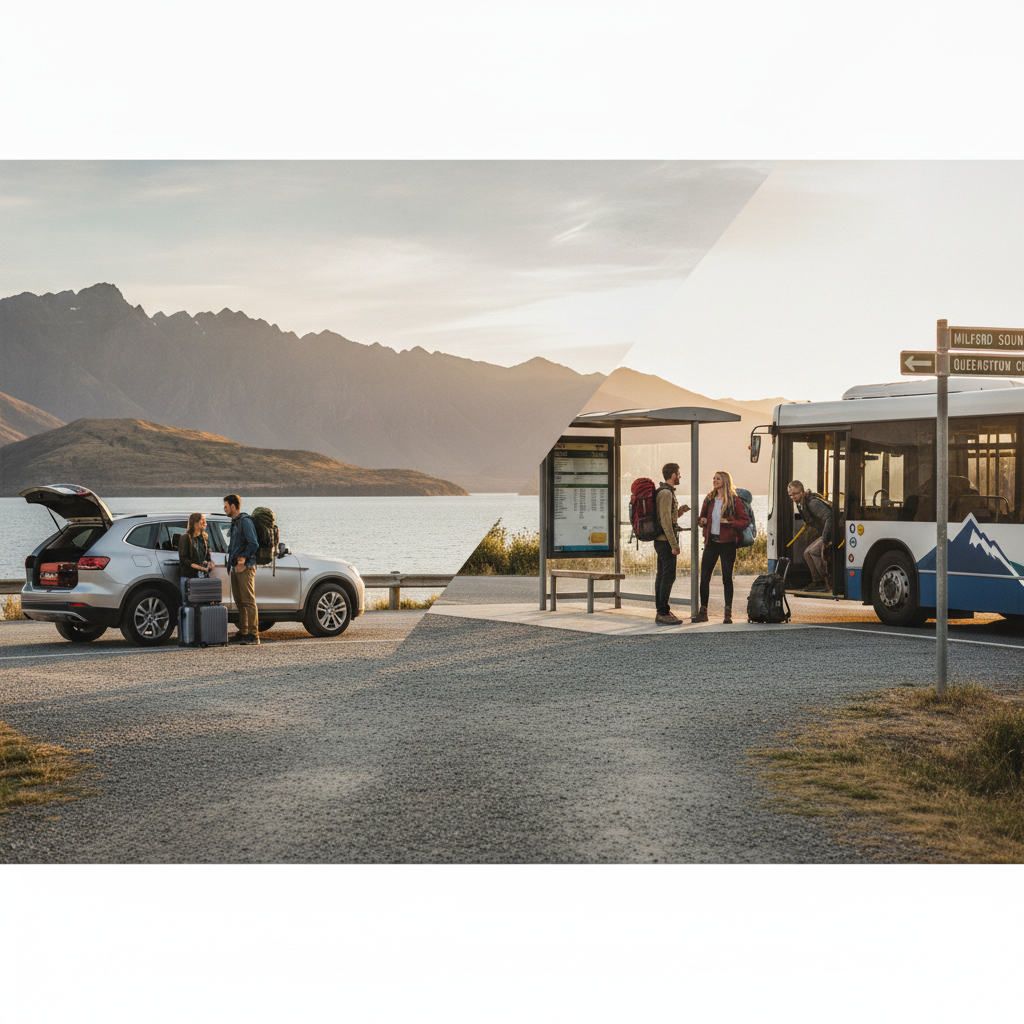
New Zealand is one of the few destinations where the journey between places matters just as much as the destinations themselves. The country's mix of dramatic coastlines, mountain passes, and rural townships raises a practical question for most visitors: is renting a car actually necessary, or can public transit and regional buses get the job done? The answer depends on itinerary style, budget priorities, and how much flexibility a traveler genuinely wants.
How Does New Zealand's Public Transit System Actually Work?
New Zealand's intercity transit network is serviceable but limited by design. The country's population is small and spread across a large land area, which means train lines are sparse and bus schedules don't always align with traveler timing. InterCity, the country's main long-distance coach operator, connects major hubs like Auckland, Wellington, Christchurch, and Queenstown reasonably well. Regional routes exist, but frequency drops significantly outside of urban centers. Travelers who plan to stick to a standard loop — say, Auckland to Queenstown via Christchurch — can manage with transit alone, though they'll spend more time waiting than driving.
What Are the Real Advantages of Renting a Car?
The strongest case for a rental car is access. New Zealand's most compelling scenery often sits well off the main highway corridors, reachable only by vehicle. Abel Tasman National Park's road entrances, the Otago Peninsula near Dunedin, the Catlins stretch along the south coast — none of these are practical via public transit. A rental also allows travelers to leave on their own schedule, stop for unplanned viewpoints, and adjust pace daily without committing to a fixed ticket. For groups of two or more, the per-person cost of a rental often compares favorably with multiple bus or shuttle fares.
When Does Transit Make More Sense Than Driving?
Transit becomes the smarter choice under specific conditions. Solo travelers on a tighter budget who are comfortable with less flexibility can stretch their money further by using InterCity passes or booking individual coach legs in advance. Travelers who don't hold an international license, feel uncertain about driving on the left, or have no interest in rural destinations can get meaningful value from staying on the transit network. Urban stretches — particularly in Auckland and Wellington — are genuinely easier without a car, where parking is expensive and city buses or the Wellington metro handle short-range movement well.
How Does Cost Break Down Between the Two Options?
Cost comparisons between renting and transit aren't straightforward because they depend on how many people are traveling and what the itinerary looks like. A small rental car for two weeks, including basic insurance, fuel, and campsite or accommodation fees, typically runs higher than a transit-only budget but opens up far more accommodation variety, including freedom camping and holiday parks that aren't walkable from bus stops. Transit costs scale more predictably per person but add up quickly across a two-week schedule, especially when shuttle services are needed to fill gaps the main coaches don't cover. Campervans from companies like Jucy or Wicked Campers represent a middle path — higher upfront cost but reduced nightly accommodation spending.
What Should Travelers Know About Driving Conditions?
New Zealand's roads demand respect, particularly on the South Island. State Highway 6 through the West Coast, the Crown Range Road near Queenstown, and sections of the Milford Sound road involve steep gradients, narrow lanes, and sudden weather shifts. These aren't roads that punish careful drivers, but they do require attention and reasonable driving experience. Rental companies are explicit about which roads are excluded from standard insurance coverage — gravel tracks being the most common restriction. Travelers should read these terms carefully before choosing between a standard rental and a 4WD option, especially if the itinerary includes areas like the Lindis Pass or Skippers Canyon.
How Should You Actually Decide Before You Book?
Start by mapping your itinerary honestly before committing to either option. If your two-week plan includes Milford Sound, Mount Cook, and the Coromandel Peninsula, transit alone will create significant logistical friction. If your trip centers on Queenstown, Wellington, and a few days in Christchurch, transit is a workable framework. You should also consider your travel party size — three or four people sharing a rental changes the math considerably. Use the InterCity website to check route availability for your specific stops, then price a comparable rental through Apex Rentals or another local operator. The gap between the two totals, combined with a clear read of what you'd gain or lose in flexibility, usually makes the decision straightforward.
Choosing between a rental car and public transit in New Zealand ultimately comes down to the gap between where you want to go and where the buses actually stop. For travelers chasing off-highway landscapes and the freedom to move at their own pace, a rental car earns its cost. For those content with a tighter circuit between major towns, transit offers a simpler, lower-commitment way to spend two weeks. Neither choice is wrong — they just reflect different versions of the same trip.