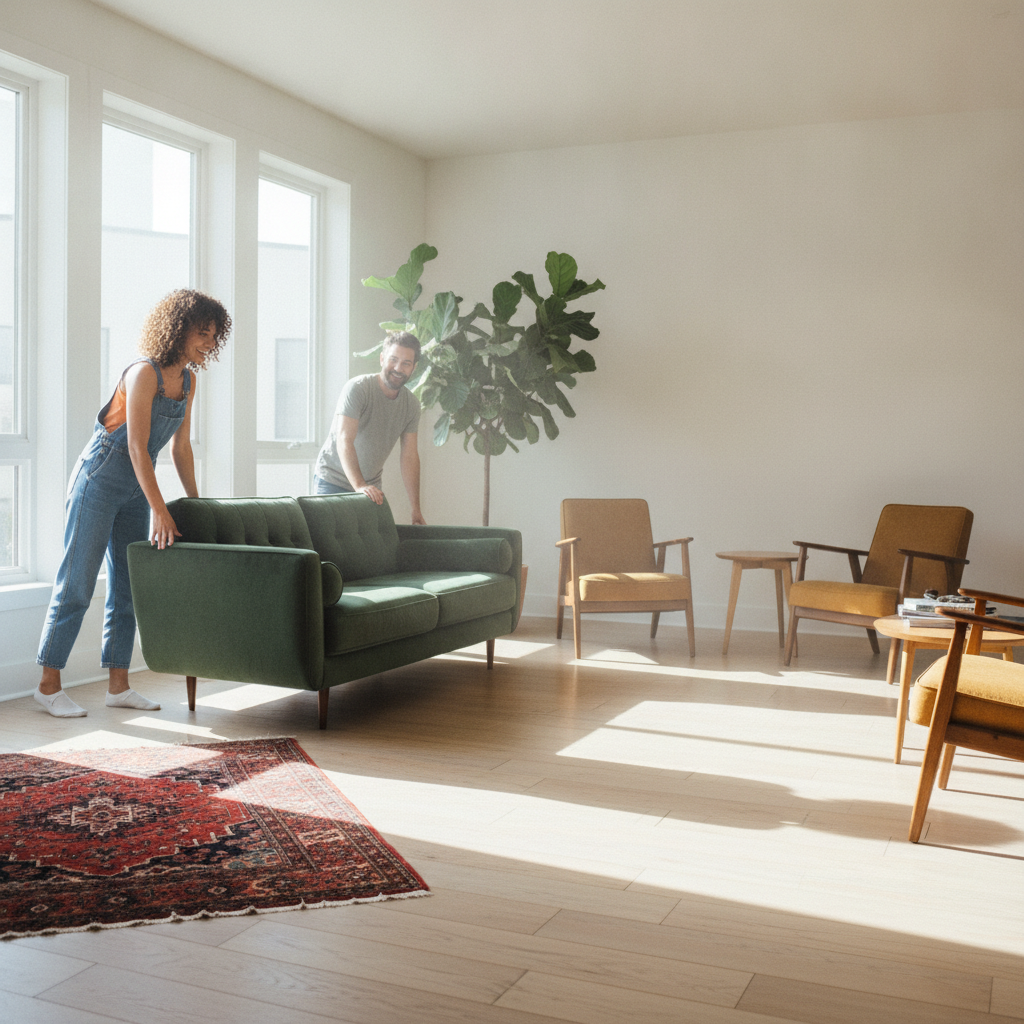
There's a particular restlessness that settles in around the change of seasons — a vague sense that something in the home feels stale, even when nothing is technically wrong. The sofa is comfortable, the rug still looks fine, and the lighting hasn't changed. Yet somehow the room feels tired, as though it's stopped working for you. Most people respond by shopping: a new throw pillow, a statement lamp, a fresh coat of paint. But the shift they're actually craving rarely comes from new objects. It comes from new perspective — and that's exactly what a single afternoon of furniture rearrangement can provide.
The Psychological Weight of Spatial Routine
Humans are remarkably sensitive to their physical environments, even when they aren't consciously aware of it. The brain processes familiar spaces on a kind of autopilot, which is efficient but deadening over time. When a room's layout stays the same for months or years, the space stops registering as something to engage with and becomes instead just backdrop. Moving the sofa to a different wall, rotating the coffee table, or shifting a bookcase to anchor a new corner forces the brain to re-engage with a space it had tuned out entirely. That renewed attention carries a quiet but measurable lift in mood, the same principle that makes returning from a trip feel like seeing your home for the first time.
Why Redecorating Often Misses the Point
The Novelty Trap
New purchases offer an immediate emotional reward, but that reward fades quickly. The brain adapts to new objects within days or weeks, folding them into the same autopilot processing that made the room feel stale in the first place. Redecorating also tends to be cumulative — each purchase layers onto the existing layout without changing the underlying spatial logic of the room. You end up with more stuff arranged in the same old way, which solves nothing and adds clutter.
What Actually Changes with Rearrangement
When furniture moves, the entire experience of moving through a room changes with it. The path from the door to the kitchen shifts. The view from the couch changes. The natural light hits differently. These are functional, embodied changes that the brain can't ignore or habituate to as quickly as it does a new decorative object. Apps like Planner 5D and RoomSketcher let you experiment with layouts digitally before committing to moving anything heavy, which makes the process feel less daunting and more like a design exercise worth taking seriously.
Timing It with the Seasons for Maximum Effect
The most effective approach ties the rearrangement to a seasonal transition, particularly the shift from winter to spring or summer to autumn. These are moments when light quality changes noticeably, when natural rhythms are already nudging a sense of renewal. Rearranging the living room in late winter, for instance, can help shake off the contracted, inward feeling that long dark months tend to produce. Moving seating toward windows to capture the longer daylight hours of spring isn't just aesthetically pleasing — it's a practical response to the changing environment. The room begins to feel tuned to the season rather than indifferent to it.
Planning the Rearrangement Without Overthinking It
Starting with Function, Not Aesthetics
The most successful rearrangements begin with a single functional question: what do you actually do in this room, and is the layout supporting that? If the primary activity is conversation, the seating should face inward. If it's reading or working, proximity to light sources matters most. Magicplan is a useful tool for mapping out a room's dimensions and testing configurations, especially in smaller spaces where it's easy to misjudge scale. Beginning with function means the final arrangement tends to feel intuitive rather than merely different for the sake of it.
The Rule of One Anchor Point
A common mistake is moving everything at once without a clear organizing principle. Choosing one anchor point — the television, a fireplace, a large window — and building the layout around it keeps the process grounded. Everything else can shift, but that anchor gives the room a sense of intention. Even a room with modest, mismatched furniture will feel cohesive when the arrangement reflects a clear center of gravity, and that cohesion is itself a source of calm that new decorative purchases rarely achieve.
Making It a Ritual Rather Than a Reaction
The difference between a rearrangement that feels meaningful and one that feels like a chore often comes down to whether it's planned or reactive. Scheduling it — even loosely — as a once-a-year practice transforms it from a response to frustration into a deliberate act of care for the space you live in. Some people tie it to a specific date, a birthday, the first weekend of spring, the post-holiday reset in January. Others use seasonal cleaning as the natural trigger, which pairs well since furniture rearrangement and a thorough clean are far easier to do together than separately. Either way, the act of choosing it in advance gives it a ritualistic quality that amplifies the mood benefit considerably.
The Cost-Free Reset That Compound Over Time
There's something quietly satisfying about the realization that one of the most effective home improvements available costs nothing. No delivery fees, no design consultations, no items to return when they don't look right in person. What a thoughtful rearrangement offers is a recalibrated relationship with a familiar space — and that shift in relationship tends to last longer than any purchase because it changes behavior rather than just appearance. You sit differently, move differently, notice the room differently. Over the course of a year, those small behavioral changes accumulate into a genuine sense that your home is working with you rather than just around you.
The restlessness that kicked off that original impulse to redecorate rarely needed a solution from a store. It needed the room to feel new again — and the most direct path to that feeling has always been a Sunday afternoon, a tape measure, and the willingness to see the same four walls from a different angle.