Most travelers who avoid Vietnam during the rainy season are making a decision based on half the picture. The rain is real, the humidity is real, and the occasional flooding in low-lying areas is real — but so are the emptier temples, the dramatically green countryside, and the accommodation rates that make extended stays genuinely affordable. The rainy season in Vietnam isn't a uniform weather event you endure; it's a shifting, regionally variable experience that rewards travelers willing to plan thoughtfully rather than simply avoid it.
Understanding Vietnam's Regional Rain Patterns
Vietnam's elongated shape means that the rainy season isn't synchronized across the country — a detail that changes everything about how you plan a trip. The south, including Ho Chi Minh City and the Mekong Delta, sees its heaviest rainfall from roughly May through October, with afternoons delivering intense downpours that typically clear within an hour or two. The central coast around Hội An and Đà Nẵng follows a nearly opposite pattern, with its wettest months falling between October and January. Northern Vietnam, including Hanoi and the hill regions around Sapa, sits somewhere in between, with a softer monsoon season that peaks in summer and tapers through September.
Working the Regional Differences to Your Advantage
This regional offset is genuinely useful for building a flexible itinerary. If you're traveling in November, for instance, the south has largely dried out while the central coast is damp — meaning a trip that starts in Ho Chi Minh City, works north through the highlands, and pauses in Hanoi before turning back south can essentially chase the dry weather across the country. Apps like Weather Underground and Windy are particularly helpful here, offering detailed regional forecasts that go beyond broad seasonal averages and let you make smarter day-by-day decisions while on the ground. Planning tools on platforms like Google Flights also allow you to compare open-jaw routes — flying into one city and out of another — which suits this kind of directional itinerary far better than a round-trip structure.
What Rainy Season Travel Actually Looks Like Day to Day
The common fear is that rain will ruin every outdoor plan, but the reality is more nuanced and, for many travelers, more manageable than expected. In southern Vietnam during peak monsoon months, rain typically arrives in the afternoon and departs with equal efficiency, leaving mornings reliably clear and evenings pleasantly cool. This rhythm actually suits sightseeing well: early starts to temples, markets, and cycling routes, followed by a lunch break that extends through the worst of the afternoon downpour, then an evening that often feels fresher and more comfortable than the muggy pre-storm heat. Locals have organized their daily lives around this pattern for generations, and travelers who do the same find it far less disruptive than the forecast would suggest.
Gear, Expectations, and the Right Attitude
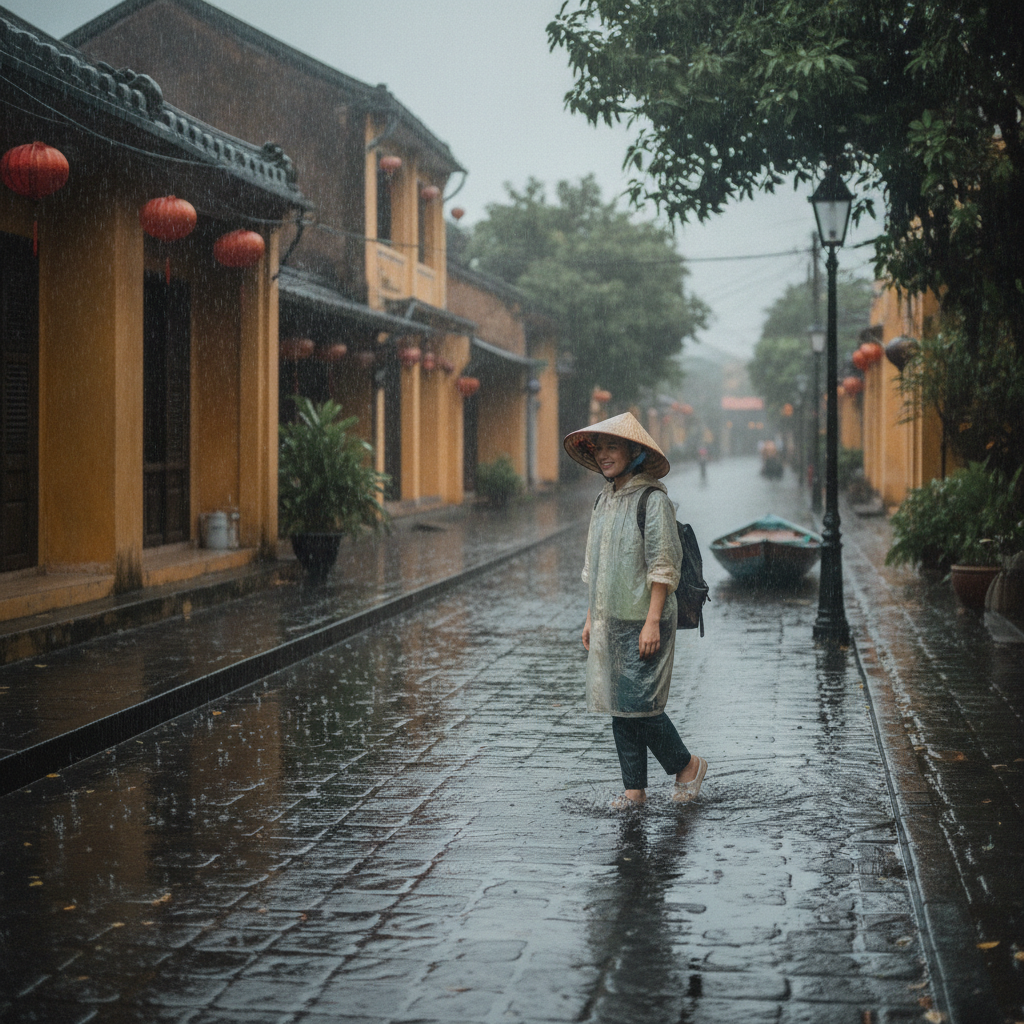
Practical preparation makes a significant difference. A compact, high-quality rain jacket — not a cheap poncho that traps heat — handles most situations without requiring you to rethink your entire packing strategy. Waterproof sandals or quick-dry shoes are worth prioritizing over anything that takes days to dry in humid conditions. The packing app PackPoint, which builds lists based on your destination's weather conditions and trip length, can be useful for flagging rain-specific gear you might otherwise overlook. Beyond gear, the most valuable preparation is simply adjusting expectations: not every day will be perfectly sunny, and some itinerary flexibility — being willing to swap an outdoor activity for a cooking class or a slower morning at a café — turns a rain delay into a genuine pleasure rather than a setback.
The Practical Upside of Traveling Off-Peak
The financial and logistical advantages of rainy season travel in Vietnam are considerable and consistent. Accommodation prices across popular destinations drop noticeably, and properties that fill weeks in advance during peak season often have immediate availability. Hội An's famous lantern-lit streets, which can feel overwhelmingly crowded from December through February, take on a different quality during the quieter months — the atmosphere is still striking, but there's room to walk slowly, linger at a tailor or ceramic shop, and have a conversation with the person running it. Popular boat tours through Hạ Long Bay, which operate year-round, run with smaller groups during the wet season, and while some days bring mist rather than clear skies, the bay's dramatic limestone karsts have a particular atmosphere in low cloud that photographs and experienced travelers consistently find more interesting than the postcard-blue version.
Booking Strategy for a Flexible Rainy Season Trip
Given that rain can shift plans, a looser booking structure suits this kind of travel better than a tightly pre-booked itinerary. Booking.com and Airbnb both offer strong selections of Vietnamese accommodation with free cancellation, which gives you the freedom to adjust as weather patterns develop. Avoiding non-refundable rates, even when they're cheaper, is usually worth it during a season when a single regional weather event might make you want to spend an extra day somewhere unexpected or skip a stop entirely. Budget an extra buffer of time at the end of your trip — even two or three days — so that a weather-related delay in transit doesn't turn into a missed flight.
The travelers who return from Vietnam's rainy season with the most satisfying accounts are rarely the ones who lucked into perfect weather. They're the ones who understood what kind of trip they were signing up for: a slightly unpredictable, notably affordable, surprisingly beautiful journey through a country that doesn't stop living or offering its best just because the sky opens up in the afternoon. That kind of travel asks more of you than a pre-packaged dry-season itinerary, but it tends to give back considerably more in return. If the idea of a less-crowded, more textured version of Vietnam appeals, the rainy season isn't a compromise — it's a legitimate choice worth planning toward.