Overnight buses in Central America are genuinely one of the best ways to cover long distances cheaply while saving a night of accommodation costs — but stepping onto one without a word of Spanish can feel like jumping into the deep end. The routes are real, the buses are often surprisingly comfortable, and thousands of travelers make these journeys every year with zero Spanish beyond *gracias*. The gap between feeling lost and feeling confident usually comes down to preparation rather than fluency.
Book Through a Recognizable Operator First
Not all bus companies are created equal, and starting with a well-known operator dramatically lowers the uncertainty. Companies like Ticabus and King Quality run established overnight routes through Guatemala, Honduras, El Salvador, and Nicaragua with English-friendly booking systems and clearer departure procedures than local chicken buses. You can often reserve seats through their websites or through third-party platforms like Busbud. Having a printed or downloaded confirmation in hand removes a lot of the guesswork at the terminal, even if you can't explain anything verbally.
Screenshot Everything Before You Leave Wi-Fi
Connectivity in Central American bus terminals ranges from slow to nonexistent, so your phone's data plan becomes your lifeline at exactly the wrong moment. Before you leave your hostel or hotel, screenshot your ticket confirmation, the terminal address, the bus departure time, and a basic map showing where the terminal sits in relation to your current location. Paste the terminal name and neighborhood into Google Maps and save it offline. Apps like Maps.me work well for offline navigation and cover Guatemala City, San José, and Managua in solid detail.
Learn the Handful of Words That Actually Matter
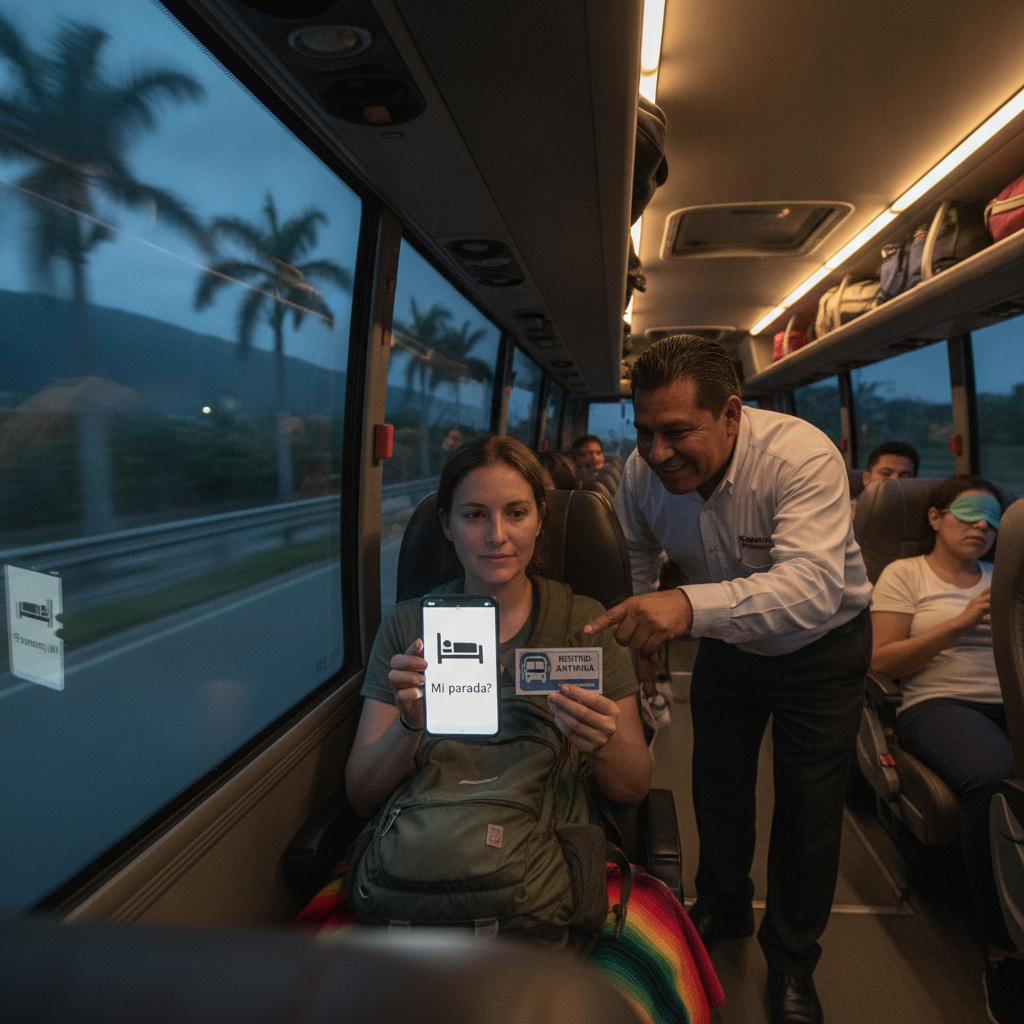
Fluency isn't the goal. What you need are maybe a dozen words and phrases that cover the high-stakes moments of a bus journey. *¿Dónde está la terminal?* (Where is the terminal?) and *¿Este asiento está ocupado?* (Is this seat taken?) will carry you further than you'd expect. Write them down on your phone's notes app so you can show the screen rather than fumble with pronunciation. Locals are generally patient with travelers who make a clear effort, and pointing at a written phrase often works better than speaking anyway.
Arrive at the Terminal Early and Watch How Others Do It
Bus terminals in cities like Antigua, San Salvador, and León can feel chaotic if you walk in five minutes before departure. Arriving 45 to 60 minutes early gives you time to locate the right counter, confirm your seat assignment, and figure out where luggage gets stored without the pressure of an imminent departure. Spend a few minutes watching how other passengers check in and hand over their bags. The process tends to follow a consistent pattern — ticket check, luggage tag, boarding area — and observing it once makes the whole thing much less intimidating.
Use Your Phone as a Translation Bridge
Google Translate's camera feature lets you point your phone at printed text and read it in English almost instantly, which is genuinely useful for signs, tickets, and departure boards. For live conversation, the microphone translation feature works well enough in noisy environments if you speak clearly and keep sentences short. Download the Spanish language pack for offline use before your trip. This won't replace communication, but it bridges the moments where a staff member is telling you something specific and you genuinely need to understand what it is.
Pack the Right Things for an Overnight Journey
Central American overnight buses, especially the first-class options, tend to run their air conditioning aggressively cold regardless of the outside temperature. A light layer — even just a long-sleeve shirt or a thin scarf — makes a meaningful difference over six or eight hours. Bring your own snacks and water since rest stops can be unpredictable, and use a small daypack as your under-seat bag so valuables stay within reach rather than in the overhead compartment. Earplugs and a sleep mask are worth adding if you're a light sleeper, since the bus rarely goes completely dark or quiet.
Know What to Do if Something Goes Wrong
Missed connections and unexpected route changes happen occasionally, and your best resource in those moments is your accommodation's contact. Before you board, message your next hostel or hotel with your bus company name and expected arrival time, and ask if they have a late check-in process. Save the number for your country's embassy in your phone as a precaution. Most problems on overnight routes are logistical rather than safety-related — a delayed departure, a wrong stop, a missed transfer — and staying calm while showing your ticket to bus staff usually gets things sorted without needing much language at all.
Trust the Hostel Staff for Route-Specific Advice
No app or article replaces what the front desk staff at a locally run hostel can tell you about a specific route. They know which bus companies are reliable out of that city, which terminals are in safe neighborhoods, and whether the overnight to your next destination is actually worth taking versus a daytime option. Hostels in well-traveled spots like Granada, Copán, and San Cristóbal de las Casas field this kind of question constantly. Ask the evening before you travel, not the morning of, so you have time to adjust plans if the advice changes your thinking.
Overnight buses across Central America open up a whole tier of travel that's affordable, practical, and honestly a little adventure in itself. A bit of preparation before you leave your accommodation — the right app, a few key phrases, a printed ticket — closes most of the gap that language would otherwise create. You don't need to be fluent to figure it out. You just need to be ready.