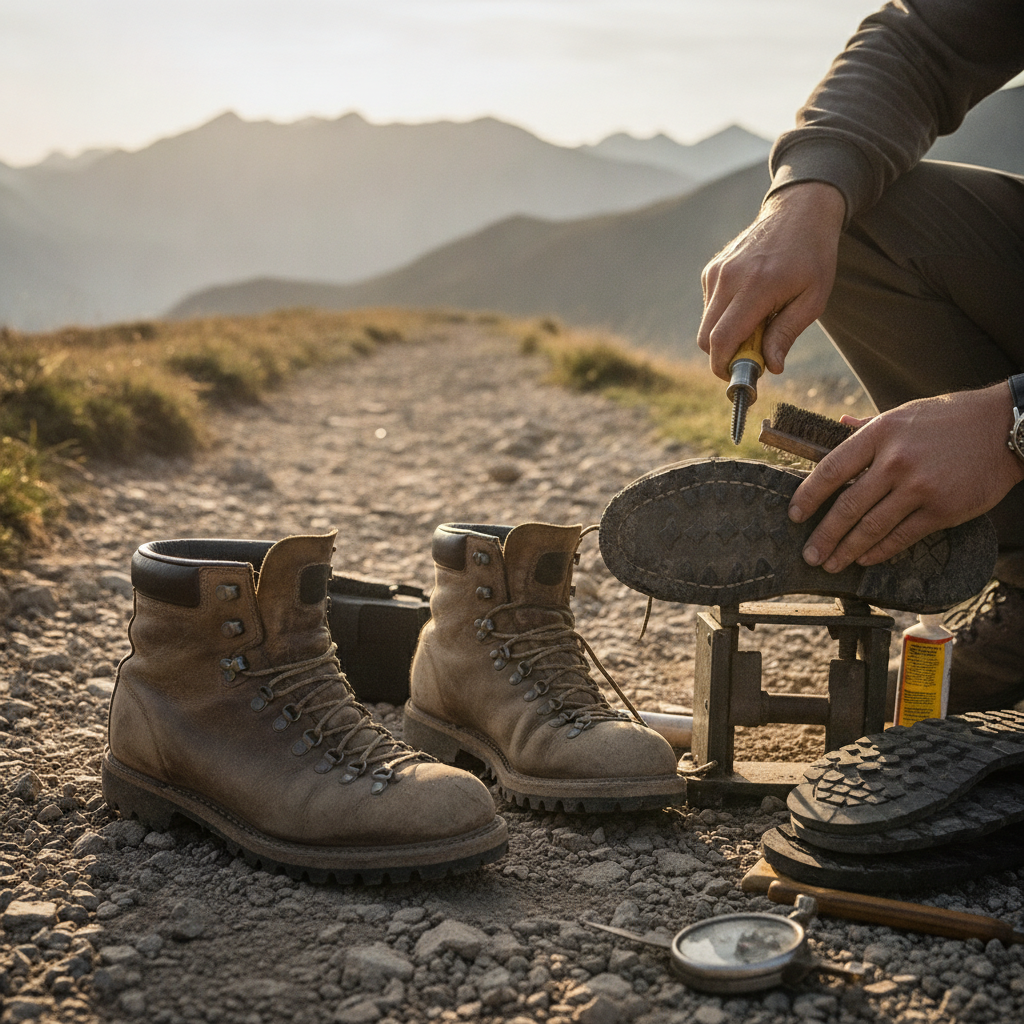
A good pair of hiking boots is one of the more significant gear purchases most outdoor travelers make, and yet resolability — the ability to have worn-out soles replaced by a cobbler — rarely shows up on any spec sheet. Most buyers focus on fit, waterproofing, and ankle support, which all matter enormously. But boots that can't be resoled become landfill after a few hundred miles, while a resolable pair might serve you faithfully for a decade or more with the right care. Knowing how to assess this before you hand over your money saves real expense in the long run.
How Does Welt Construction Determine Repairability?
The single most important structural feature for resolability is welt construction. A welt is a strip of material stitched between the upper and the outsole, creating a seam that a cobbler can cut open, replace the sole, and resew. Boots built on a Norwegian welt or a Goodyear welt are the gold standard for repairability — brands like Danner, Lowa, and Meindl use these methods across much of their lineup. Boots with cemented or glued-only construction bond the outsole directly to the upper, and separating that bond cleanly enough to resole is often impossible without damaging the boot beyond repair.
What Should You Look for on the Outsole Edge?
Before buying, turn the boot upside down and examine where the outsole meets the upper. On a welt-constructed boot, you'll see a visible lip or ridge running around the perimeter — that's the welt itself, and it signals that a cobbler has something to work with. On cemented boots, the transition from upper to sole tends to be seamless and tight, with no visible seam or stitching. Some boots use a combination approach, with stitching at the front and glue at the heel, which limits but doesn't eliminate repair options. Running your finger along the edge tells you quite a lot before you ever ask a salesperson.
How Do Midsole Materials Affect Long-Term Resolability?
The outsole gets all the visible wear, but the midsole is what cushions each step, and its condition determines whether resoling is even worthwhile. Midsoles made from polyurethane tend to hold up longer and compress more slowly than EVA foam alternatives. When a boot's midsole has degraded — which often happens before the outsole looks truly finished — resoling the bottom doesn't restore the ride quality. Boots with replaceable or rebuildable midsoles, often found in heavier mountaineering styles, represent the better long-term investment. Ask specifically whether the midsole can be replaced as part of a full resole service, not just the rubber outsole.
Which Brands Actually Support Resoling Through Their Own Networks?
Some manufacturers go further than simply building resolable boots — they maintain direct relationships with authorized repair cobblers or offer in-house resoling programs. Danner operates its own resoling service out of Portland, Oregon, and Limmer Boots, a small American maker in New Hampshire, builds every boot with the expectation of a long repair relationship with the customer. Lowa and Hanwag both support European cobbler networks trained on their specific constructions. Buying from a brand that actively supports resoling means the repair process will be smoother and less likely to result in a cobbler refusing the job for lack of compatible soles.
How Does Upper Material Influence Whether a Resole Makes Sense?
Resoling only makes financial sense if the upper is in good enough condition to justify the cost. Full-grain leather uppers hold up to decades of use with proper conditioning and can easily outlast two or three sets of outsoles. Split-grain leather and synthetic fabrics degrade faster, especially at flex points around the toe and ankle collar. When evaluating a boot in a shop, check whether the upper material is thick and supple or thin and prone to creasing. A boot with a robust full-grain upper and a welted sole is the combination that makes long-term resoling a genuinely smart financial decision rather than an optimistic one.
What Questions Should You Actually Ask a Salesperson?
Most outdoor retailers have at least one staff member who understands boot construction, but you need to ask the right questions to surface that knowledge. Ask whether the boot is welt-stitched, and if so, which type of welt. Ask whether the brand has an authorized resoling program or a recommended cobbler network. Ask how many resoles the boot is typically designed to accept before the upper reaches its limit. A well-informed salesperson at a shop like REI or a dedicated hiking retailer should be able to answer at least the first two questions clearly. If nobody on the floor knows the answer, that's useful information in itself.
How Can You Verify Resolability Claims After Purchase?
Once you've bought the boots, it's worth establishing a relationship with a quality cobbler before the soles actually need replacing. Take the boots in early, ask whether they can work with that construction, and find out what a resole typically costs for that style. Many cobblers who specialize in outdoor footwear will inspect the boots, confirm resolability, and give you a realistic sense of how many miles you can expect before bringing them back. This kind of relationship also means you're not scrambling at mile four hundred, mid-trip, suddenly wondering whether anyone can fix what's wearing away beneath you.
Evaluating resolability before you buy isn't complicated once you know what to look for. Check the welt, examine the outsole edge, consider the upper material, and ask a few direct questions at the counter. Boots that can be repaired rather than replaced reward that early attention with years of additional use — and that's exactly the kind of purchase that holds its value long after the receipt has faded.