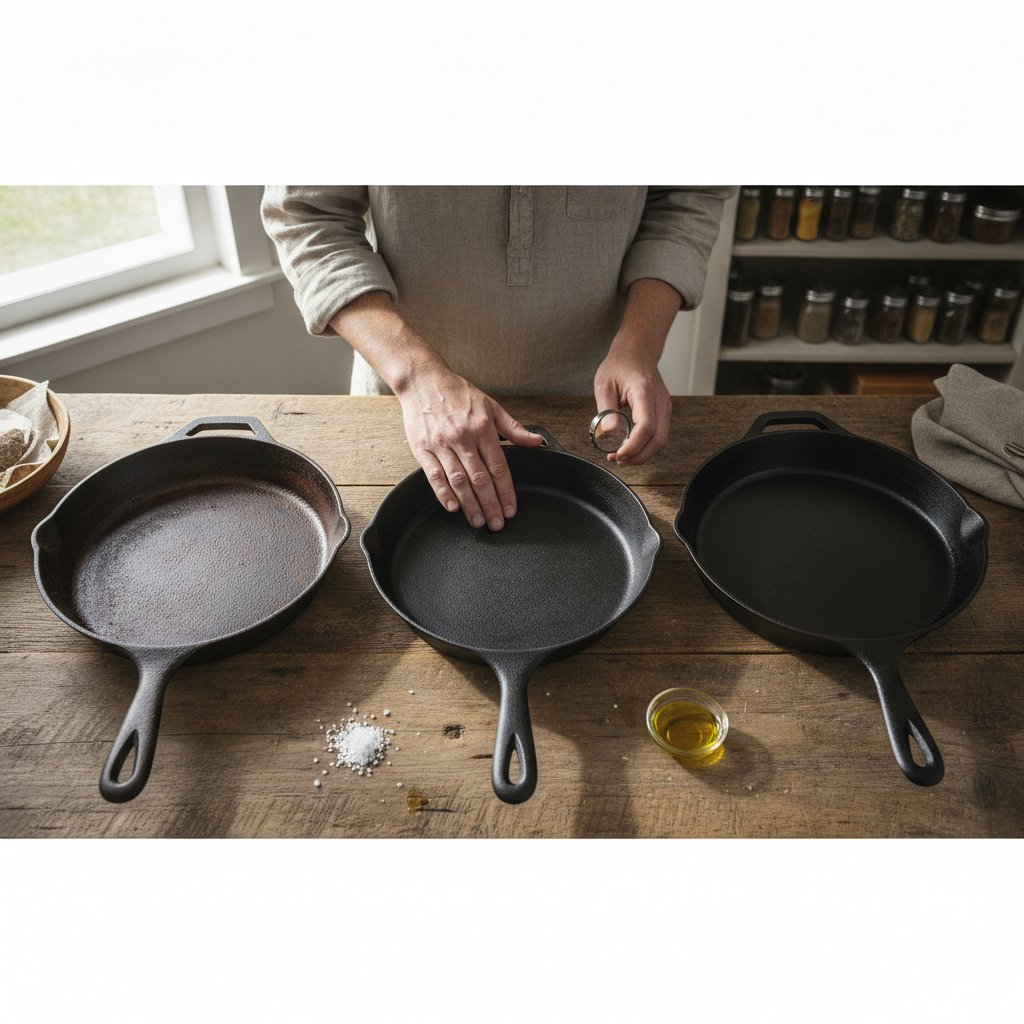
Cast iron cookware comes wrapped in more mythology than almost any other product in a kitchen store. Brands lean hard on century-old founding stories, hand-me-down nostalgia, and made-in-America badges to justify wildly different price points for pans that may or may not outperform a budget option sitting right next to them on the shelf. The honest truth is that heritage claims tell you almost nothing about how a pan will cook. What actually matters is the quality of the seasoning base and the texture of the cooking surface — and both of these are things you can assess yourself, without needing a family recipe passed down three generations.
Reading the Cooking Surface Before You Buy
The first thing you should do when picking up any cast iron pan is turn it over and run your fingers across the cooking surface. A well-finished pan will feel relatively smooth — not glassy like stainless steel, but not aggressively pebbly either. Modern budget brands like Lodge produce pans with a rougher, sandblasted texture that some cooks love and others find sticky for years. Higher-priced options from makers like Smithey or Finex tend to offer a machined or polished cooking surface right out of the box. Neither is automatically better, but knowing what you're starting with helps you set realistic expectations about the seasoning process ahead.
Understanding What a Good Seasoning Base Actually Looks Like
Seasoning is the layer of polymerized oil that protects cast iron from rust and creates its nonstick properties over time. When you're evaluating a pan in a store or online, a good factory seasoning should appear dark, matte, and even across the entire surface. Shiny patches, streaks, or areas that look gummy or tacky are red flags — they suggest the oil wasn't fully polymerized, which means the seasoning could peel or flake during your first few uses. A thin, properly cured seasoning base is actually more durable than a thick, rushed one, so don't confuse depth of color with quality.
Checking the Rim and Side Walls for Consistency
Most shoppers focus entirely on the flat cooking surface and ignore the side walls and rim — which is exactly where manufacturing shortcuts tend to show up. Run your hand along the inside curve where the side wall meets the base. Rough casting seams, uneven thickness, or abrupt transitions can cause hot spots during cooking and make seasoning harder to maintain in those areas. Brands like Field Company are known for their attention to wall consistency, which is one reason their pans tend to season evenly over time. Uneven walls aren't always a deal-breaker, but they're worth factoring into your decision, especially if you're paying a premium price.
Testing Handle Comfort and Balance
A cast iron pan's handle design matters more than most people realize, particularly because you'll be lifting a heavy piece of cookware over heat without a second hand available. Pick the pan up by the handle and feel where the weight sits. A well-balanced pan distributes weight toward the base rather than tipping dramatically forward or backward. The handle shape should feel natural in a gripped hand — not too narrow, not so wide that it's awkward with an oven mitt. Some brands use an assist handle opposite the main grip, which is genuinely useful for larger skillets. This is a detail that brand heritage stories almost never address.
Looking at the Base for Flatness and Contact
A warped base is one of the most common complaints about cast iron cookware, and it's almost impossible to fix once you own it. Before buying, set the pan on a flat surface — a store shelf or countertop works fine — and press gently on the rim. It shouldn't rock. Then look at the base from eye level to check for any visible curvature or high spots in the center. A slightly concave base can cause cooking oil to pool at the edges rather than distributing evenly. This matters especially on flat glass or induction cooktops, where full surface contact is critical for even heat transfer.
Comparing New Versus Pre-Seasoned Budget Options
Restaurant supply stores and secondhand markets often carry cast iron pans that have already been seasoned through years of actual use — and that built-up seasoning is genuinely superior to anything that comes out of a factory. A well-used Griswold or Wagner skillet found at an estate sale or antique market can outperform a brand-new pan costing three times as much. The key is checking for cracks, deep pitting, or rust that has penetrated below the surface. Light surface rust is almost always restorable with oil and heat. Deep structural damage is not. Buying used is one of the smartest moves in cast iron shopping, but it requires a basic visual inspection before you commit.
Knowing When Brand Reputation Is Actually Useful
Brand heritage isn't meaningless — it just shouldn't be your primary evaluation tool. Consistent manufacturing tolerances, quality control, and warranty support are all legitimate reasons to factor a brand's reputation into your decision. Companies like Lodge have been reliable at the budget end for decades, while newer makers like Butter Pat Industries have built genuine reputations for surface quality. The difference is that these reputations are grounded in verifiable product characteristics, not just a founding story or a rustic logo. When a brand's claims align with what you can physically observe in the pan itself, that reputation earns its weight.
Cast iron cookware rewards the shopper who pays attention to what's actually in front of them. A smooth, evenly seasoned surface, consistent wall thickness, a flat base, and a comfortable handle will serve you far better than a brand story that began in 1896. Touch the pan, inspect the seasoning, check the balance — and let what you find guide your decision rather than what the marketing copy tells you to feel.