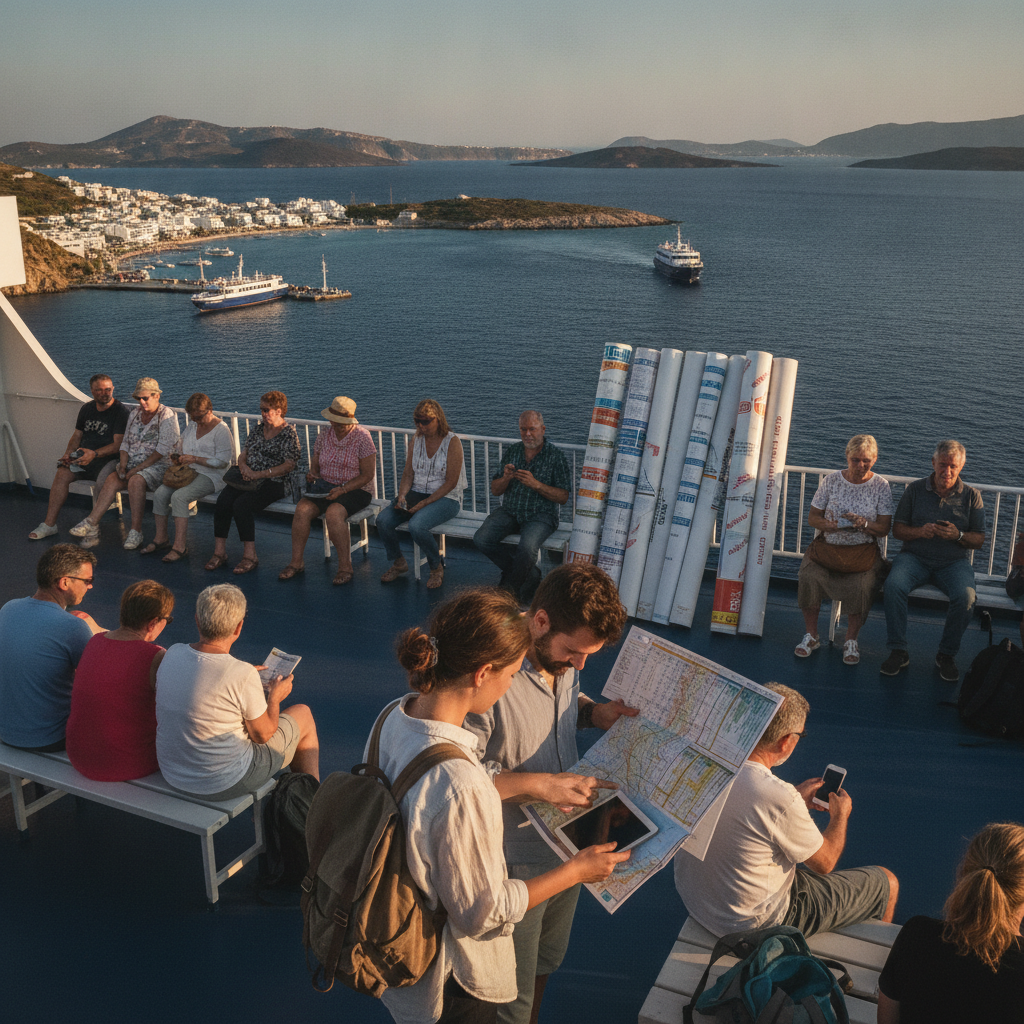
The Greek island ferry system is one of the most freeing travel networks in Europe — and one of the most misunderstood. Travelers often arrive having booked every crossing weeks in advance, only to wish they'd stayed longer on Naxos or skipped Mykonos entirely. The fear of being stranded makes over-planning feel like the safe choice. But with a little local knowledge, the system rewards flexibility far more than rigid itineraries.
The ferry world in the Greek islands runs on predictable rhythms once you understand its logic. Routes shift by season, islands cluster into natural circuits, and most crossings — outside of peak August weekends — have more availability than you'd expect. You don't need to lock every leg down before you leave home. What you need is a working framework for making decisions on the ground.
Learn How the Route Networks Actually Cluster
The Aegean ferry network isn't one big web — it breaks into distinct clusters. The Cyclades (think Santorini, Mykonos, Paros, Ios, Naxos) are the most interconnected, with frequent daily crossings in summer. The Dodecanese (Rhodes, Kos, Patmos) run on a separate axis. The Sporades and the Ionian Islands have their own patterns entirely. Understanding which islands belong to the same natural circuit helps you plan loosely rather than rigidly, hopping between nearby islands without routing yourself through Athens unnecessarily.
Use Ferryhopper or Greek Ferries as Your Real-Time Lookup Tool
Ferryhopper is the most traveler-friendly platform for checking routes, schedules, and pricing across multiple operators at once. You can also use Greek Ferries or go directly to operator sites like Hellenic Seaways or Blue Star Ferries. The key habit is checking schedules the evening before you want to travel, not weeks in advance. Timetables change between seasons, and mid-season adjustments happen. Real-time lookups also show you what's actually full versus what just looks unavailable weeks out.
Travel Mid-Week and Avoid Sunday Evenings
Ferry availability drops sharply on Friday afternoons and Sunday evenings, when Greeks head home from weekend island trips. The same crossing that has open seats on a Tuesday might be fully booked on those windows. If your itinerary has any flexibility at all, lean toward Tuesday, Wednesday, or Thursday departures. You'll get better pricing, more cabin options if you want them, and a noticeably less chaotic port experience. August is the one month where even mid-week crossings on popular routes can fill up — that's the one stretch where earlier booking genuinely pays off.
Know the Difference Between High-Speed and Standard Ferries
High-speed ferries — catamarans and fast boats — cut crossing times significantly but cost more and get affected by wind far more easily. The Aegean is notorious for Meltemi winds in July and August, which can cancel fast boat departures with short notice. Standard ferries are slower but more reliable in rough conditions and cheaper for longer crossings. For a trip like Piraeus to Heraklion or Piraeus to Rhodes, the overnight standard ferry is often the smarter pick — you travel while you sleep and save a night's accommodation.
Keep Port Timing Loose When You Arrive on a New Island
When you arrive at a port — Paros Town, Ios, or even busy Mykonos — the ticket agencies are right there at the waterfront, and they're your best source for same-day and next-day availability. Don't assume that because something looked unavailable online it's actually gone. Agencies hold allocations, cancellations happen, and for the smaller island-hopping boats like the local kaïkia that connect tiny spots like Koufonisia or Amorgos, tickets simply aren't sold online at all. Walking the port strip and asking directly is standard practice, not a backup plan.
Build in One Buffer Day Per Island to Stay Flexible
The most common mistake is scheduling crossings so tightly that a single delay cascades through the whole trip. A cancelled fast boat, a late arrival, a ferry you simply want to skip because the island you're on is too good — these are all real scenarios. Building one buffer day into every two or three islands gives you room to absorb delays or linger without stress. Think of it less as wasted time and more as the mechanism that keeps everything else working. Islands like Folegandros or Schinoussa are exactly the kind of places you'll want that extra day.
Understand the Piraeus–Athens Hub Logic
Piraeus is Greece's main ferry hub, and almost all inter-island networks eventually run through it. If you're routing between island clusters — say, finishing in the Cyclades and wanting to reach Corfu or Thessaloniki — you'll almost certainly need to pass through Piraeus. Building in a night in Athens on either end of your island-hopping stretch isn't a detour; it's just how the system works. Treating Piraeus as a hub rather than an obstacle makes the whole network easier to use and opens up routes you wouldn't see otherwise.
Buy Tickets at the Port When You're Unsure About Timing
Online booking charges fees, and more importantly, it locks you in. For any crossing where you're genuinely unsure of the date, buying at the port on the day is a perfectly normal approach. Port ticket windows for major operators like Anek Lines or Blue Star Ferries are open early, and for most routes outside August, you'll find seats available. Deck-class tickets are especially easy to grab last-minute and are a great value for short crossings. Save online booking for the handful of crossings — summer Santorini, late-night Rhodes departures — where demand genuinely justifies it.
The Greek island ferry system is continuing to improve its digital infrastructure, with more operators offering real-time availability and easier mobile ticketing. That trend only makes flexible travel easier over time. For now, the travelers who get the most out of these islands are the ones who treat the ferry schedule as a living document rather than a fixed plan — staying curious, staying loose, and trusting that the boats will get you where you want to go.