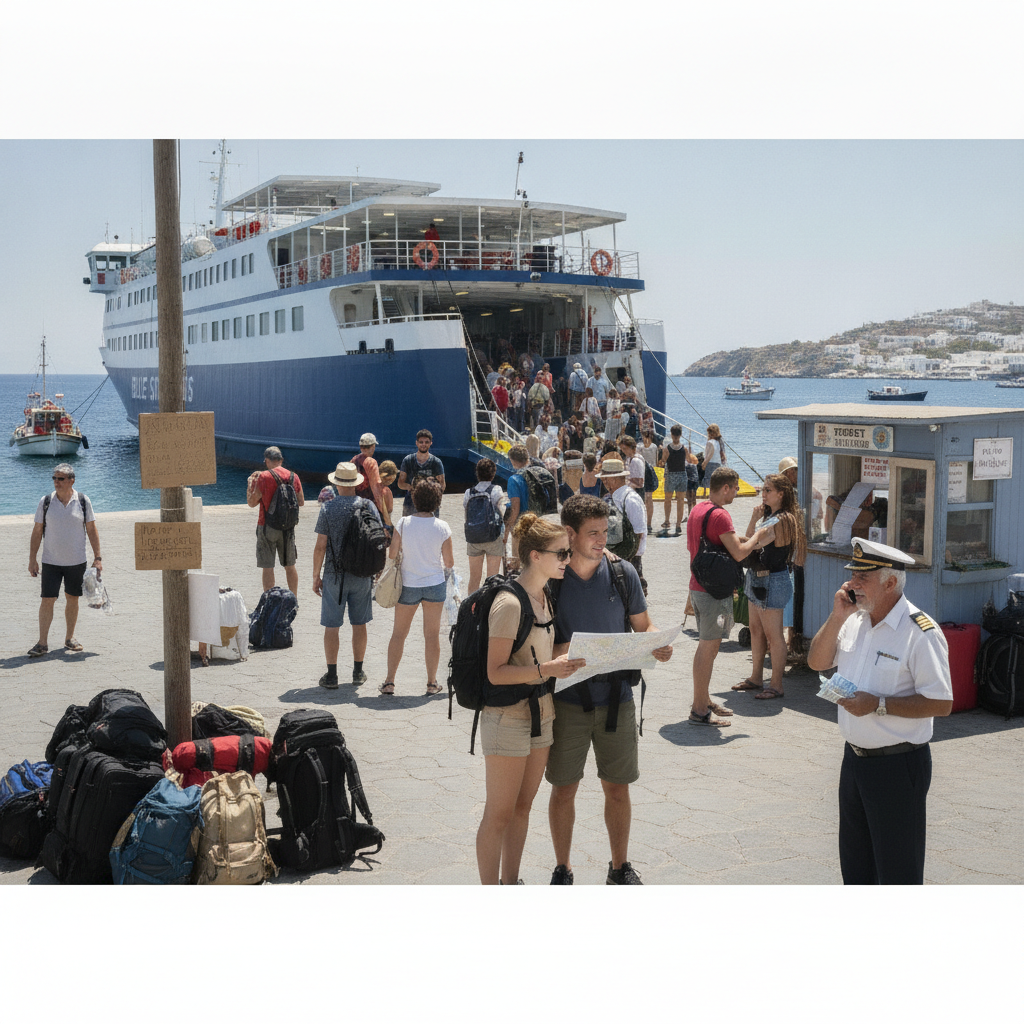
Flexible travel sounds romantic until you're standing at a Greek port at 9am, realizing you have no ticket, no clear schedule, and three different ferry companies operating out of three different docks. The Greek island ferry system is genuinely one of the great travel freedoms in Europe — but it works on its own logic, and if you don't understand that logic, it can feel chaotic fast. The good news is that plenty of experienced travelers move through the Aegean without pre-booking every leg, and with a bit of know-how, you can too.
Learn How the Ferry Companies Actually Split the Network
Not all Greek ferries are run by the same operator, and that matters more than most first-timers expect. Blue Star Ferries handles most of the major Cyclades and Dodecanese routes out of Piraeus. Hellenic Seaways and SeaJets cover faster, smaller connections between islands. Knowing which company serves which route means you're not hunting blindly when you show up at the port. A quick check on the aggregator site Ferryhopper before each leg gives you a solid overview without requiring you to commit to anything.
Use Piraeus as Your Base of Operations
Athens' port at Piraeus is the central hub of the entire network, and treating it that way makes everything easier. Most major routes to the Cyclades, Dodecanese, and Crete depart from here, often with multiple sailings per day during peak season. Rather than locking yourself into a rigid island-hopping sequence before you leave home, you can use Piraeus as a reset point — return here between clusters of islands, reassess your timing, and pick your next move based on what's actually available. It takes the pressure off and gives you real flexibility.
Understand When Advance Booking Actually Matters
Honestly, you can walk up and buy a ticket for most island routes without any trouble outside of July and August. High season is the exception, not the rule. During peak weeks, popular routes like Piraeus to Santorini or Mykonos to Naxos can fill up, especially on Friday afternoons when Athenians head out for the weekend. If your travel falls in those windows, booking a day or two ahead on Ferryhopper or directly through Blue Star's website is a reasonable move — you're not giving up flexibility, you're just being practical about it.
Check the Port Layout Before You Arrive
Large ports like Piraeus have multiple departure gates spread across a long stretch of waterfront, and ferries for different companies leave from different numbered gates that aren't always well-signed. Showing up at the wrong gate twenty minutes before departure is a genuinely stressful experience. Before you head to the port, confirm which gate your ferry leaves from — your ticket will usually say, but double-check with the company's app or website. At smaller ports like Heraklion or Rhodes, the layout is simpler, but the principle still applies.
Keep a Light Buffer Between Island Stops
One of the quiet pleasures of flexible ferry travel is that you're not racing a timetable you locked in six months ago. Build in at least one buffer day at each island rather than scheduling back-to-back moves. Weather in the Aegean changes quickly, and even in summer, strong meltemi winds can delay or cancel sailings on shorter routes without much notice. A spare day means a cancellation is an inconvenience rather than a crisis. It also means you can actually stay somewhere you love a little longer, which is usually the point.
Use Smaller Ports as Strategic Shortcuts
Most travelers funnel through the same big ports, but the smaller ones often offer direct connections that cut travel time significantly. From Rafina, just east of Athens, you can reach Mykonos and Andros faster than from Piraeus. The port at Lavrio connects to eastern Cyclades islands that are otherwise awkward to reach. These shortcuts aren't secret — they're just less advertised. Once you know they exist, you can build smarter island sequences that avoid unnecessary backtracking and keep your overall travel time lower.
Factor in Crossing Time Honestly
Ferry schedules in Greece list crossing times, but slow ferries and high-speed catamarans operate very differently, and the price gap between them is real. A slow overnight ferry from Piraeus to Crete takes around eight hours — long enough to sleep on board and skip a night's accommodation cost. A fast catamaran from Mykonos to Naxos takes about forty-five minutes. Both serve a purpose. Overnight ferries are genuinely worth considering as a budget and time hack, especially on longer routes, as long as you grab a cabin or at least a reclining seat rather than trying to sleep on deck.
Know What to Do When a Ferry Gets Cancelled
Cancellations happen, and how you handle them sets the tone for the rest of your day. First, check in at the ticket office immediately — they often rebook you on the next available sailing at no charge. Second, look at alternative operators running the same route, as different companies sometimes have openings even when one is full or cancelled. Third, if you're genuinely stranded, ask port staff rather than other travelers, since they have real-time information. Most Greek port towns are pleasant enough places to wait an extra few hours, and a cancellation rarely means being stuck for more than a day.
The Greek ferry network rewards travelers who stay curious rather than rigid. As hydrofoil services expand and more routes get added between the smaller Aegean islands, spontaneous island-hopping is only going to get more viable. The key is holding your plans loosely, learning the basic geography of the network, and trusting that the system — however improvised it sometimes feels — has been moving people between these islands reliably for decades.