There is a certain kind of traveler who arrives in Oaxaca City already certain they understand mezcal. They've read the listicles, ordered it at cocktail bars back home, perhaps even toured a distillery or two in some other context. They arrive with a checklist and a confident palate, and they spend the better part of their trip optimizing for quantity rather than meaning. It's an understandable instinct, but it tends to produce a hollow experience — the kind where you return home having tasted a great deal and understood very little.
What the Mezcal Trail Actually Is
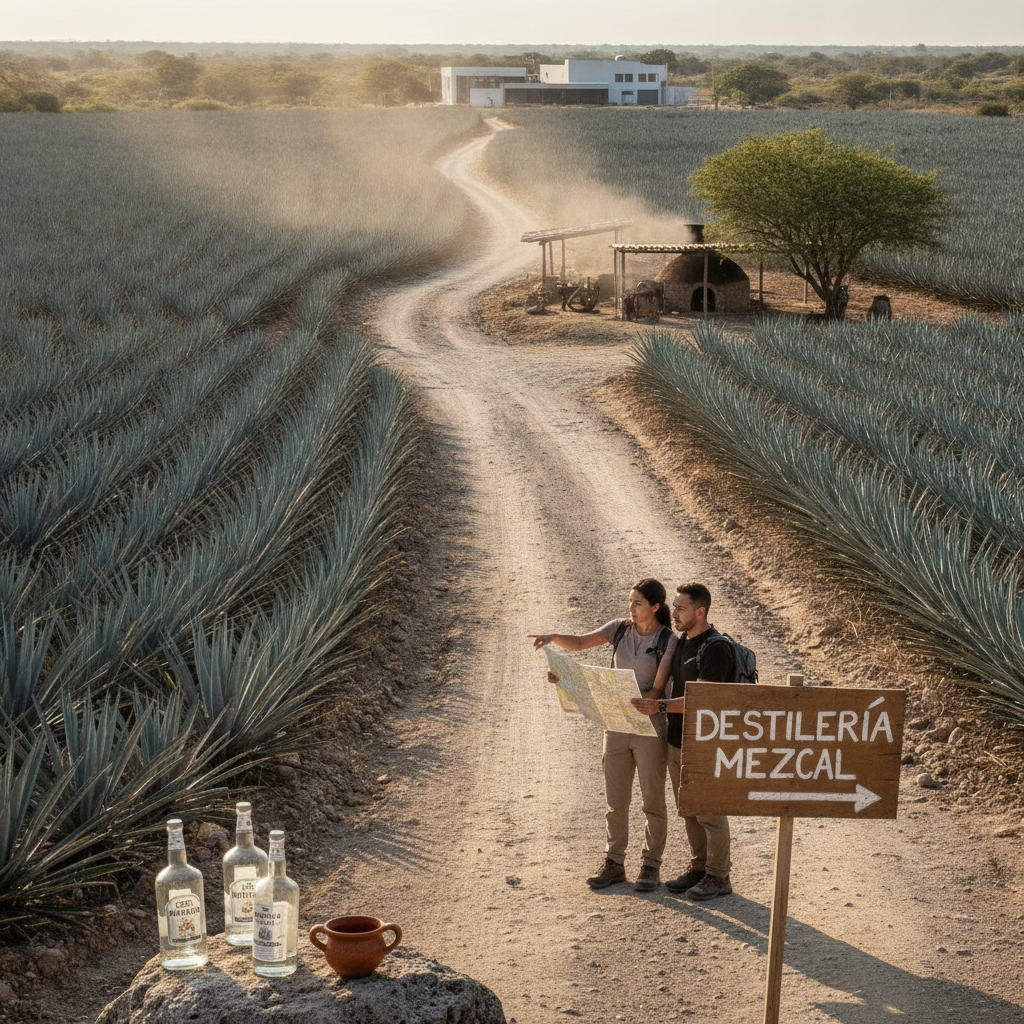
The term *palenque* — the traditional mezcal production site, usually a family-run operation with hand-built stone or clay ovens, wooden mallets, and a stone tahona wheel for crushing roasted agave — is not just a quaint detail. It is the entire point. The villages surrounding Oaxaca City, particularly those along the road toward Santiago Matatlán, which locals often call the world capital of mezcal, represent something closer to a living craft tradition than a tourist attraction. First-time visitors frequently conflate the mezcal trail with wine-country tourism in the European sense — scheduled tastings, polished visitor centers, gift shops with curated bottles. What they find instead is something more unscripted and more rewarding: producers who may or may not be expecting company, families who have been working with *maguey* (the agave plant, harvested after years of slow growth) for multiple generations, and a product whose variation from batch to batch tells you something specific about soil, water, and human decision-making.
The mistake isn't arriving with enthusiasm. It's arriving with a fixed framework that treats the trail as a checklist rather than an encounter.
The Problem With Rushing the Villages
Many first-time visitors to Oaxaca City treat the mezcal villages as a half-day excursion bolted onto a city itinerary. They hire a driver, stop at two or three palenques along the road between San Dionisio Ocotepec and Santiago Matatlán, take photographs of the clay pots and smoke-stained roasting pits, collect a few samples, and return to the city in time for dinner. The result is a surface-level familiarity that can actually work against deeper appreciation. The producers who welcome visitors most readily — the ones whose signage is in English and whose sample pours come with laminated tasting notes — are not necessarily the ones making the most interesting mezcal. The more considered approach is to dedicate a full day, hire a local guide with genuine relationships in the villages (rather than a generic tour operator), and allow the rhythm of those communities to set the pace rather than imposing one from the outside.
Misunderstanding Agave Varieties
Oaxacan mezcal is not a single flavor profile. This is where a great deal of confusion enters. Visitors who have encountered only *espadín* — the most widely cultivated agave variety, and the workhorse of commercial mezcal production — sometimes conclude that they don't particularly like mezcal, when what they've actually experienced is one thread in a much larger conversation. *Tobalá*, a smaller wild agave that grows in mountainous terrain and takes longer to mature, produces something entirely different: more floral, more mineral, often with a lighter body that surprises people expecting smoke and heat. *Tepeztate*, which can take decades to reach harvest maturity, carries a complexity that regular tastings won't prepare you for. Understanding that the agave species and its growing conditions are primary determinants of flavor — more than the producer's technique in many cases — changes how you approach a tasting entirely. The best way to encounter this range is to ask specifically, at each palenque, what variety you're tasting and where it was sourced, rather than simply drinking through whatever is poured.
The Cultural Weight of *Bienvenida* and Reciprocity
One of the more significant missteps involves the social dimension of visiting a palenque. Mezcal production in Oaxaca carries a strong current of *reciprocidad* — the principle that hospitality creates an obligation to engage genuinely, not just consume. When a family opens their production space to visitors, offers small pours of their work, and explains the process through gestures and limited translation, the appropriate response is not to photograph everything, take the samples, and move on. It involves some form of purchase, however modest, and some form of genuine attention — asking a question, sitting with the process for a few minutes, acknowledging the years of labor behind what's in the glass. Visitors who treat tastings as free samples and palenques as attractions rather than working businesses are not simply missing a cultural cue; they're contributing to an erosion of the hospitality that makes the trail worth experiencing at all.
Getting More From Oaxaca City Itself
The mezcal trail doesn't begin and end outside the city. Back in Oaxaca's centro histórico, the mezcalerías along García Vigil and in the streets surrounding the Zócalo offer a different kind of education — one that's slower, more conversational, and often more accessible to visitors who aren't yet comfortable navigating rural villages independently. Places like In Situ Mezcalería are known for stocking rare and semi-rare expressions in a setting where the staff can speak at length about provenance and production. Spending an evening here before heading to the villages the next day creates a useful frame of reference: you arrive at the palenques with questions rather than assumptions, which makes every pour more legible.
When you do finally sit down in a village courtyard, glass of *tobalá* or *arroqueño* in hand, smoke still faintly in the air from the roasting pit nearby, the experience doesn't feel like a stop on an itinerary. It feels like arriving somewhere that was never trying to be found in a hurry. That shift — from tourist optimizing to traveler paying attention — is exactly what Oaxaca keeps offering, quietly, to anyone willing to slow down enough to receive it.