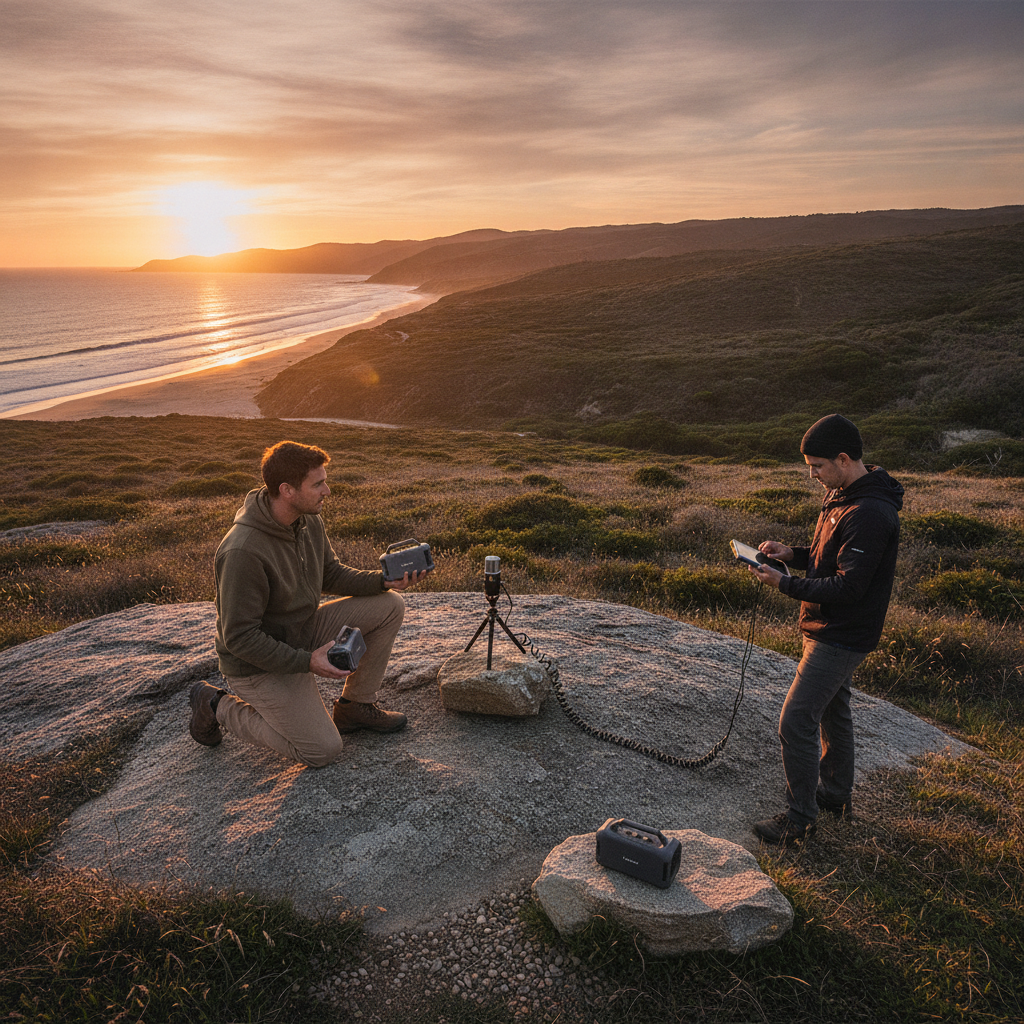
Buying a portable Bluetooth speaker based on lab specs alone is one of the most common ways to end up disappointed on a beach, a campsite, or a rooftop terrace. Indoor ratings look great on paper, but the moment you step outside, the rules change entirely. Wind scatter, reflective surfaces, ambient noise, and open air all conspire to make your carefully chosen speaker sound nothing like it did in a showroom or an anechoic chamber. If you've ever stood outdoors wondering why your expensive speaker sounds thin and distant, you're dealing with a real performance gap that specs rarely warn you about.
The good news is that with a little know-how, you can shop smarter — testing and comparing speakers in ways that actually predict how they'll perform where you plan to use them.
What Does Frequency Response Consistency Actually Mean?
Frequency response measures how evenly a speaker reproduces sound across the audio spectrum, from deep bass up through midrange and treble. A speaker with good frequency response consistency holds that balance as conditions change — when you move further away, turn up the volume, or step outside. Many marketed specs list ideal indoor measurements taken in controlled environments, where room walls reflect sound back and fill in gaps the speaker would otherwise miss. Outdoors, that reflected energy disappears, and weaknesses in the speaker's actual driver performance become obvious fast.
How Does Outdoor Listening Distance Change Everything?
Indoors, even a modest speaker benefits from natural room gain — sound bouncing off walls and ceiling adds perceived fullness and volume at almost no cost to the listener. Outside, that reinforcement vanishes immediately. As you move even a few meters away from the speaker, bass frequencies drop off disproportionately compared to midrange and treble, which means the sound balance shifts toward thin and harsh. When evaluating speakers for outdoor use, distance testing matters far more than any spec sheet. A speaker that sounds balanced at arm's length but loses its low-end warmth at three meters is a poor outdoor performer regardless of its published frequency range.
Why Should You Test Speakers in Wind Conditions?
Wind is an underrated factor in outdoor speaker evaluation. Even a light breeze creates low-frequency rumble and disrupts the dispersion pattern that speakers rely on to reach your ears cleanly. Some speakers compensate with enclosure designs that limit wind sensitivity, while others — particularly those with exposed passive radiators on the sides or back — pick up interference easily. JBL's Charge series and UE's Hyperboom use different approaches to passive radiator placement, and the practical difference becomes obvious the moment you use them outdoors on a gusty day. When testing or reading user reviews, specifically look for mentions of wind performance rather than pure volume output.
How Do Dispersion Angles Affect What You Hear Outside?
A speaker's dispersion angle describes how widely it spreads sound in front of and around itself. Narrow dispersion speakers work beautifully in a quiet room where one or two people sit directly in front, but outdoors they create a listening sweet spot so small that anyone moving around loses audio quality immediately. Wide-dispersion designs — like those using 360-degree drivers, as seen in Sony's SRS-XB series — maintain more consistent sound levels as listeners move off-axis. For group outdoor use, dispersion is arguably more important than raw frequency range because it determines whether the speaker works for your whole gathering or just the person sitting closest.
What Should You Listen for During an Outdoor Test Session?
If you have the chance to audition a speaker before buying, take it outside the store or find a large open area nearby. Play music you know well across different genres — something with prominent bass, something with detailed midrange, and something with sharp high-frequency content like acoustic guitar or cymbals. Walk in a slow arc around the speaker while it plays and notice where the sound thins out or shifts in character. A speaker worth buying for outdoor use maintains relatively even tonal balance across that arc. Bose's SoundLink Flex became a strong recommendation partly because of exactly this kind of user-reported consistency in open-air testing.
How Do User Reviews Reveal What Lab Data Hides?
User reviews from outdoor-specific contexts — camping forums, beach trip roundups, travel subreddits — are genuinely useful data sources because they describe real-world conditions rather than controlled measurements. Filter reviews by searching for keywords like "beach," "campsite," "pool," and "wind" rather than skimming the top comments. You'll quickly surface patterns: speakers that reviewers consistently describe as sounding fuller at a distance, or ones that users mention lose bass the moment they're set on grass rather than a hard surface. This kind of aggregated real experience often predicts outdoor performance more reliably than frequency response graphs.
Why Does Surface Placement Matter More Outdoors?
Where you set your speaker has a significant effect on bass performance, especially outside. Hard surfaces like concrete or a wooden picnic table reflect bass frequencies back upward, giving the speaker a useful boost. Soft surfaces like sand, grass, or a beach towel absorb low-end energy rather than reflecting it, which can make even an excellent speaker sound noticeably thin. This is worth knowing before you buy because it affects how you'll actually use the speaker. A model that relies heavily on surface reflection to achieve its marketed bass response will consistently underperform at the beach — one of the most common places people expect it to shine.
How Can You Use Return Windows to Your Advantage?
Most major retailers offer return windows of at least two weeks, and treating that window as a structured outdoor test period rather than a safety net is one of the smartest buying strategies available. Take the speaker to at least two different outdoor environments — somewhere with ambient noise, like a park near a road, and somewhere more open and exposed. Test it at the volume levels you'd actually use, at various distances, and on different surfaces. Apps like Spectrum Analyzer or AudioTool can give you a rough visual read on whether the speaker is maintaining balance across frequencies as conditions change, even without professional equipment.
Shopping for a portable speaker with outdoor performance in mind feels like more work upfront, but it quickly narrows the field to options that actually deliver where you'll use them most. Take the specs as a starting point, then let real-world testing — yours and other users' — do the rest of the work. A speaker that earns its place on your next trip is worth taking a little extra time to find.