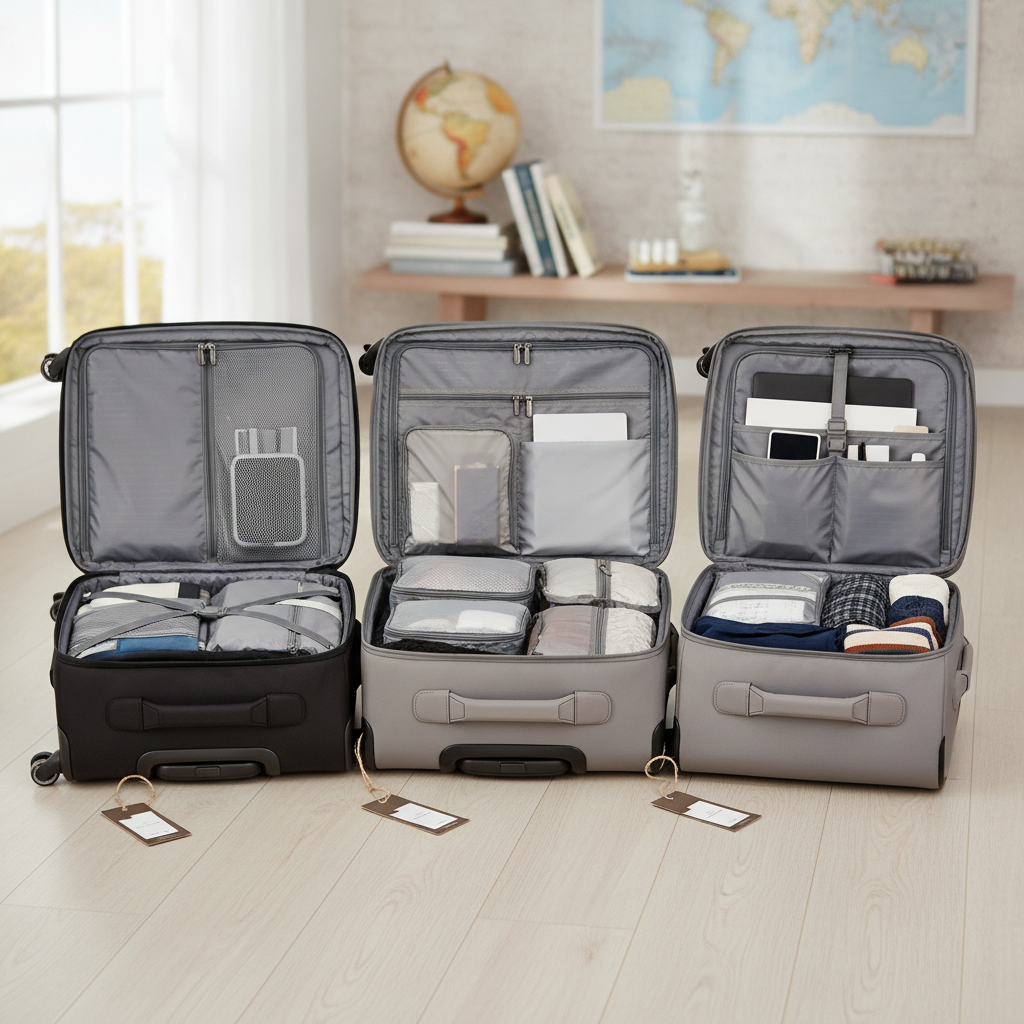
The brand name on a carry-on bag tells you almost nothing about whether it will actually work for how you travel. What matters far more is what's happening on the inside — how the space is divided, where pockets sit, and whether the layout matches your specific packing habits. Shoppers spend a lot of time comparing shell materials and wheel quality, which are valid concerns, but the interior organization is often what determines whether a bag becomes your go-to companion or stays frustrating for years.
How Many Compartments Is Actually Enough?
More compartments don't always mean better organization — they can just mean more places to lose things. The real question is whether the compartments are logically sized and placed. A single large main cavity with one well-positioned divider often beats a bag with seven shallow pockets that can't hold anything useful. When you look at a bag, mentally walk through your actual travel day: where does your passport go, your laptop, your toiletry kit? If you can't place those items easily in the layout you're looking at, move on regardless of the brand.
What Should the Main Cavity Layout Look Like?
The main compartment deserves the most scrutiny because it's doing the heaviest lifting. Look for a full-length clamshell opening that lets the bag lie flat — this makes packing and unpacking dramatically easier, especially in tight spaces like overhead bins or cramped hotel rooms. A central divider with compression straps on at least one side is a strong sign of thoughtful design. Bags from brands like Osprey and Cotopaxi tend to build this well, but the feature itself is what you want to identify, not just the label.
Where Are the Quick-Access Pockets Positioned?
Quick-access pockets exist to hold things you need during transit: your phone, boarding pass, lip balm, earbuds. The placement of these pockets matters enormously. A pocket on the front exterior panel is convenient when the bag is upright on a luggage rack, but nearly useless when it's overhead. A top-mounted zippered pocket is much more practical for the way most people interact with their bag at airports. Check that the opening faces the direction you'll actually be reaching from, and that the interior is shallow enough that small items won't get buried.
How Well Does the Bag Handle a Laptop or Tablet?
If you travel with any kind of device, the tech storage situation is worth examining carefully. A dedicated laptop sleeve should be padded on at least two sides, not just lined with fabric. It should also be positioned to allow easy removal at security — ideally in a separate compartment near the back panel so you're not unpacking everything just to pull out your computer. Some bags, like those from Briggs & Riley, include a pass-through sleeve for attaching to luggage handles, but the laptop pocket construction itself varies a lot even within a single brand's lineup.
What Makes a Toiletry or Liquid Pocket Worth Using?
Most carry-on bags include some version of a toiletry pocket, but quality varies enormously. The best versions are water-resistant lined, easy to wipe clean, and large enough to actually fit a quart-sized zip bag without folding it awkwardly. Check whether the opening is wide enough to see the full contents at a glance — narrow openings cause you to dig around, which defeats the purpose. Some bags tuck this pocket on the side or back panel, making it harder to access quickly when you need to pull liquids out at security. Front placement, with a wide zipper, is almost always the better choice.
How Do You Spot Wasted Interior Space?
Wasted space is one of the most common complaints travelers have after using a bag for the first time. It usually shows up as a poorly proportioned pocket that's too tall but not wide enough, or a mesh divider that compresses too quickly and stops holding anything in place. When you're evaluating a bag in a store or reading a detailed product listing on a site like REI or Amazon, look for actual interior dimensions on each compartment, not just the overall bag size. A bag that's 22 liters total could feel much larger or smaller depending on how that volume is distributed.
How Does the Layout Change When the Bag Is Full?
An often-overlooked detail is how the bag's interior behaves when it's packed near capacity. Soft-sided bags can bulge in ways that make zipper pockets inaccessible or cause a laptop sleeve to press against other contents uncomfortably. If you can test a bag in person — which is always worth doing if a store like Away or a local luggage retailer has floor samples — bring your actual gear or use in-store display items to simulate a real load. Pockets that seem spacious when empty can become nearly unusable once the main compartment is full.
Why Do Organizational Panels Near the Lid Matter?
The lid panel of a clamshell carry-on is prime real estate that many buyers overlook. A well-designed lid organizer typically includes a mix of zippered compartments, open slip pockets, and maybe a key clip — all accessible the moment you open the bag. This is where you want the items you reach for multiple times a day: a portable charger, snacks, a pen, your hotel confirmation. Brands like Eagle Creek have made this area a design priority, but again, the feature is what counts. If the lid is just a flat panel with a loose mesh pocket, you're missing out on one of the most functional spots in the bag.
Choosing a carry-on based on interior layout rather than name recognition takes a little more patience, but it pays off every single trip. The next time you're shopping, give yourself permission to ignore the logo and spend five minutes mentally unpacking your whole travel routine into the compartments in front of you. The bag that fits your habits perfectly is almost certainly out there — and it might not be the one everyone else is buying.