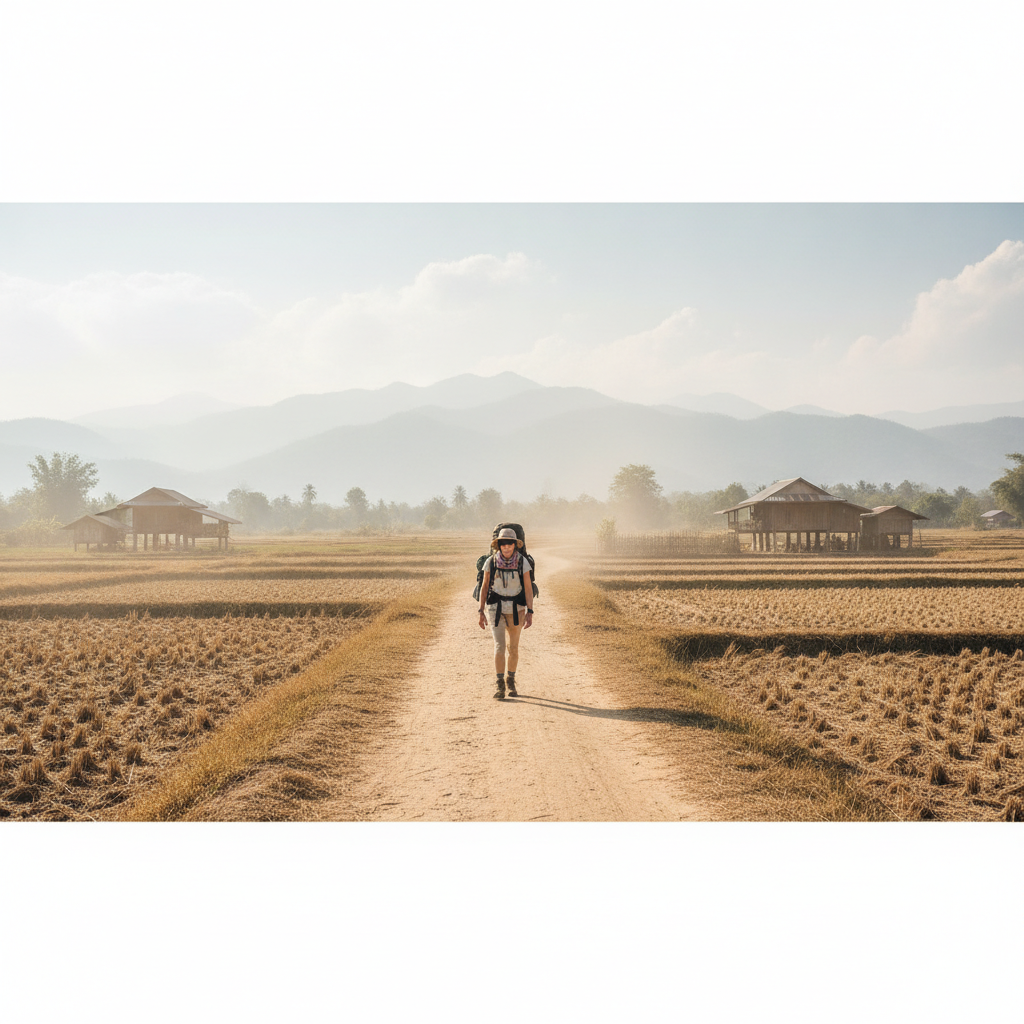
There is a particular kind of clarity that settles over northern Laos between November and April — the air loses its weight, the mountain roads dry out, and the whole region becomes something close to navigable for travelers who prefer to move without a fixed itinerary. The dry season is widely understood as the best window for independent travel in this part of Southeast Asia, and that reputation is well earned. But understanding what it actually delivers on the ground, as opposed to what the photos suggest, makes a meaningful difference in how you plan and what you expect.
What the Dry Season Means on the Ground
The shift from wet to dry in northern Laos is not just a matter of rainfall. Roads that were muddy, slow, or occasionally impassable during the monsoon months firm up and become consistently accessible, which matters enormously in a region where overland travel is the primary way of getting between small towns and villages. The haze that builds later in the season, particularly from February onward as farmers burn fields in preparation for planting, affects visibility and air quality in ways that catch many visitors off guard. Early dry season, from November through January, tends to offer the clearest skies and the most comfortable temperatures, especially at higher elevations around Phongsali and the Muang Sing Valley, where nights can drop to genuinely cold by regional standards. If your priorities include trekking, photographing landscapes, or taking slow boat journeys on the Nam Ou River, this early window is when conditions align most reliably.
Luang Prabang, the most visited city in the north, becomes noticeably busier from December through February as international visitor numbers peak. The famous morning alms-giving ceremony along Sakkaline Road draws larger crowds during this period, and guesthouses in the older UNESCO district book up faster than visitors unfamiliar with the region typically expect. Using a platform like Booking.com to scan availability a few weeks in advance is a reasonable habit, not because accommodation is scarce exactly, but because the better-located guesthouses and smaller family-run properties tend to fill before the generic mid-range options do. Prices across the board stay modest by most travelers' standards, though they do edge upward during peak December and January.
Moving Around Without a Fixed Plan
Northern Laos rewards a slower approach to movement, and the dry season makes that approach genuinely comfortable rather than aspirational. The slow boat route along the Mekong from Huay Xai to Luang Prabang is a well-established two-day journey that independent travelers have been taking for years, and it runs reliably during this period. From Luang Prabang, the Nam Ou River route toward Nong Khiaw and Muang Ngoi Neua offers a quieter alternative — smaller boats, fewer tourists, and a pace that suits the landscape. The villages along this stretch have minimal infrastructure, which is partly the appeal, though it also means cash is essential since card payments and ATMs are absent outside of larger towns.
For overland legs, minivans operated by local companies connect most major towns, and apps like 12Go Asia are useful for checking schedules and booking seats in advance, particularly on popular routes where a day's delay isn't welcome. The road between Luang Prabang and Vang Vieng, which sits at the southern edge of the northern region, has improved substantially and the drive through karst scenery is easier than it was even a few years ago. That said, mountain roads in the far north — toward Muang Sing or along the Nam Ha protected area — still require more flexibility in timing, and a buffer day built into your schedule avoids unnecessary stress when a vehicle runs late or a connection doesn't materialize.
Trekking, Villages, and Getting the Timing Right
The dry season opens up trekking routes that are either difficult or inaccessible during wetter months. The Nam Ha National Protected Area near Luang Namtha is one of the most organized trekking destinations in the country, offering community-based routes that pass through Akha, Lanten, and other ethnic minority villages. These treks are best arranged through locally licensed operators in Luang Namtha itself rather than booked from abroad, both because local agencies support community revenue directly and because they can advise on current trail conditions, which shift even within the dry season. Morning temperatures on multi-day routes can be cold enough to warrant a light layer, and packing accordingly saves a lot of discomfort.
The haze issue that builds from late February is worth factoring into plans for anyone prioritizing mountain views or photography. By March and into April, smoke from seasonal burning can obscure ranges that would otherwise define the scenery, and some travelers who arrive expecting clear blue skies during this period find the visibility disappointing. That's not a reason to avoid the later dry months entirely — the heat is manageable, the crowds thin out, and guesthouses become easier and cheaper to find — but it does shift what the experience looks like in practice. Apps like IQAir offer real-time air quality data for major towns and are worth checking before committing to a trekking date if conditions are a priority.
For budgeting purposes, travelers who use tools like Trail Wallet or a simple daily log tend to find northern Laos genuinely affordable even during peak dry season, with accommodation, food, and local transport combining to leave meaningful room in most travel budgets. The financial ease of moving through the region is one of its quietest draws, allowing for spontaneous decisions — an extra night in Nong Khiaw, a boat trip that wasn't in the original plan — without the kind of calculation that tighter budgets demand.
There is a rhythm to northern Laos in the dry season that only becomes clear after a few days of moving through it — unhurried, slightly unpredictable, and consistently rewarding for those willing to work with its pace rather than against it. The clarity that settles over these mountains in November is not just atmospheric. It extends to the way a journey here tends to unfold: less managed, more discovered, and better for both. If a trip like this has been sitting at the edge of consideration, the window is real, and it opens earlier than most people think to start planning.