Kitchen clutter has a way of spreading silently, one rubber band, expired coupon, and mystery key at a time, until the whole room starts to feel slightly chaotic even when it's technically clean. Most organizing advice tells you to eliminate the mess entirely, to sort, purge, and label until every surface is pristine. That's an admirable goal, but it misses something important about how people actually live. A more honest, sustainable approach acknowledges that some clutter is inevitable — and gives it exactly one place to exist.
Give the Chaos a Designated Home
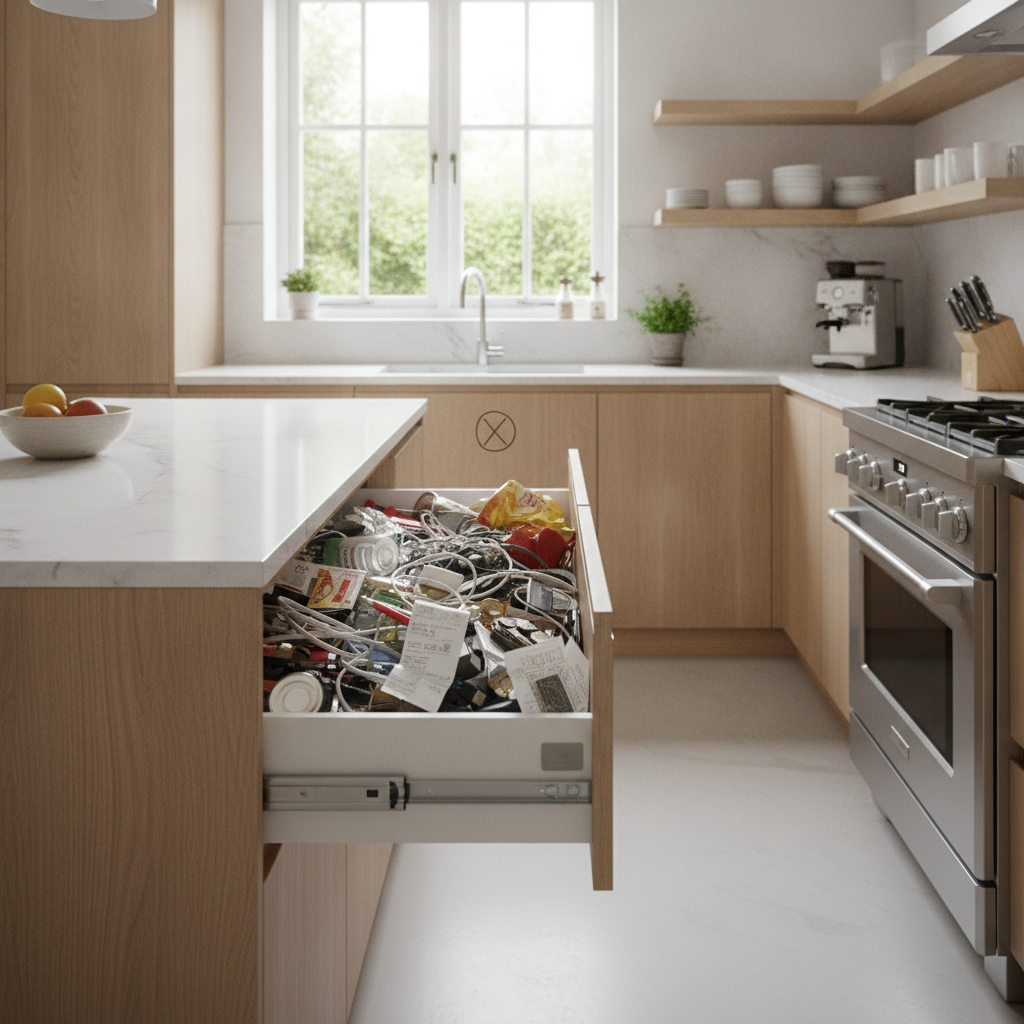
The idea behind a single clutter drawer is simple: you choose one drawer, ideally somewhere low-traffic like a lower cabinet or a side unit rather than prime real estate near the stove, and you allow it to hold whatever doesn't belong anywhere else. Takeout menus, twist ties, the occasional battery of unknown charge level — it all goes there. The rest of the kitchen, freed from the pressure of absorbing random items, stays noticeably cleaner. You're not eliminating the mess; you're containing it, which turns out to be far more effective for most households.
Choose the Right Drawer Before You Start
Location Shapes How Well This Works
Placement matters more than you might expect. A clutter drawer that lives right beside your most-used counter space tends to become a dumping ground that expands outward over time. Aim for a drawer that's accessible enough to use quickly but not so central that it becomes the default landing spot for everything that enters the kitchen. A spot near the back door or beside a pantry cabinet often works well — close enough to be convenient, removed enough to stay contained.
Set One Rule From the Beginning
The only rule worth enforcing is that nothing else in the kitchen becomes a secondary clutter zone. Once you've claimed your drawer, every other surface, shelf, and cabinet earns the right to stay organized because the chaos has somewhere legitimate to go. Apps like Tody or OurHome can help you build a light weekly habit of checking the drawer before it gets overwhelming, setting a recurring reminder to spend five minutes sorting through it every Sunday or so.
Reset the Drawer on a Seasonal Schedule
A clutter drawer only works as a long-term system if it gets emptied and re-evaluated a few times a year. Think of it the way you might approach a seasonal wardrobe refresh — the goal isn't to keep every item indefinitely, but to periodically decide what still deserves space and what can finally be thrown out. Setting a reminder in Google Calendar or a habit tracker like Streaks at the start of each season makes this feel less like a chore and more like a small, satisfying ritual. Spring is a natural reset point, but the end of summer and the start of a new year both work equally well.
What Actually Belongs in the Drawer
Being intentional about the category of items you allow in keeps the drawer from becoming genuinely unmanageable. Good candidates include items you need occasionally but not daily — spare batteries, a small roll of tape, a few rubber bands, pens that may or may not work, takeout condiment packets, and the odd spare key. Things that belong in the drawer are the items that always seem to need a home but never quite earn a permanent spot anywhere logical. What shouldn't live there are things you reach for constantly; those deserve their own designated place.
Why the Rest of the Kitchen Responds So Well
When clutter has no official place to go, it spreads across every available surface — the counter, the top of the fridge, the edge of a shelf. The moment you give it one legitimate destination, a subtle psychological shift happens. You stop feeling like the kitchen is perpetually winning against you, because you've built a system that accounts for real life rather than an idealized version of it. Homeowners who use this method often find that other small organizational habits start to feel more achievable, because the baseline anxiety of ambient clutter has been quietly reduced. Containing the mess, it turns out, changes how the whole room feels to move through.
Pair the Drawer With a Simple Weekly Glance
You don't need a full organizational overhaul to keep this working — just a brief weekly glance. Spend two or three minutes at the end of the week pulling out anything obviously expired, broken, or no longer needed. The Notion app offers simple personal templates that some people use to track home maintenance habits including quick drawer checks, though even a handwritten sticky note on the fridge works fine. The goal is just enough friction to keep the drawer from silently expanding over the months.
A single contained clutter zone is one of those rare organizational strategies that works precisely because it doesn't demand perfection. It meets you where you actually are — someone with a busy kitchen, a full schedule, and a handful of items that never quite belong anywhere specific. Starting is as simple as choosing a drawer this week and giving yourself permission to let it do its job.