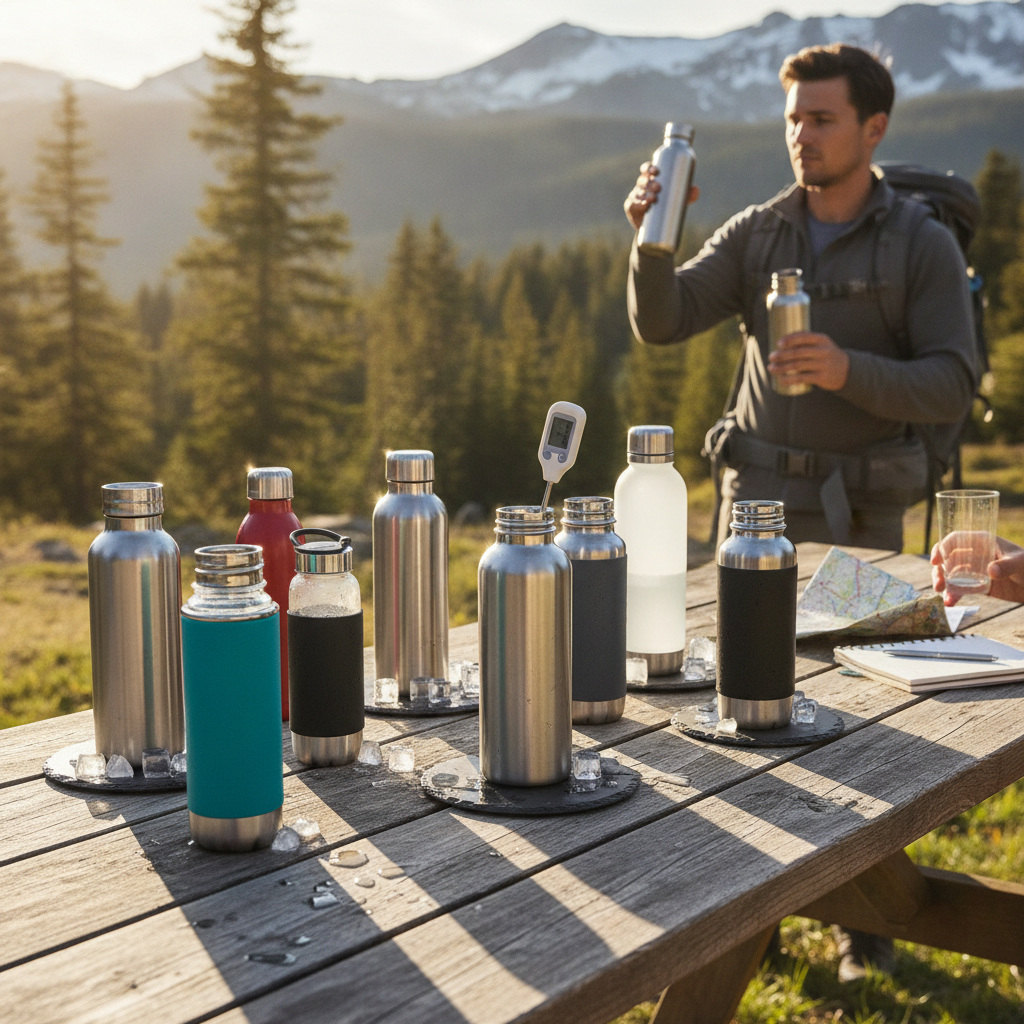
Buying a reusable water bottle feels like it should be simple, but once you start shopping, you quickly realize that almost every product on the shelf promises to keep your drinks cold for 24 hours or hot for 12. Those numbers are everywhere, and they're almost meaningless without context. The frustrating part is that two bottles with identical claims can perform completely differently depending on how they're actually used — and you won't find out until you've already committed.
How Do Insulation Claims Actually Get Made?
Most bottle brands test their products under controlled lab conditions that don't reflect real-world use. A 24-hour cold rating might mean the bottle started fully chilled, sat in a climate-controlled room at 70 degrees, and was never opened. That's not how anyone actually uses a water bottle. When you start comparing options, look for brands that specify the conditions of their testing — ambient temperature, how full the bottle was, and whether the lid was opened. Stanley and Hydro Flask sometimes share more test detail than smaller brands, which gives you at least a starting reference point.
What Does Wall Construction Tell You?
Double-wall vacuum insulation is the standard for any bottle worth taking seriously. The quality gap shows up in how well the vacuum is maintained over time and how thick the walls are. Thin stainless steel walls with a poorly sealed vacuum will lose efficiency faster than you'd expect. When you're comparing options in person, a noticeably heavy bottle isn't always better — but an unusually light double-wall bottle is worth scrutinizing. The vacuum layer needs physical space to work, so extreme thinness is often a signal that corners were cut somewhere in construction.
How Can You Test Insulation Before You Buy?
If you're shopping in a store, you can actually run a quick informal test. Fill a display bottle with ice water if that's possible, or just hold the outside of a cold-display unit for 30 seconds. A well-insulated bottle shouldn't transfer that cold to your hand at all — the outer wall should feel close to room temperature. This is called thermal bridging, and it's one of the clearest physical signs of insulation quality. Bottles from brands like Yeti tend to pass this test reliably, while cheaper generics often show a noticeable temperature difference on the exterior.
Why Does Lid Design Matter More Than You Think?
The lid is one of the most overlooked factors in insulation performance. A poorly sealed or loosely fitting lid allows heat exchange regardless of how good the bottle walls are. Screw-top lids with a silicone gasket tend to hold temperature better than push-button or straw lids, which have more moving parts and more gaps. Before committing, check whether replacement gaskets are available and whether the threading feels tight and precise when you close it. A lid that wobbles or doesn't seat cleanly is a red flag, even on an otherwise well-constructed bottle.
What Should You Look for in Community Reviews?
Brand websites will never show you the edge cases, so third-party reviews are where the real insulation data lives. When reading through reviews on Amazon or Reddit's r/HydroHomies community, filter specifically for comments about performance in heat — left in a hot car, used outdoors in summer, kept in a gym bag. Cold retention in a cool office is easy. Heat stress is where cheap insulation fails. Look for patterns across multiple reviews rather than a single dramatic complaint, and pay attention to how long reviewers have owned the bottle before reporting degraded performance.
How Does Bottle Shape Affect Temperature Consistency?
Narrower bottles tend to maintain temperature longer than wide-mouth designs because they have less surface area exposed at the opening. That doesn't mean wide-mouth bottles are bad — they're easier to clean and fill with ice — but the trade-off is real and rarely mentioned in marketing materials. If you're primarily using the bottle for cold drinks during outdoor activities, a narrower opening is genuinely worth considering. Wider openings also mean the lid gasket has more surface area to seal, which introduces more potential for inconsistency across different units of the same model.
Why Is Long-Term Consistency More Important Than Day-One Performance?
A bottle that performs beautifully for three months and then starts condensing on the outside has lost its vacuum seal. This is more common than brands like to admit, and it's almost impossible to reverse. Before buying, search specifically for reviews that mention vacuum failure or condensation appearing after extended use. Brands that offer a lifetime warranty and actually honor it — like Hydro Flask's policy — are worth paying more for precisely because vacuum integrity over years is the real test of value. A cheap bottle that fails in year two costs more in the long run than a mid-range bottle that holds up.
How Do You Weigh Price Against Insulation Quality?
The relationship between price and insulation performance is real but not linear. Spending more than mid-range doesn't always get you proportionally better results, but spending significantly less almost always means compromising somewhere in wall quality or lid construction. A reasonable range for a genuinely well-insulated 20-32 oz bottle tends to sit in the mid-tier — not the promotional price-point options you'll see on end caps, and not necessarily the top-shelf marketing flagship. Comparing construction specs, wall thickness where listed, and warranty terms gives you a much more honest picture than the cold-hours number printed on the label.
Once you start looking past the marketing claims and focusing on what you can actually observe and verify, choosing a water bottle becomes a lot less overwhelming. Test the lid, check the wall feel, read the long-term reviews, and trust construction details over catchy numbers. A little extra attention at the point of comparison saves you from a disappointing purchase — and puts a genuinely useful bottle in your hands for years to come.