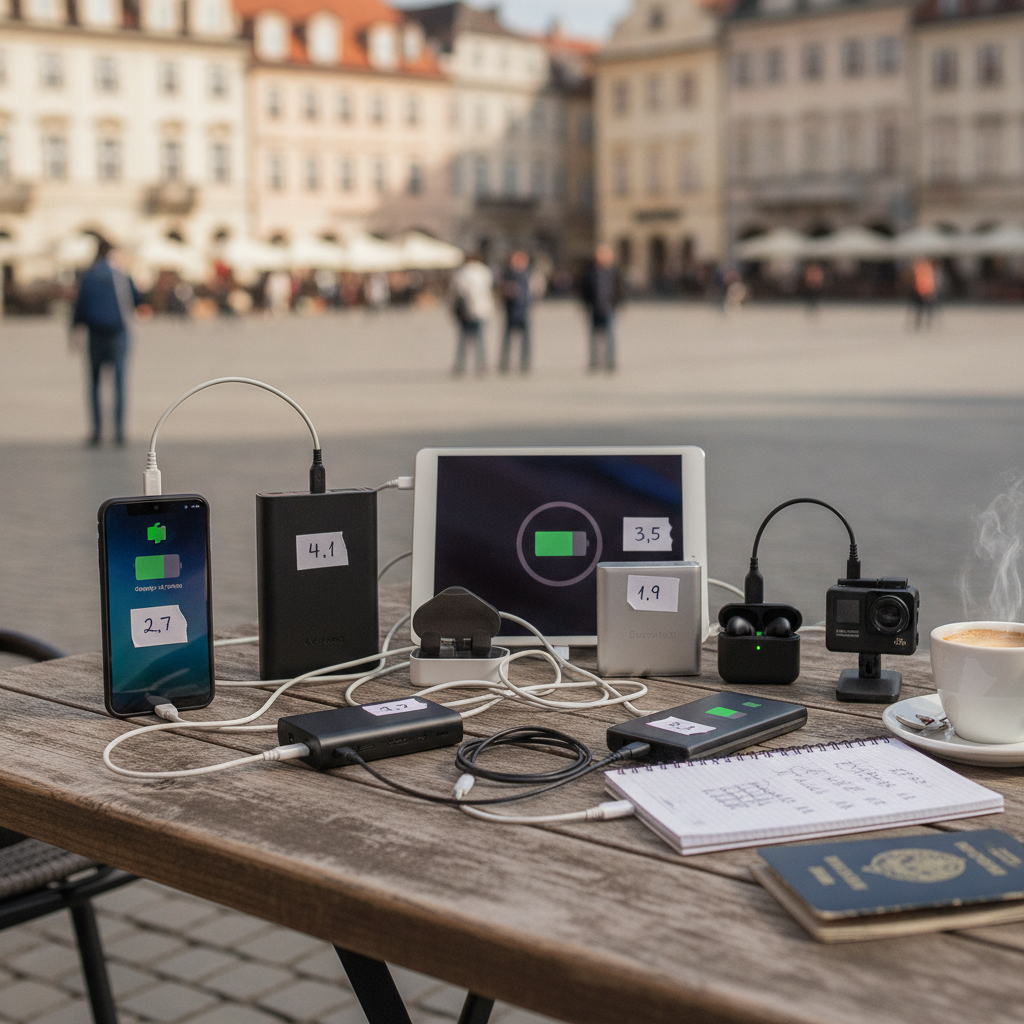
Advertised capacity numbers on portable power banks are among the most misunderstood figures in consumer electronics shopping. The milliampere-hour rating printed on the box tells only part of the story — and often the most flattering part. Understanding how a power bank actually performs over repeated charge cycles gives shoppers a far more honest basis for comparison, and can mean the difference between a purchase that lasts years and one that disappoints within months.
What Does Advertised Capacity Actually Measure?
The mAh figure on a power bank's packaging reflects the raw capacity of its internal battery cells, measured under ideal laboratory conditions. What it doesn't account for is the energy lost during the conversion process, heat dissipation, cable resistance, and the natural inefficiency of transferring power from one battery to another. In practical terms, a 20,000 mAh bank rarely delivers more than 60 to 70 percent of that figure to a connected device. Brands like Anker and Aukey publish this conversion efficiency in their technical specs, though many budget manufacturers do not.
How Do Charging Cycles Affect Long-Term Output?
Lithium-ion cells, the chemistry used in virtually all consumer power banks, degrade with every charge cycle they complete. A cycle counts as one full discharge and recharge of the bank itself. After several hundred cycles, most cells retain only a fraction of their original capacity — meaning the 10,000 mAh bank that once confidently charged a phone twice may eventually struggle to manage a single full charge. This degradation is gradual and invisible to the user until it becomes significant. Checking whether a manufacturer publishes a rated cycle count — some brands specify 500 cycles at 80 percent retained capacity — offers a concrete comparison point.
Why Does Cell Quality Matter More Than Total Capacity?
Not all lithium-ion cells are built to the same standard. Tier-one cells from manufacturers like Panasonic or LG Chem tend to hold their capacity through more cycles than lower-grade alternatives, even when the initial mAh rating looks identical on paper. Budget power banks frequently use unbranded cells that test well when new but degrade faster under repeated use. Shoppers who look beyond the headline number and check whether a brand discloses its cell sourcing — or read teardown reviews on sites like Wirecutter — will find this distinction often explains the price gap between product tiers.
How Can Real-World Testing Reveal What Specs Cannot?
Independent reviewers regularly run power banks through controlled discharge tests using USB measurement tools, logging how many milliwatt-hours actually reach a test device rather than what the bank claims to hold. These tests expose the difference between a 26,800 mAh Zendure bank and a similarly rated no-name alternative far more clearly than spec sheets allow. Cycle endurance testing — running a bank through repeated full charge-discharge cycles and measuring output at intervals — reveals how quickly a given model degrades. Third-party review channels that publish these cycle results provide some of the most reliable comparative data available to consumers.
What Specifications Should Shoppers Actually Prioritize?
Beyond the mAh figure, several specifications deserve closer attention. Conversion efficiency ratings above 90 percent indicate quality internal circuitry. Stated cycle counts at a defined retention threshold — such as 500 cycles at 80 percent capacity — give a meaningful lifespan estimate. Input wattage matters too: a bank that recharges itself slowly becomes inconvenient on longer trips. Pass-through charging capability, which allows the bank to charge a device while being recharged itself, is another practical feature that cheap models often omit or implement poorly. Reading the full specification sheet rather than the front-panel marketing copy makes these distinctions visible.
How Should You Apply This When Shopping?
When you're ready to compare models side by side, resist anchoring to the biggest mAh number in your price range. Start by filtering for brands that publish conversion efficiency and cycle ratings — Anker, RAVPower, and Zendure are consistent here. Cross-reference those specs against independent discharge tests; a quick search for any model name alongside "real-world test" or "USB meter results" usually surfaces useful data within minutes. If a power bank has no independent test data and the brand discloses nothing beyond raw capacity, treat that as a meaningful signal about build quality. Check the return window carefully before committing, and if possible, run your own basic test using a USB power meter during the return period to verify output against the claimed figure.
Choosing a power bank well comes down to shifting attention from a single impressive number to a fuller picture of how that number holds up over time. Capacity ratings establish a starting point, but conversion efficiency, cell quality, and cycle endurance determine the actual value of what ends up in your bag. Taking a few extra minutes to look past the packaging tends to reward travelers and everyday users alike with a product that genuinely delivers — trip after trip, charge after charge.