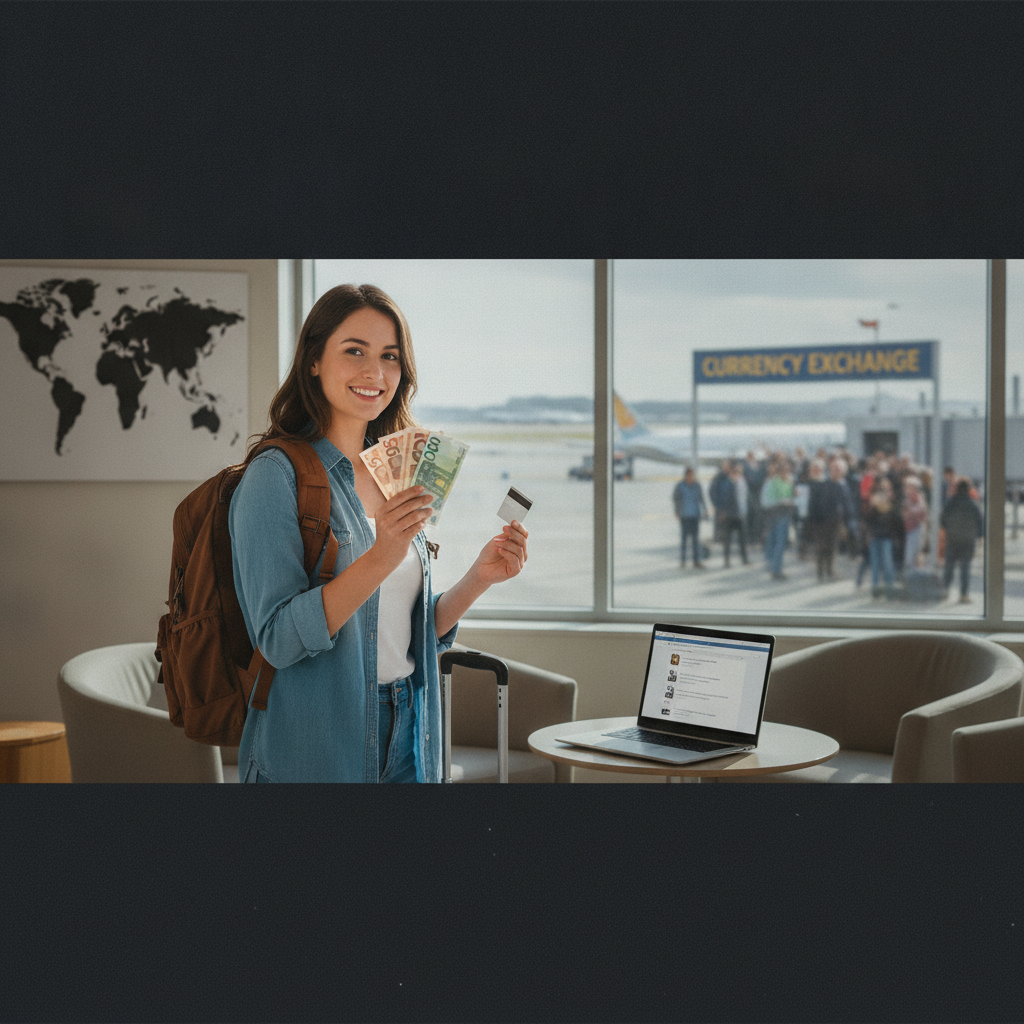
Most travelers lose money on currency exchange without realizing it — not through theft or fraud, but through routine convenience. The exchange kiosks positioned at arrival and departure terminals in airports around the world are designed for one purpose: capturing customers who haven't yet made a plan. Understanding how exchange rates and service fees actually work reveals why the airport is almost always the worst place to convert currency, and why a little advance preparation consistently delivers better value.
How Do Airport Currency Kiosks Actually Make Money?
Airport currency kiosks profit primarily through a spread — the gap between the rate at which they buy currency and the rate at which they sell it. On top of that spread, many operators charge a flat service fee or a percentage-based transaction fee that compounds the cost. The rates advertised on the boards at companies like Travelex or ICE are rarely close to the interbank rate, which is the benchmark rate banks use when trading currency among themselves. For a traveler exchanging a meaningful sum before a two-week trip, the difference between the interbank rate and a kiosk rate can represent a noticeable portion of a daily budget.
Convenience pricing is a well-established retail strategy, and currency exchange is no exception. Airport operators pay premium rents for terminal access, and those costs are built into the margin on every transaction.
What Makes Credit Unions a Stronger Option for Currency Orders?
Credit unions consistently offer foreign currency at rates closer to the interbank benchmark than most commercial bank branches, and they typically charge lower or more transparent fees. Because credit unions operate as member-owned institutions rather than for-profit businesses, their incentive structure differs from that of commercial exchange services. Many credit unions will order foreign banknotes directly for members with a few days' notice, delivering the currency to a branch or sometimes by mail.
The process requires a bit of planning — typically placing an order three to five business days before departure — but that timeline is manageable for almost any trip. Navy Federal Credit Union, for instance, offers foreign currency ordering to members at rates that compare favorably with most retail alternatives. Locally chartered credit unions often extend similar services, though availability of specific currencies varies by institution and region.
How Do Online Currency Exchange Platforms Compare?
Online exchange platforms have expanded significantly in recent years, offering competitive rates and home delivery for most major currencies. Services like Wise (formerly TransferWise) operate with a transparent fee model that shows users exactly what they're paying above the mid-market rate, which removes the guesswork that makes airport kiosks frustrating. Currency delivery through the mail typically takes three to seven business days depending on the provider and destination address, so ordering early matters.
Some platforms function primarily as digital transfer services rather than physical banknote delivery, which suits travelers who plan to rely mainly on card payments abroad. Others specialize in physical currency delivery, with packaging that arrives discreetly. Comparing a few platforms before committing takes less than ten minutes and often reveals meaningful differences in the effective rate after fees.
Why Does the Interbank Rate Matter to Everyday Travelers?
The interbank rate — sometimes called the mid-market rate — is the baseline from which all retail exchange rates are derived. No retail customer gets the interbank rate directly, but the closer a provider's rate sits to that benchmark, the less the traveler pays for the same amount of foreign currency. Tools like Google's currency converter or the XE app display the current mid-market rate in real time, giving travelers a reference point before they agree to any exchange.
Using that reference point as a baseline comparison is straightforward. If an airport kiosk offers significantly fewer units of foreign currency per dollar than the mid-market rate, that gap is the effective cost of using that service. The gap tends to be widest at airports, narrower at bank branches, and narrowest through credit unions and well-regarded online platforms.
What Role Do Travel Credit Cards Play Alongside Physical Currency?
Physical currency exchange is only one part of a smart travel money strategy. Many experienced travelers carry a modest amount of local currency for small purchases, taxis, and markets, while relying on a travel-focused credit card for larger transactions. Cards from providers like Charles Schwab or Capital One that carry no foreign transaction fees and offer competitive conversion rates effectively apply something close to the mid-market rate to every purchase, without a service fee markup.
Using both physical currency and a no-fee travel card in combination reduces the total amount a traveler needs to exchange upfront, which limits exposure to any rate that falls short of the ideal. Keeping exchange amounts modest and targeted also reduces the risk of returning home with unspent notes.
How Should You Approach Currency Planning Before Your Next Trip?
Before your departure date, check the mid-market rate for your destination currency using Wise or XE, then contact your credit union to ask about foreign currency ordering. If your credit union doesn't offer the service, compare two or three online platforms for delivery timelines and effective rates after fees. Order enough to cover the first day or two of spending comfortably — transport from the airport, a meal, small incidentals — without converting more than you're likely to use.
If you land without local currency and need a small amount immediately, an ATM inside the airport generally offers better rates than a kiosk, provided your bank doesn't charge excessive international ATM fees. Avoid dynamic currency conversion when offered at ATMs or point-of-sale terminals abroad; always choose to be charged in the local currency rather than your home currency, as the conversion rate applied to home-currency transactions is almost always worse.
As digital payment infrastructure expands across more destinations, the practical need for physical foreign currency before departure will likely continue to shrink. Contactless payments and mobile wallets are now accepted in many markets where cash once dominated. Still, cash remains essential in enough situations — rural transport, small guesthouses, local markets — that knowing how to acquire it efficiently remains a genuinely useful travel skill. The most cost-conscious travelers will continue to watch how fintech platforms refine their currency services, as competition in that space tends to push rates closer to the benchmark over time.