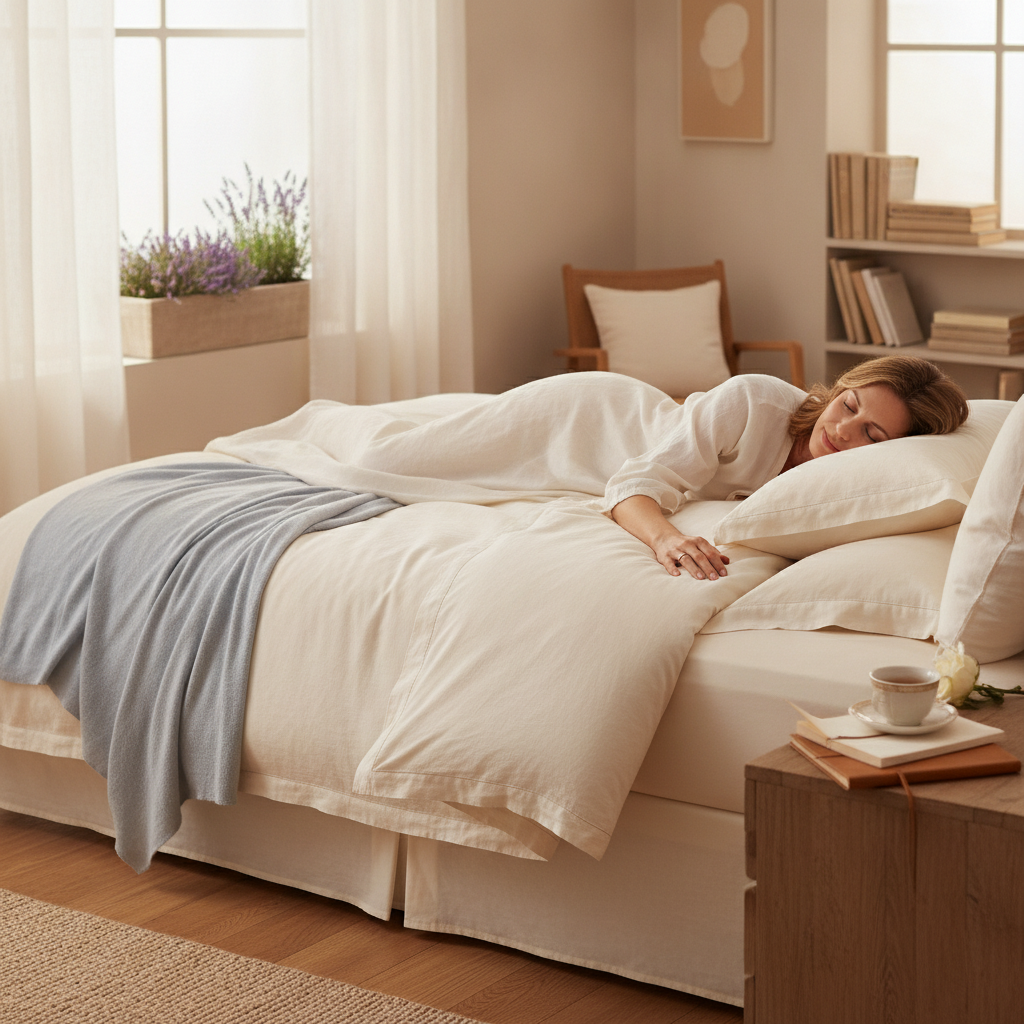
Most people buy bedding the same way they buy dish soap — quickly, based on price and packaging, with little expectation that the choice will matter much a few weeks later. That assumption tends to hold until it doesn't. Shoppers who shift from department chain purchases to specialty linen retailers consistently report a delayed but distinct recognition: something about sleep feels different, and tracing it back to the sheets takes longer than expected.
The Difference a Focused Retailer Makes
Department chains like Macy's or Target carry bedding as one category among hundreds. Their buyers select products based on margin, shelf appeal, and broad demographic fit. Specialty linen retailers — stores like Boll & Branch, Brooklinen, or a well-regarded independent shop — build their entire identity around fabric quality, thread behavior, and long-term performance. That narrowed focus changes what ends up on the shelf. Products go through more rigorous selection because there's nothing else in the store to carry the brand if the bedding disappoints.
What Thread Count Actually Signals in Practice
Thread count has been a marketing number for decades, and department chains lean on it heavily. A 1000-thread-count sheet set on a chain store shelf can feel stiff, trap heat, and pill after a handful of washes. Specialty retailers tend to de-emphasize thread count in favor of fiber origin, weave type, and finishing process. Long-staple Egyptian cotton or stonewashed linen, handled correctly, often lands in the 300–500 thread count range — and outperforms triple the count on any measure that matters after thirty days of regular use.
The First Month as a Calibration Period
New bedding from a department store often feels acceptable on the first night. The problems surface gradually — slight texture changes after washing, a synthetic sheen that doesn't soften, elastic that begins losing tension by week three. Specialty linen products tend to move in the opposite direction. Percale cotton from a brand like Parachute Home typically softens with each wash cycle rather than degrading. By the end of the first month, the sheets feel noticeably more broken-in in a way that reads as quality rather than wear, which is a distinction most people only notice once they've experienced both sides of it.
How Fabric Origin Shapes the Long-Term Experience
The supply chain behind specialty linen is usually shorter and more traceable. Many independent linen retailers work directly with mills in Portugal, Italy, or Japan — regions with long textile traditions and consistent production standards. This traceability matters for durability. When a manufacturer controls more of the process, there are fewer points at which corners get cut. Department chain bedding, sourced through multi-tier wholesale arrangements, is more likely to carry inconsistencies in dye lots, weave tension, or finishing chemicals that affect how the fabric feels against skin over time.
The Cost-Per-Night Calculation
Specialty linen typically carries a higher upfront price, and that can feel like a reason to avoid it. But durability reframes the math. A set of quality percale sheets from a specialty store, lasting four or five years with proper care, often costs less per night of use than a department chain set replaced every eighteen months. You won't feel that difference in the first week, but the first month starts to reveal it. Pilling, fading, and elastic failure — the quiet signals of lower material investment — tend to appear early enough that attentive buyers notice them before the return window closes.
What to Look for When You Make the Switch
If you're shifting your bedding purchases toward specialty retailers, a few practical details are worth prioritizing. Look for retailers who list fiber origin explicitly — vague descriptions like "premium cotton" without a source country are a signal to look elsewhere. Ask about weave type: percale offers a crisp, cool feel while sateen runs warmer and has a subtle sheen. Pay attention to return and trial policies; stores like Saatva and Boll & Branch offer generous windows because they're confident in how the product holds up. Wash your new sheets before the first use, and evaluate them again at the thirty-day mark — that's when the real performance gap between specialty and chain becomes apparent to most people.
The shift from department chain bedding to a specialty linen retailer isn't about spending more for its own sake. It's about choosing a product category where the quality gap is wide enough to affect daily experience, and where the first month of use — rather than the first night — is the more reliable indicator of whether the investment was sound. Shoppers who make that shift once tend not to reverse it.