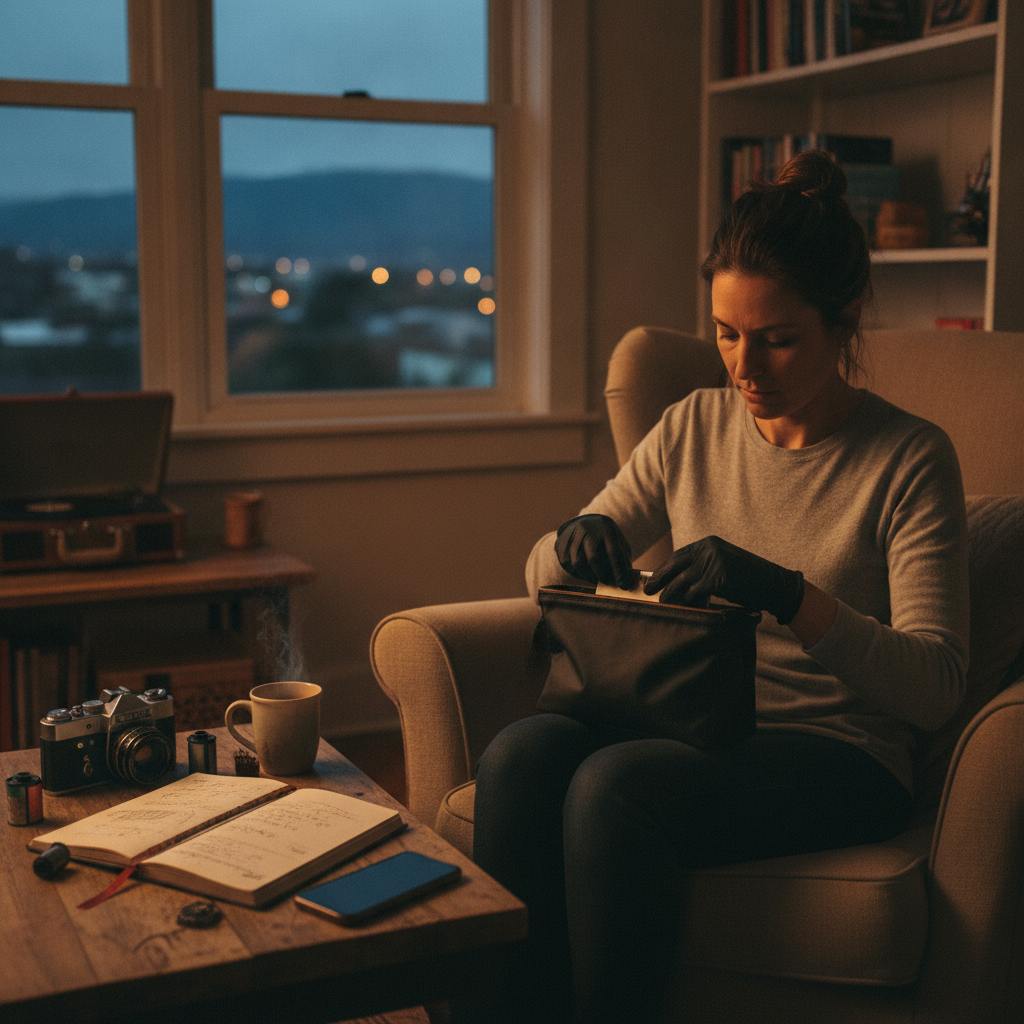
The evening hour has a particular weight to it. After the day's obligations finally release their grip, there's a familiar pull toward the phone — not out of urgency, but out of habit. The scroll begins without intention, the room dims around the glowing screen, and somewhere in that quiet drift, the chance for genuine rest quietly slips away. It's a pattern that has become so normalized in daily life that most people don't recognize it as a choice at all.
Recognize the Scroll as a Mood Event, Not Just a Time Sink
Before anything changes, it helps to understand what scrolling actually does to the emotional atmosphere of an evening. It isn't neutral. The constant intake of fragmented information — news, opinions, curated images — keeps the nervous system in a low-grade state of alertness. Psychologists sometimes call this *vicarious vigilance*, the condition of scanning for threats or stimulation on behalf of other people's lives. The body reads this stimulation as engagement, but the mind ends up neither rested nor satisfied. That's the gap where analog habits have room to work.
Choose One Habit That Matches Your Actual Energy Level
The common mistake is reaching for the most virtuous-sounding replacement: a journal, a language app, a demanding novel by an author you've been meaning to read for years. These can work, but they often don't, because they ask for more than a tired person can honestly give. A more effective approach is choosing something calibrated to your real state after 8 p.m. — not your aspirational state. Watercolor practice, a crossword from the *New York Times*, a slow assembly puzzle, or even reorganizing a small shelf are all genuine analog activities that don't require the same cognitive overhead as focused learning.
Understand Why the Hands Matter in This Shift
There's a reason that activities involving physical engagement — folding, drawing, writing by hand, working with clay — tend to quiet the mind more effectively than passive alternatives. *Proprioception*, the body's sense of its own movement and position, draws attention inward rather than outward. When the hands are occupied with something tactile and unhurried, the brain tends to follow. This is one reason that practices like hand-stitching, playing a quiet instrument, or even slow cooking with no particular goal have been embedded in evening rituals across many cultures long before screens existed.
Anchor the New Habit to an Existing Cue
Habits rarely stick in isolation. The most reliable way to introduce an analog evening practice is to attach it to something that already happens reliably — finishing dinner, making a cup of tea, changing out of work clothes. Behavioral researchers call this *habit stacking*, and it works because the new behavior borrows momentum from the established one. A simple routine might look like: tea is made, the phone is placed in another room, and a specific notebook or sketchbook is left open on the table. The physical arrangement does part of the work before willpower ever enters the picture.
Give It Three Weeks Before Expecting a Mood Shift
The change in evening mood doesn't arrive all at once. The first few nights of a new analog habit often feel slightly restless, because the brain is accustomed to the stimulation it's no longer receiving. This is not failure — it's adjustment. Somewhere around the second and third week, something subtler begins to happen. The transition into sleep tends to feel less effortful. The hour before bed starts to feel like a genuine pause rather than a postponed ending. Brands like Leuchtturm1917 and Moleskine both make blank-page notebooks specifically sized for evening use, which is a small but useful signal that this kind of intentional wind-down has found a real audience.
Notice What the Habit Reveals About What You Actually Want
One unexpected outcome of replacing a scrolling routine is that it surfaces preferences that the scroll had been quietly suppressing. When there's no feed to fall into, the mind sometimes drifts toward things it genuinely wants — to write something, to listen to a specific kind of music, to look at a coffee table book about Kyoto architecture or Scandinavian textile design. The analog habit doesn't have to remain the same one forever. It can shift as your interests clarify. What matters is maintaining the structure: one deliberate, screen-free activity as the anchor for the evening.
Start Small Enough That Skipping Feels Unnecessary
If you're building this kind of practice for the first time, ten minutes is a more honest starting point than an hour. The goal isn't productivity — it's atmosphere. You're trying to change the feeling of an evening, not accomplish something measurable within it. A short session with a sketchbook, a few pages of a physical book, or fifteen minutes of quiet listening to an album you've owned for years without actually sitting through — these small commitments accumulate into something real. The evening eventually stops feeling like leftover time and starts feeling like its own distinct part of the day, with its own texture and its own quiet reward.
That pull toward the glowing screen at day's end doesn't disappear entirely — it was built by months or years of repetition, and it deserves some patience on the way out. But as an analog habit gradually fills the space that scrolling used to occupy, the evening starts to feel like something it may not have felt in a long time: chosen.